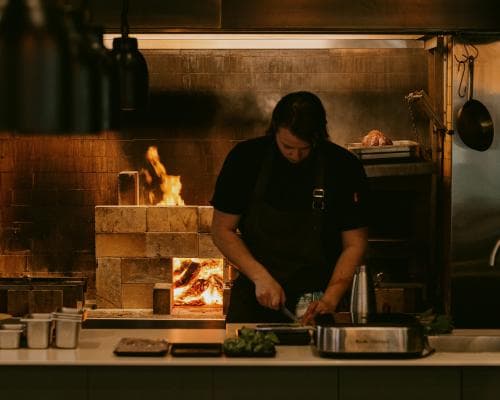
The Quiet Luxury of the Perfect Tomato: Why the World's Best Chefs Still Deseed by Hand
There is a moment in every great kitchen—whether a Michelin-starred temple in Mayfair or a sun-drenched villa in Capri—when the chef pauses, knife in hand, over a blood-red tomato. The seeds glisten like tiny amber jewels. And then, with the calm of a surgeon, they are flicked away. To the uninitiated, this looks like sacrilege. After all, isn't the seed where the flavor lives? The answer, it turns out, is as layered as a perfectly laminated pastry. And for those who truly understand the currency of taste, it’s not about waste—it’s about control. It’s about knowing that the difference between a good sauce and a transcendent one is not just the tomato, but the discipline to know what to leave out.
The debate over deseeding is as old as the tomato itself, but the modern answer is refreshingly nuanced. As Rachel Roddy, the Rome-based doyenne of honest cooking, explains, 'It all depends on the variety.' Some tomatoes—particularly the drought-hardy Sicilian varieties that thrive on neglect—are little seed factories, each one carrying a bitter note that can muddy a delicate sauce. Others, like the vesuvio, are meaty, almost aristocratic in their dense flesh, and deserve nothing more than a slice, a splash of olive oil, and a pinch of salt. Jay Patel, co-owner of London’s acclaimed Legare, puts it succinctly: 'If you’re making a salad with watery winter tomatoes, the seeds provide a lovely pop as well as acidity.' But for a lighter, fresher pasta sauce? He’ll blanch, peel, and deseed by hand, because texture is the ultimate luxury. And for a slow-cooked ragu? Tinned tomatoes, seeds and all, because time will humble even the most bitter seed.
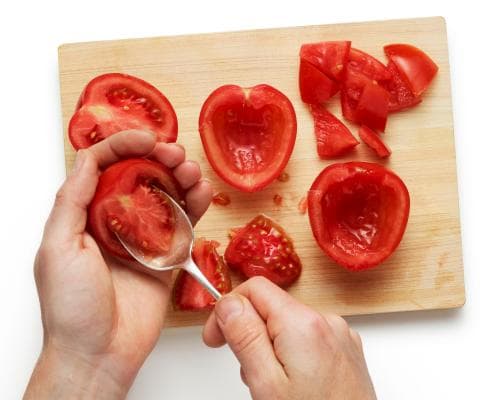
This is where the art lies—not in a blanket rule, but in a bespoke approach. Nick Molyviatis of Zylia in London has his own ritual: he grates tomatoes, using the skin as a protective glove, or scoops out the seeds with a teaspoon, treating the flesh like a precious stone. Roddy, meanwhile, swears by the food mill—a tool that presses the flavor from the gel around the seeds while separating the unwanted bits. 'Seeds don’t contain flavour,' she says, 'but the fleshy gel around them does.' That gel, however, is also mostly water. And water is the enemy of a crisp pastry. Patel, ever the pragmatist, insists on deseeding for tomato tarts: 'You want to remove as much water as possible, because it will make the pastry soggy.' The result? Slices that bake into almost semi-dried jewels, sitting atop a crust that shatters with a whisper, not a soggy sigh.
For the truly discerning, the skin is just as critical as the seeds. Thin-skinned varieties are forgiving, but thicker skins can twist into stubborn scrolls during cooking—an annoyance that no amount of truffle shavings can mask. Roddy’s solution is a quick plunge into boiling water, then cold, to loosen the skins. Patel prefers a serrated knife, especially for bull’s heart tomatoes, which peel so easily they feel almost designed for the task. It’s a tactile, almost sensual process—one that separates the merely rich from the truly refined. After all, anyone can buy a €200 bottle of Barolo, but it takes a certain quiet confidence to spend twenty minutes deseeding tomatoes for a sauce that will be gone in five.
This micro-obsession is a mirror of the broader luxury market. Just as a bespoke suit is defined by its hand-stitched lapels, a tomato sauce is defined by what’s left out. The ultra-wealthy have long understood that true exclusivity isn’t about excess—it’s about editing. It’s about the patience to remove the bitter, the watery, the distracting, until only the essence remains. In a world of instant gratification, the act of deseeding is a deliberate slowdown, a refusal to compromise. It signals that you have the time, the skill, and the palate to care. And as the global appetite for artisanal, farm-to-table experiences grows, the tomato has become the new truffle—a humble fruit elevated by the hands that treat it with reverence.
Looking ahead, the trend is clear: the next frontier of luxury dining isn’t a new exotic ingredient, but the rediscovery of technique. Chefs like Patel, Molyviatis, and Roddy are leading a quiet revolution, one that values precision over abundance. For the collector of experiences, this means seeking out restaurants where the chef still blanches, peels, and deseeds by hand—not because it’s efficient, but because it’s essential. It means growing your own vesuvio tomatoes on a terrace overlooking the Amalfi Coast, or commissioning a custom food mill from a Tuscan artisan. The seed, once discarded, becomes a symbol of discernment. And the sauce? It becomes a statement—silent, but unmistakably powerful.
The Experience
To taste the difference, book a private culinary masterclass at Legare in London, where Jay Patel will guide you through the art of hand-deseeding bull's heart tomatoes—then enjoy your creation with a glass of Barolo.