The New British Summer: When the Forecast Becomes a Luxury
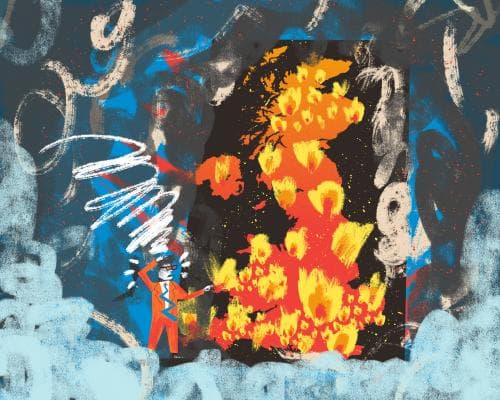
There was a time, not so long ago, when the British weather forecast was the nation's great leveler—a gentle, shared ritual of mild disappointment and quiet relief. George Cowling, the BBC's first television forecaster, debuted in January 1954 with a prediction that tomorrow would be 'rather windy' but 'a good day to hang out the washing.' For seventy-two years, that measured, almost apologetic tone carried the country through endless variations on the same theme: changeable, but never truly extreme. Yet this summer, as the Met Office weighs issuing red 'extreme heat' warnings while the tabloids crow about an 'incredible summer,' the forecast has become something else entirely—a daily bulletin of existential anxiety, delivered in the same breathless tone as a breaking-news alert. And for those with the means, the question is no longer what to wear, but where to go.
The shift is palpable in every broadcast. One moment, a presenter beams at a map of golden sunshine; the next, they warn of unprecedented UV levels and the risk of wildfires. Rain, once a mere inconvenience, is now framed as either a blessing or a catastrophe, depending on which region's reservoirs are running dry. This is not the weather we grew up with—the gentle drizzle, the grey skies that inspired a thousand polite conversations about the garden. This is weather as a series of emergencies, and it has quietly transformed what it means to be a discerning traveler in the British Isles. The old holiday, a week in Cornwall or a cottage in the Cotswolds, now carries an element of gamble: will the heat be unbearable, the beaches closed, the moorland ablaze?
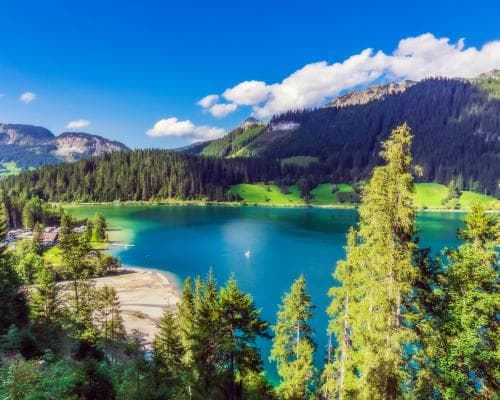
For the luxury traveler, this uncertainty is the new currency. The ultra-wealthy have always sought refuge from the mundane, but now they are seeking refuge from the climate itself. The private islands of the Indian Ocean, the cool fjords of Norway, the alpine valleys that remain verdant while the lowlands bake—these are no longer mere destinations but sanctuaries. The question of 'where to go next' is increasingly answered by 'where the weather is still predictable.' And that, in itself, is a luxury beyond price. A private island in the Maldives, with its constant trade winds and reliable 28-degree days, offers a kind of meteorological certainty that the British summer can no longer provide. The forecast is not just a matter of packing a raincoat; it is a matter of choosing a microclimate that will not betray you.
The irony is that this very uncertainty is what makes the British summer, in its more benign moments, so precious. The perfect day—a warm breeze, a cloudless sky, a glass of something cold on a terrace overlooking the sea—is now a rarity to be seized, not a given to be expected. For those who can afford it, the art of travel has become the art of anticipation: reading the forecast not for small talk but for strategic advantage. The wealthy do not just check the weather; they buy it. They book the last available suite on a yacht that will chase the sun, or the exclusive lodge in the Scottish Highlands that promises cool air and midge-free evenings. They pay for a private meteorologist to plan their itinerary around the whims of the jet stream.
This is the new signal of status, more telling than a watch or a car: the ability to be elsewhere when the red warning flashes. While the rest of the nation sweats through 'incredible summers' that feel increasingly like a threat, the privileged decamp to latitudes where the climate is still a comfort, not a crisis. The forecast has become a class divide, a daily reminder that the weather, like everything else, is not what it used to be. And for those who can, the answer is not to complain about the heat but to leave it behind—to find the places where 'tomorrow would be rather windy' is still a perfectly lovely prediction, and the only thing on the horizon is a good day to hang out the washing.
So where do the wealthy go next? Not to the obvious resorts, but to the edges—the Shetland isles, the Patagonian steppe, the high-altitude plateaus where the air is thin and the forecasts are still written in pencil. They seek out private islands with their own microclimates, where the temperature is controlled by the ocean and the only red warning is a spectacular sunset. The new luxury is not a bigger suite or a better view; it is the quiet confidence that the weather will be kind, and that the forecast, for once, will not be the most alarming thing you read all day. And as the climate continues to shift, that confidence—like the perfect British summer—will become ever rarer, and ever more worth traveling for.