The Most Exclusive Commemoration in America: Inside Black August
In the rarefied circles where August means a Hamptons retreat or a Mediterranean yacht, there exists a far more radical calendar: Black August. It is not a gala, not a charity auction, not a gallery opening. It is a month of disciplined remembrance, born in the brutal confines of California’s prison system, and it has quietly become one of the most profound acts of cultural resistance in America. For the ultra-wealthy, who often seek meaning beyond the balance sheet, Black August offers something money cannot buy: a connection to a lineage of sacrifice, intellect, and unyielding resolve. It is a reminder that true legacy is not about what you accumulate, but what you choose to honor.
The story begins in the late 1960s, when California was a crucible of radical energy and reactionary backlash. The Black Panther Party was organizing, and Governor Ronald Reagan was working to crush it. Inside San Quentin and other state prisons, a group of young Black men—some barely in their twenties—faced a terrifying reality: the Aryan Brotherhood, a white supremacist gang, was assaulting and murdering them with the tacit approval of guards. In response, men like WL Nolen and George Jackson, a Panther field marshal, formed the Black Guerrilla Family, a Marxist-Leninist organization born not of ideology alone but of sheer survival. Their ranks were decimated. Nolen was killed by guards in January 1970. Jonathan Jackson, George’s brother, was killed in August 1970. George himself was killed in August 1971, and Khatari Gaulden followed in August 1978. These were not distant names in a history book; they were young men who dared to fight back and paid with their lives. As former Black Liberation Army member Jalil Muntaqim put it, the survivors decided to commemorate these deaths, and thus Black August was born—a month of study, fasting, meditation, and physical discipline, designed to keep the flame of revolution alive behind bars.
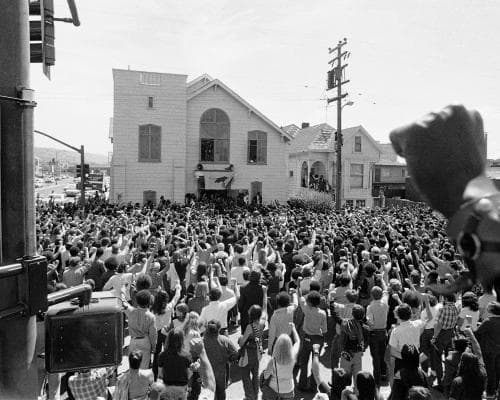
What began as a prison ritual has since seeped into the cultural mainstream, yet it retains its raw, uncompromising edge. Today, Black August is observed both inside and outside prison walls, by the incarcerated and the free, by activists and artists. It is a time to push for the release of aging political prisoners—many now in their 70s and 80s—and to re-engage with the intellectual traditions that fueled the movement. The historian Gerald Horne has called it a striking example of how memory can be weaponized for liberation. In Durham, North Carolina, Black August in the Park blends music, dance, and film with education. In Oakland, the Black August Arc of Liberation Commemoration uses art to honor the legacy. In Brooklyn, the Free Black Women’s Library hosts a reading challenge that turns the month into a collective intellectual pilgrimage. These are not passive observances; they are active, rigorous, and deeply intentional.
For the discerning few who value provenance and rarity, Black August is the ultimate collectible: a living archive of courage. It is not for sale, not for display, not for Instagram. It demands participation. The discipline of fasting, the focus of study, the commitment to physical exercise—these are the same tenets that built dynasties and fortunes. But here, they are applied to a cause far greater than profit. The craftsmanship of Black August lies in its oral history, passed down through generations of activists who refused to let their comrades be forgotten. It is a heritage that cannot be auctioned, only inherited through action. In a world where luxury is often defined by scarcity, Black August is the rarest commodity of all: a tradition that has never been commodified, never diluted, and never co-opted.
What does it signal about wealth and taste? It signals that the new guard of the ultra-wealthy is no longer satisfied with passive philanthropy. They want to engage with the roots of social change, to understand the mechanisms of power and resistance. Black August offers a lens through which to examine the American project—its failures, its contradictions, and its potential for redemption. It is a masterclass in resilience, taught by those who have endured the unimaginable. For the investor who has everything, this is the one asset that appreciates in moral value: the knowledge that you are part of a continuum of struggle and triumph.
As August approaches, consider this: the most exclusive invitation in America is not to a penthouse party or a private island. It is to a month of deliberate discomfort, of reading, of remembering. Black August is a quiet revolution, and it is open to anyone willing to show up. The question is not whether you are worthy of it, but whether you are brave enough to participate. In a world that often rewards forgetting, the ultimate luxury is to remember.
The Experience
To participate, start by reading the works of George Jackson, particularly 'Soledad Brother,' and consider joining a local Black August study group or commemoration event in your city.