The Medical That Broke a £40m Deal: Inside Football's Most Brutal Deadline Day
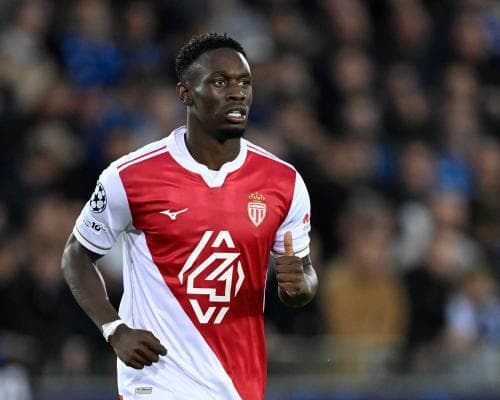
In the rarefied air of football's transfer deadline day, where fortunes shift in seconds and egos are as fragile as a striker's hamstring, the story of Folarin Balogun is not just a tale of a deal gone wrong. It's a masterclass in the unspoken codes of the game's upper echelon—a world where a medical room can become a battlefield and a player's trust is the most valuable currency of all. For the ultra-wealthy who collect clubs like rare art, this saga is a reminder that even the most meticulously crafted acquisitions can unravel when the human element is mishandled.
The numbers are staggering: £40 million, a deal sheet signed at 11pm, a medical that began at 4pm in Liverpool and ended in chaos by 7pm. Balogun, the 25-year-old US international, was poised to join Everton from Monaco, a move that would have made him the club's record signing. But as Monaco's CEO Thiago Scuro tells it, the deal didn't die because of a failed physical—it died because of a failure of manners. Everton raised questions about the striker's medical results, concerns that Scuro insists made no sense to Monaco's medical staff or Balogun's own personal doctors. Within half an hour, news of a 'failed medical' was splashed across the press, a leak that Scuro describes as a tactical move—one that alerted Chelsea, who swooped in to hijack Monaco's other asset, Lamine Camara, for £47m.
This is where the story pivots from mere transfer gossip to a study in power dynamics. Everton, having renegotiated the fee structure after discovering an issue, then tried to pivot to loan deals for Joshua Zirkzee or Tammy Abraham, only to come back to Balogun at the last minute. By then, the damage was done. Balogun, who had traveled from France, arrived late, and was left waiting for hours as Everton's medical department deliberated, checking with other doctors, while the rumor mill churned. Scuro paints a picture of a player who felt not just undervalued, but fundamentally disrespected. 'I'm not feeling well by the way the club treated me,' Balogun reportedly said. 'I'm not feeling well by the way the medical department of Everton brought doubts about my future or my health. I have nothing, so I'm not comfortable to sign a long contract here.'
For the connoisseur of high-stakes negotiation, this is a cautionary tale about the art of the deal. In the world of luxury transfers, the medical is not just a check of physical fitness—it's a ritual of trust. When a club treats a player like a suspect rather than a prized asset, the deal is already dead, even if the paperwork says otherwise. Everton's mistake wasn't in asking questions; it was in failing to understand that in this rarefied market, perception is reality. The leak to the press, whether intentional or not, turned a private concern into a public humiliation. Balogun, a young man with his future at stake, chose dignity over dollars.
But the real chess move came later. Once Everton signaled they were proceeding, Monaco pulled the plug on Chelsea's deal for Camara—a move Scuro defends with the calm of a man who knows he holds the cards. Monaco wanted to sell Balogun, not Camara, and they used Everton's interest as leverage to renege on Chelsea. The Premier League's 'one extra hour' mechanism, requested five minutes before the window closed, was the final flourish. Contracts were signed by both clubs, but not by the player. In the end, Balogun walked away, and Monaco kept both their stars, albeit with a story that will follow them for years.
What does this signal about wealth and taste in football? It reveals that the modern game is not just about money; it's about emotional intelligence. The ultra-wealthy who own clubs are increasingly realizing that a player's psychological state is as important as his sprint speed. A £40m asset can be lost in a single clumsy interaction. The market is shifting toward a more holistic approach, where clubs like Monaco, known for their polished handling of young talent, are proving that sometimes the best deal is the one you don't make. For the rest of us, this saga is a reminder that in any negotiation, the human touch is the ultimate luxury.
Looking forward, Balogun's next move will be watched with the intensity of a hawk. Will he stay at Monaco, or will another club—one that understands the delicate art of making a player feel like a king—come calling? The transfer window may be closed, but the echoes of this deadline day will shape the summer. For those who collect clubs, the lesson is clear: in the high-stakes game of football, the most valuable asset is not the player's legs, but his loyalty. And that, as Everton learned, cannot be bought at any price.
The Experience
To experience the thrill of deadline day from the owner's box, consider a private consultation with a football advisory firm that brokers elite transfers—where discretion is the ultimate luxury.