The Man Who Bent London's Skyline: Wilem Frischmann's Concrete Legacy
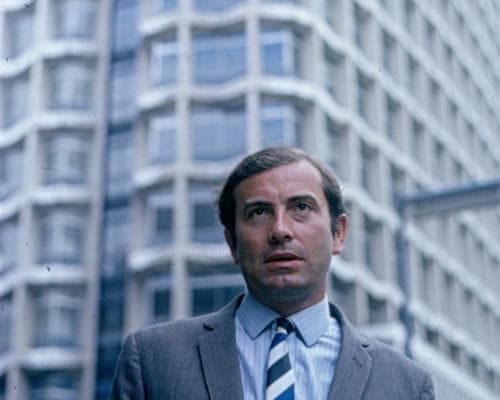
Every great city has a secret skeleton. For London, that skeleton was engineered by a man who once spent a night trapped in a hole he'd dug to prove a point. Wilem Frischmann, who died at 95, didn't just design buildings—he bullied the earth itself into submission. When experts swore London's soft clay could never hold a skyscraper, he drilled down and said, 'Watch me.' And the city's most iconic towers—Centre Point, the NatWest Tower, now Tower 42—rose because he refused to accept the word 'impossible.' For anyone who's ever looked up at London's jagged skyline and felt a thrill, that thrill has Frischmann's fingerprints on it.
Frischmann's genius wasn't just in the numbers—though the numbers were staggering. Tower 42, at 600 feet, was once the tallest building in Europe. Centre Point, that 34-storey monolith at the edge of Oxford Street, was completed in 1966 and remains a polarizing masterpiece—so bold that architectural historian Nikolaus Pevsner sniffed it was 'coarse in the extreme.' But Pevsner was wrong. He missed the point. Frischmann's innovation was the large-diameter piled foundation: a series of closely packed concrete columns that distributed the building's weight deep into the clay, making high-rise construction possible where it had been dismissed as fantasy. He wasn't just an engineer; he was a magician who turned mud into bedrock.
And then there was the craftsmanship. Centre Point wasn't just engineered—it was assembled like a colossal jigsaw. Precast concrete panels, slotted together, formed both the structure and the facade, eliminating scaffolding and rising a storey a week. The T-shaped panels created an op-art patterned exoskeleton that still looks futuristic today. Frischmann's obsession with detail was legendary. He personally inspected every foundation hole, and once got stuck in one overnight—a story that sums up his hands-on, almost obsessive commitment. That same structural ingenuity was later proven in the remodelling of Space House in Kingsway, completed in 2024. The building was extended by two storeys simply by adding new layers of precast elements—a testament to the original design's integrity. The firm he built, now Pell Frischmann Group, returned as the structural engineer, celebrating its centenary in that very building. It's a rare thing in the luxury world: a legacy that proves itself anew decades later.
For the ultra-wealthy, this is more than a history lesson. It's a lesson in what true value looks like. London's skyline isn't just a collection of glass boxes; it's a portfolio of audacious engineering feats. Centre Point, once derided, is now Grade II-listed—a protected icon. Tower 42, once the City's crown, has been reimagined as a destination for the elite, with private dining and panoramic views that money can't easily replicate. What Frischmann understood is that luxury isn't just about materials or finishes—it's about the bones. The invisible structures that make a building stand for decades, that allow it to be reimagined without losing its soul, are the real markers of lasting wealth. His work signals a shift in how we value architecture: not just as a backdrop, but as a living, breathing legacy that appreciates with time.
Looking forward, Frischmann's influence is only growing. The principles he pioneered—foundations that defy geology, prefabrication that speeds construction, structures that adapt to new uses—are the same principles behind today's most exclusive developments. From super-prime residential towers to boutique office conversions, the engineers and architects who shape the future are standing on his shoulders. And as London continues to densify, his lessons about building on challenging ground become more relevant than ever. The skyline he helped create is now a canvas for the next generation of wealth—but it's his invisible hand that still guides the pencil. For those who own a piece of that skyline, or aspire to, Frischmann's story is a reminder: the most valuable asset isn't the view. It's the ground beneath it.
The Experience
To walk in Frischmann's footsteps, book a private architectural tour of Tower 42's exclusive floors, or arrange a bespoke visit to Centre Point's restored interiors—where the city's past and future collide.