The Little Penguin's $5 Billion Problem: Why a Dead Bird on Phillip Island Is a Warning Shot for Wildlife-Asset Values
Australia's first confirmed H5 bird flu death in a little penguin on Phillip Island threatens the world's largest colony of the species and a cornerstone of Victoria's eco-tourism economy. The race to vaccinate 5,000 wild birds is now a test case for how governments and investors price biological risk into natural assets.
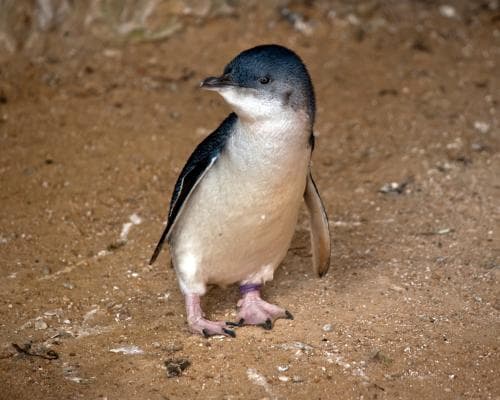
A single dead penguin has just become the most expensive bird in Australian history. On Saturday, Victoria's government confirmed that a little penguin on Phillip Island — the jewel of the state's $5 billion-plus nature-tourism economy — had died of the H5 strain of avian influenza. It's the first such death in the species on Australian soil, and it lands like a brick through a stained-glass window. The bird was found outside the famous Penguin Parade, but that detail is cold comfort. The virus has breached the perimeter, and now the clock is ticking on a biological asset that draws hundreds of thousands of deep-pocketed visitors each year.
The numbers here are stark. Phillip Island hosts roughly 40,000 little penguins — the largest colony of the species on Earth. That's not just a conservation statistic; it's a revenue line. The Penguin Parade alone funnels millions of tourist dollars annually into the local economy, and the broader eco-tourism sector around the island supports hotels, restaurants, and guiding outfits that depend on the spectacle of these birds waddling ashore at dusk. When a virus like H5 lands in a population that dense, the math turns ugly fast. Avian flu can wipe out 50 to 90 percent of an exposed colony within weeks. For a species with a global population already under pressure from warming seas and shifting fish stocks, losing even a fraction of the Phillip Island colony would be a market-moving event for the region's tourism balance sheet.
The government's response is unprecedented — and it should be. On Wednesday, Victoria announced plans for the world's largest H5 vaccination program for wild birds, targeting up to 5,000 little penguins across Phillip Island and Melbourne's St Kilda beach. The roll-out begins Monday. That's a logistical nightmare dressed up as a press release. Vaccinating wild birds requires capturing each one, injecting it, and tracking it — all while the colony remains stressed and the virus potentially spreads through shared burrows and feeding grounds. The fact that officials are even attempting this signals how high the stakes are. They're not just saving birds; they're protecting a natural asset class that generates reliable, recurring revenue for the state. Call it wildlife infrastructure. It's as valuable as a bridge or a port, except it can't be insured against pandemics.
Here's the darker angle for wealth builders: this is a stress test for how we value concentrated biological assets. Phillip Island is not a diversified portfolio. It's a single-stock bet on a charismatic species. The same logic applies to other high-value natural attractions — coral reefs, whale migrations, salmon runs. When a pathogen or climate shock hits, the drawdown is brutal and non-linear. The Victorian government's decision to vaccinate is effectively a rescue package for a critical economic asset, but it's also a reminder that nature doesn't offer bailouts. The cost of protecting these systems is rising, and the market hasn't fully priced in that risk.
Professor Euan Ritchie from Deakin University called the detection "devastating," and he's right — not just ecologically, but financially. Phillip Island is home to Australian fur seals, eastern barred bandicoots, and reintroduced bush stone curlews. Each of those species is a thread in a web that tourists pay to see. If the penguins crash, the whole ecosystem narrative weakens, and so does the premium visitors are willing to pay. The ripple effect would hit everything from local real estate to hospitality wages. This isn't a niche conservation story; it's a balance-sheet story wearing a feather coat.
So what happens next? The vaccination program is a bold move, but it's a holding action, not a cure. H5 flu mutates fast, and wild birds don't line up for booster shots. The government hasn't even disclosed exactly where the dead penguin was found — a sign that containment, not transparency, is the priority. For investors and policymakers, the takeaway is blunt: natural assets are underpriced for pandemic risk, and the cost of defending them is about to become a permanent line item. The little penguin may be small, but the signal it just sent is enormous. If you own anything that depends on a healthy ecosystem — a tourism business, a coastal property, a conservation bond — you'd be wise to ask your risk manager how you're hedged against a virus with wings.