The Last Drop: When Shakespeare Meets the Fight for Clean Water
Dante Passarelli and Fernanda Zancopé turn a dark domestic comedy into a clarion call for water justice, using the Edinburgh Fringe to spotlight corruption and environmental decay. Their Manás Theatre Lab transforms a São Paulo apartment block into a microcosm of global inequality.
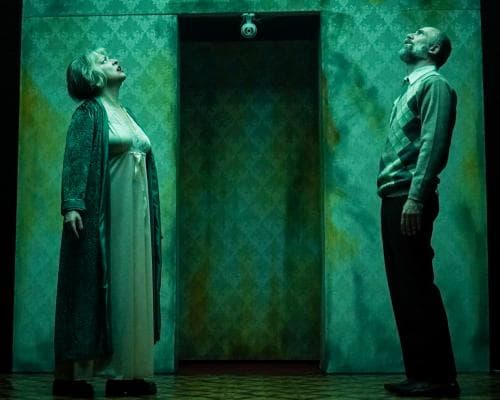
The opening scene looks like a murder. A woman stands over a man sprawled on the floor, her face a mask of cold fury. But the man rises, and the two begin to bicker — and that's when you realize the real crime isn't a body on a rug. It's the mold creeping down the ceiling, the drip-drip of a neighbor's waste, the smell of something rotten seeping through the walls. Welcome to *The Last Drop*, a 60-minute play that borrows the opening and closing lines of *Hamlet* but trades Elsinore for a crumbling São Paulo apartment block. And while it's billed as a dark domestic comedy, it's really a story about water — who has it, who wastes it, and who profits from its absence.
Dante Passarelli and Fernanda Zancopé are the co-directors and co-founders of Manás Theatre Lab, a São Paulo-based collective that has spent years creating work at the intersection of art and social critique. Their previous pieces have tackled housing rights and police violence, but *The Last Drop* feels like their most urgent work yet. It's part of the Edinburgh Fringe's São Paulo Showcase, a curated selection of Brazilian theatre that brings the country's most provocative voices to a global stage. Passarelli and Zancopé aren't philanthropists in the traditional sense — they don't write checks or fund scholarships. But they're giving something arguably more valuable: their platform, their craft, and their relentless attention to the systems that keep people thirsty.
The play's plot is deceptively simple. Cynthia (Zancopé) and Gilberto (Ernani Sanchez) have lived in the same apartment for years, watching new high-rises sprout around them like weeds. They blame their upstairs neighbor for the water stains on their ceiling, but the real enemy is larger: a city where construction is tangled in corruption, where every new tower means someone else's groundwater is siphoned away, where the poor are left to sniff the air and wonder what's poisoning them. The play drips with paranoia — literally. The sound design is a constant, queasy accompaniment of drips and hisses, and the lighting casts the apartment in a sickly glow. It's claustrophobic, and that's the point. Passarelli and Zancopé want you to feel what it's like to live in a place where the water itself has memory — and that memory is not cleansing, but sinister.
But *The Last Drop* isn't just a piece of theatre; it's a call to action. In São Paulo, the water crisis is not hypothetical. The city nearly ran dry in 2015, and its reservoirs have never fully recovered. Meanwhile, private companies pump aquifers for profit, and the poor are left to ration what's left. The play's stark commentary on class and inequality has drawn comparisons to Bong Joon-ho's *Parasite*, and it's not hard to see why. Like that film, *The Last Drop* shows how the wealthy and the desperate are locked in a parasitic relationship, each side feeding off the other's fear. But where *Parasite* ends in violence, *The Last Drop* ends in something more unsettling: a quiet acknowledgment that the water will outlast us all, and that we're the ones who are rotten.
The production's impact extends beyond the stage. Manás Theatre Lab has partnered with local water justice organizations in São Paulo to host post-show discussions, and they've made the play's script available under a creative commons license so that community groups can stage their own versions. They've also committed a portion of their Edinburgh ticket sales to the Brazilian NGO Água e Cidade, which works on water access in informal settlements. It's a modest amount — a few thousand pounds — but it's a model for how artists can embed philanthropy into their practice without sacrificing artistic integrity. The play itself becomes a fundraiser, a teachable moment, and a piece of agitprop all at once.
What makes *The Last Drop* resonate beyond the festival circuit is its refusal to offer easy answers. Passarelli and Zancopé don't tell you to turn off the tap or write to your MP. They simply hold up a mirror and say: this is what you've made. The mold on the ceiling is our collective neglect. The drip is the sound of a system leaking. And the fact that we can laugh at it — that's the real tragedy. As one audience member put it after the show, 'I came for the comedy, but I left feeling like I'd been punched in the gut.' That's the kind of art that changes minds, and maybe, just maybe, changes policies.
In a festival teeming with Hamlet adaptations — from Big Brother to Sweden — *The Last Drop* stands out because it uses Shakespeare's ghost to haunt a very modern crisis. It's a reminder that the most impactful giving isn't always financial. Sometimes it's the gift of attention, the willingness to look at the rot and say, 'This matters.' Passarelli and Zancopé are everyday heroes in the truest sense: artists who understand that the stage is a pulpit, and that the story of water is the story of us all. The last drop isn't just a title; it's a warning. And thanks to their work, more people are listening.