The ICC Under Siege: How Trump's Sanctions Are Redrawing the Boundaries of Global Justice
The US sanctions on ICC president Tomoko Akane and prosecutor Abdoulaye Seye mark an unprecedented escalation in the Trump administration's war on international law, threatening to dismantle the court's ability to hold powerful nations accountable. This move signals a dangerous shift in global power dynamics, where legal institutions become pawns in geopolitical struggles.
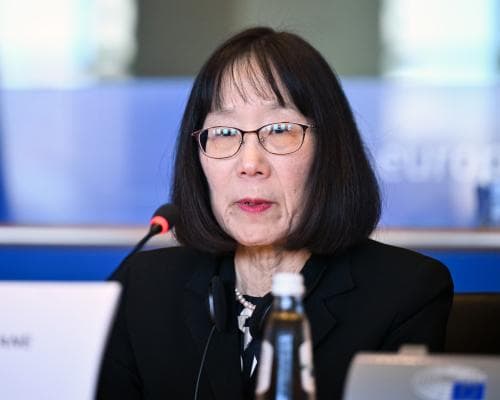
The Hague's marble corridors have seen many battles, but none quite like this. On Thursday, the United States didn't just fire a warning shot across the International Criminal Court's bow—it aimed directly at the helm. Secretary of State Marco Rubio announced sanctions against the ICC's president, Tomoko Akane of Japan, and senior trial lawyer Abdoulaye Seye of Senegal, accusing them of 'maliciously abusing' the court's authority. This isn't diplomatic pressure; it's a declaration of war on the very concept of universal jurisdiction.
The timing is no accident. These sanctions land as the ICC investigates Israeli officials, including Prime Minister Benjamin Netanyahu, for alleged war crimes in Gaza. The Trump administration's message is unmistakable: any court that dares to hold US allies accountable will face the full force of American financial and political power. Rubio's language—calling the ICC 'corrupt and fatally politicized'—echoes the administration's broader assault on international institutions it views as constraints on American sovereignty.
But this is more than a legal spat. It's a test of whether international law can survive in an era of great-power competition. The ICC, established in 2002 to prosecute genocide, war crimes, and crimes against humanity, has always relied on the cooperation of major powers. Now, with the US actively working to 'disable the ICC's ability to operate,' the court's survival is uncertain. Rubio has even called on the ICC's 125 member states to withdraw, a move that would hollow out the institution from within.
The sanctions target individuals, not just the institution. Akane, a Japanese judge with decades of experience in international law, and Seye, a Senegalese lawyer overseeing the Israel investigation, are now effectively cut off from the US financial system. Their bank accounts, travel, and even their ability to collaborate with American NGOs are frozen. This personalization of punishment sends a chilling signal to any prosecutor or judge who might consider investigating US allies—or the US itself.
What makes this move particularly audacious is its timing. The US had already sanctioned ICC prosecutor Karim Khan in 2025 for seeking arrest warrants against Netanyahu and former defense minister Yoav Gallant. Now, with Akane and Seye added to the list, the Trump administration is targeting the court's leadership structure itself. The message is clear: the US will not tolerate any legal mechanism that challenges its allies' impunity, especially in the volatile Middle East.
This escalation reflects a deeper trend: the weaponization of financial sanctions as a tool of geopolitical coercion. The US has long used its economic leverage to punish adversaries, but targeting international judicial officials is a new frontier. It's a strategy that could backfire. Other nations, particularly in the Global South, may see this as a blatant attempt to undermine a court that has increasingly focused on African and Middle Eastern conflicts. The ICC's legitimacy, already questioned by some, could be further eroded—but so could the US's moral authority as a champion of rule of law.
For the tech and innovation world, this is a reminder that the infrastructure of global governance is fragile. Just as supply chains and data flows are vulnerable to geopolitical shocks, so too is the legal architecture that underpins international order. The sanctions on ICC officials are a signal to multinational corporations and investors: the rules-based system that has facilitated global commerce for decades is under threat. When courts can be disabled by executive order, contracts, investments, and even human rights protections become less predictable.
Looking ahead, the ICC faces a stark choice: capitulate to US pressure and lose its credibility, or resist and risk financial strangulation. The court's recent efforts to modernize—embracing digital evidence, AI-assisted case management, and remote hearings—could be jeopardized if it can't retain top talent or collaborate with US-based tech providers. The sanctions may inadvertently accelerate the court's shift toward non-US technology partners, creating a parallel legal tech ecosystem.
But the broader implications extend beyond the ICC. This is a preview of a world where international institutions are only as powerful as the major powers allow them to be. The US's unilateral actions are eroding the post-World War II consensus that no nation is above the law. As the ICC fights for survival, it will need to find new allies, new funding sources, and new technological tools to remain effective. The next few years will determine whether international justice is a universal ideal or just a convenient tool for the powerful.
For now, Akane and Seye are the faces of this struggle. Their names may not be household words, but their fate will shape the future of accountability. In an era of rising authoritarianism and great-power rivalry, the sanctions on the ICC are not just a legal maneuver—they're a bellwether of the world to come. The question is whether the court can adapt, innovate, and stand firm, or whether it will become another casualty of the new world order.