The Himalayan Flood Crisis: A Deadly Preview of the Infrastructure Failures Billionaires Can't Fix
As the Nepal-Tibet disaster death toll exceeds 800, the region faces a new wave of glacial lake outburst floods, exposing the urgent need for climate-resilient infrastructure and early-warning systems. This catastrophe signals a grim future for high-altitude communities and global supply chains, demanding a technological leap in disaster preparedness.
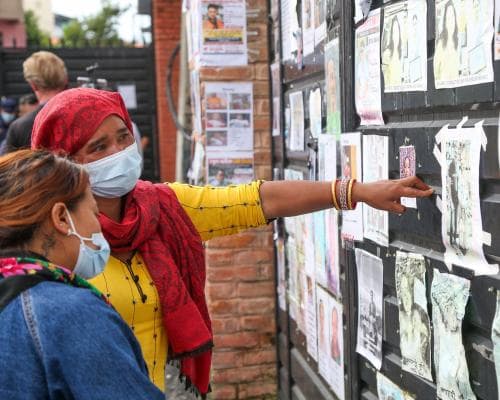
The numbers are staggering, but the real story lies in what they portend. In the Devghat forest of Nepal's Chitwan district, hundreds of freshly dug graves now hold the unidentified victims of a catastrophe that has already claimed 804 lives, with 3,048 more unaccounted for. These are not just statistics; they are the first shockwaves of a new climate reality. The flash floods that tore through the Himalayan foothills last Wednesday, triggered by severe glacial collapses and debris flows, have turned a once-fertile landscape into a mass burial ground. Morgues overflow, bodies decompose beyond recognition, and the living are left to wonder: who is next?
This disaster is not a random act of nature—it is a predictable consequence of a warming planet, and it is accelerating. The epicenter of the tragedy is the Nepal-Tibet border, a region where glaciers are melting at an alarming rate, creating unstable glacial lakes that can burst without warning. The Trishuli Bazaar area in Nepal's Nuwakot district is now on high alert for fresh water surges and flash floods, a direct result of upstream glacial collapses. This is not a one-off event; it is a harbinger of what scientists have been warning about for decades. The technology to predict these events exists, but it is not being deployed at the speed or scale required. Satellite-based monitoring, AI-driven early-warning systems, and real-time debris flow sensors could have given communities precious hours to evacuate. Instead, we are seeing the grim aftermath of reactive, rather than proactive, disaster management.
The human toll is staggering, but the geopolitical and economic implications are equally profound. The disaster has left 261 foreign nationals from 23 countries missing on the Tibetan side, including 49 Indians, 33 Latvians, 18 Americans, and 15 Britons. The US State Department confirms 85 Americans are missing, with nine evacuated. Australia has pledged $3 million in humanitarian aid, but money cannot bring back the 42 Australians who remain unaccounted for. This is not just a regional crisis; it is a global one, affecting the lives of citizens from across the world who travel to the Himalayas for business, adventure, or pilgrimage. The region is also a critical artery for trade between China and South Asia, and any disruption to its infrastructure—roads, bridges, and hydroelectric dams—has cascading effects on supply chains and energy security.
The role of elite capital and billionaire-driven innovation in this crisis is paradoxical. On one hand, billionaires like Richard Branson and Jeff Bezos have championed climate-tech investments, from carbon capture to advanced satellite imaging. Yet, these technologies remain largely inaccessible to the most vulnerable populations in the Himalayas. The gap between Silicon Valley's futuristic solutions and the on-the-ground reality in Nepal is a chasm that this disaster has thrown into sharp relief. The private sector has the resources and technical expertise to build resilient infrastructure, but it lacks the incentive to do so in remote, low-income regions. This is a market failure that governments and international bodies must address, or we will see a repeat of this tragedy on an even larger scale. The world's richest individuals and corporations must recognize that their own supply chains, investments, and reputations are at stake in these fragile zones.
This disaster also exposes the inadequacy of current disaster response mechanisms. The sheer volume of unidentified bodies has overwhelmed Nepal's forensic capabilities, with mass burials becoming a grim necessity. Advances in DNA sequencing and portable forensic technology could have helped identify victims more quickly, but these tools are not being deployed in emergency settings. The same applies to early-warning systems: the technology exists, but it is not being integrated into a coherent, region-wide strategy. The Himalayan region, spanning Nepal, Tibet, India, and Bhutan, needs a unified disaster preparedness framework that leverages cutting-edge technology—from drone-based rescue operations to AI-powered flood modeling—to protect its millions of inhabitants.
Looking forward, this event should be a wake-up call for the global elite and tech innovators. The Himalayan cryosphere is a canary in the coal mine for climate change, and its collapse will have far-reaching consequences for water security, biodiversity, and geopolitical stability. The next decade will see more frequent and severe glacial lake outburst floods, and the only way to mitigate their impact is through massive investment in resilient infrastructure and predictive analytics. This is not a problem that can be solved with charity alone; it requires a fundamental shift in how we value and invest in climate adaptation, particularly in high-altitude regions. The billionaires who are pouring money into space tourism and AI must also turn their attention to the ground beneath their feet—and the melting ice above it.
As the waters recede and the graves fill, the world must ask itself a hard question: are we prepared for the next disaster? The answer, for now, is a resounding no. But we have the tools to change that. The question is whether we have the will. The Himalayas are not just a distant mountain range; they are a sentinel of our future. And that future is flooding, one community at a time.