The Four H's of Empire: Inside the Trial That Could Redraw Big Tech's Blueprint
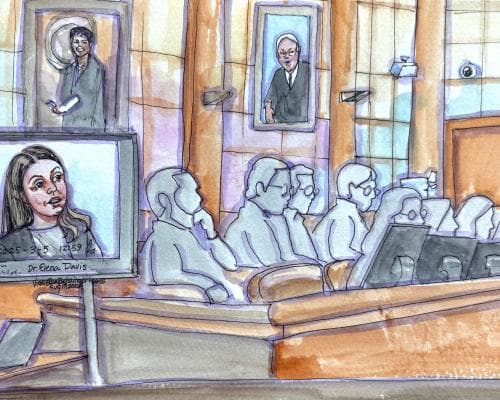
There is a phrase whispered in the corridors of power, a mantra that has quietly built a trillion-dollar empire: hook, hold, harvest, hide. It sounds like a magician's trick, and in many ways it is. On a crisp Tuesday morning in Oakland, just a stone's throw from the glass cathedrals of Silicon Valley, a lawyer for the state of California stood before eight jurors and uttered those four words, pulling back the curtain on the most consequential trial of our digital age. This is not a story about code or algorithms. This is a story about the architecture of desire, and the price we all pay for it.
At the heart of the courtroom drama is Meta, the parent company of Facebook and Instagram, a behemoth valued at $1.36 trillion. The accusation, laid out with surgical precision by attorney Megan O'Neill, is that Meta's entire business model is engineered to ensnare the most vulnerable among us—our children. The states of California, Colorado, Kentucky, and New Jersey, joined by 25 others, have filed a lawsuit alleging that Meta violated federal child privacy laws and state consumer protection statutes by harvesting data from users under 13 without parental consent. The stakes are existential: if the company is found liable, damages could reach $200 billion—a sum equal to its entire 2025 annual revenue. And beyond the money, the states are demanding structural changes to the platforms themselves, a potential rewrite of the very DNA of social media.
This is not a case about a broken feature or a misstep in moderation. This is an indictment of a business model that treats human attention as a raw material, to be mined, refined, and sold. The prosecution's narrative is stark: hook users with endless novelty, hold them with the fear of missing out, harvest their every click, swipe, and pause, and hide the true cost of this extraction. The defense, led by attorney Paul Schmidt, counters that Meta has built robust safety tools, disabled over a million accounts of underage users, and that the states are chasing an 'outlandish payout.' But the jury will also hear from former employees and a psychologist, and eventually, from Meta CEO Mark Zuckerberg and Instagram chief Adam Mosseri themselves. The trial, expected to last six to eight weeks, will unfold like a slow-motion autopsy of the digital attention economy.
For the ultra-wealthy, this trial is not a spectator sport. It is a referendum on the very nature of value creation in the 21st century. For decades, the most coveted assets were oil fields, factories, and real estate. Now, the world's most valuable companies trade in a more ephemeral commodity: human consciousness. Meta's empire is built on the ability to command millions of minds, to shape what we see, think, and want. The craftsmanship here is not in metal or stone, but in psychological triggers, in the subtle art of making a notification feel like a lifeline. The rarity is not in scarcity, but in the sheer scale of its reach—over 3 billion people use its platforms monthly. This is a new kind of luxury, one that is not purchased but experienced, and its price is paid in attention, privacy, and, increasingly, in the well-being of the next generation.
What does this trial signal about the shifting tides of wealth and taste? It signals a reckoning. The era of unchecked growth, of 'move fast and break things,' is colliding with a new paradigm of accountability. For the investor, this is a cautionary tale about the fragility of tech valuations. For the philanthropist, it's a call to re-examine where true influence lies. And for the parent who happens to be a billionaire, it's a reminder that no amount of private jets or yacht charters can shield your children from the algorithmic pull of a perfectly timed notification. The luxury market, too, is evolving: exclusivity is no longer just about a handbag or a watch, but about access to spaces and experiences that are free from the noise—digital detox retreats, private clubs, and bespoke media diets are becoming the new status symbols.
As the trial grinds on, one thing is clear: the outcome will reverberate far beyond the courtroom. If the states prevail, Meta could be forced to redesign its platforms for safety, fundamentally altering the way billions of people connect. That would be a seismic shift, not just for the company, but for the entire digital ecosystem. If Meta wins, the message is equally powerful: the attention economy is immune to regulation, and the game continues. For now, the world's wealthiest are watching with a mix of fascination and unease, knowing that the verdict will shape the future of influence, power, and the very currency of our time. The four H's may be on trial, but the verdict will be about us all.
The Experience
For a front-row seat to the future of digital power, consider a private briefing with legal and tech analysts in the Bay Area, followed by a curated tour of Silicon Valley's innovation hubs—arranged through your family office or a bespoke advisory firm.