The End of the Independent Justice Department: Todd Blanche's Quiet Revolution
US Attorney General Todd Blanche's refusal to pledge independence from the White House signals a seismic shift in American governance—the formal subordination of the Justice Department to presidential will. This move, unprecedented since Watergate, redefines the boundaries of executive power and the rule of law.
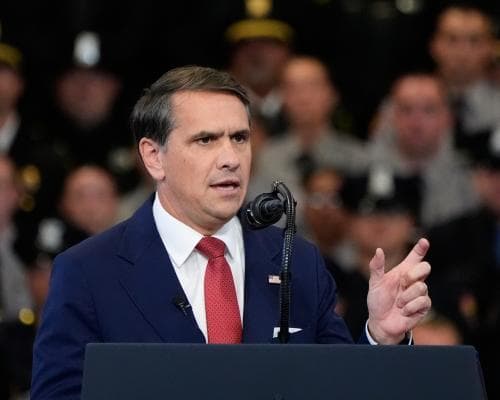
In a single Sunday morning interview, Todd Blanche did what no attorney general has dared since the smoking-gun tapes of 1974: he looked into the camera and calmly dismantled the last firewall between the White House and the federal justice system. When asked if he would promise independence from President Trump, Blanche didn't blink. "No, I'm not going to pledge that." The words landed like a hammer on glass—quietly, then everywhere.
This isn't a scandal. It's a declaration. Blanche, who spent years as Trump's personal defense attorney before being narrowly confirmed 50-49 to replace Pam Bondi, is not hiding a rogue operation. He's articulating a new doctrine: the Justice Department is an extension of the president's will, not a neutral arbiter. His confirmation itself was the tell—a razor-thin margin that signaled how polarizing this shift has become. But the real story is what comes next: a legal architecture where the AG's loyalty oath runs to the Oval Office, not the Constitution.
The mechanics are already in motion. Blanche's predecessor, Pam Bondi, was pushed out because she wasn't aggressive enough in pursuing Trump's political enemies. The message was clear: the department exists to serve the president's agenda, not to police it. Blanche's refusal to even entertain the question of independence is the logical endpoint of a decade-long erosion of norms. He frames it as pragmatism—"no attorney general should ever pledge that"—but legal scholars like Barb McQuade see it for what it is: "an appalling departure" from the post-Watergate consensus. The department, she wrote, "as we once knew it, is no more. Blanche has turned it into Trump's private law firm."
What makes this moment genuinely novel is the tech-adjacent framing. Blanche isn't just a lawyer; he's a product of the modern political machine—a former federal prosecutor who flipped to defense, then to political operative. He understands that power in 2025 flows through information, and the Justice Department is the ultimate information broker. Its prosecutorial decisions, its investigative priorities, its very silence—these are now tools of statecraft, not justice. The machinery of law enforcement is being repurposed as a political instrument, with the same efficiency that tech billionaires apply to scaling algorithms.
For the sector watching this—and make no mistake, the AI and data communities are watching—the implications are profound. The Justice Department's antitrust division, its AI task forces, its cybersecurity units all now operate under a doctrine of presidential preference. When the AG says he won't pledge independence, he's telling every tech CEO, every startup founder, every data scientist: the rules of the game are set by the man in the White House, not by precedent or statute. The chilling effect on innovation is immediate—who builds for a market where the referee is also the coach?
The market reaction has been muted so far, but that's the nature of slow-moving institutional shifts. The dollar hasn't crashed; the courts haven't shut down. But the signal is unmistakable: the United States is entering an era where the rule of law is negotiable, and the negotiation happens in private. Blanche's comments are a shot across the bow of every check and balance the founders designed. The question is no longer whether the Justice Department will act independently—it's whether any institution can.
Look forward, not back. The next attorney general won't be asked to pledge independence; they'll be asked to prove loyalty. The Senate's 50-49 vote is a preview of every future confirmation—a coin flip on whether the American legal system remains a shield for the vulnerable or becomes a sword for the powerful. For the deep-tech world, this means navigating a regulatory landscape where the rules change with the weather. The only hedge is to build systems that are transparent, auditable, and portable—because the ground is shifting beneath everyone's feet.
Blanche says Trump "never has" and "never will" ask him to do something illegal. That's not a reassurance; it's a threat. It means the line between legal and illegal is whatever the president says it is, and the attorney general is there to document it. The Watergate reforms were built on the premise that the Justice Department must be independent—Blanche has just declared that premise null and void. The next decade will test whether the Constitution can survive its own enforcers. The answer, it seems, is not in the courts, but in the next election—and the one after that.