The Crown Shifts at Flushing Meadows: Rybakina's Cool Conquest for World No. 1
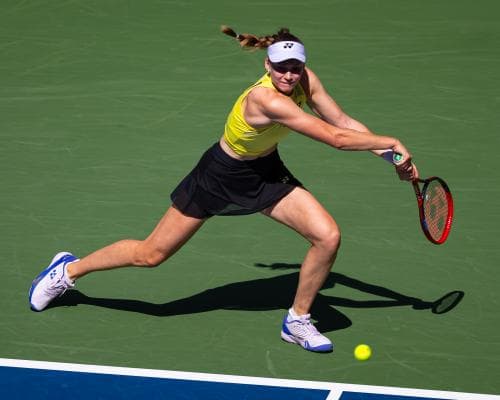
There are moments in sport that feel less like a match and more like a coronation. The 2026 US Open quarter-final between Elena Rybakina and Zheng Qinwen was exactly that—a two-hour, twenty-minute masterclass in the currency of composure. The setting: Arthur Ashe Stadium, where the air is thick with the scent of private box champagne and the quiet hum of billion-dollar watches. The stakes: a semifinal berth, but more tantalizingly, the world No. 1 ranking—a title that has eluded Rybakina for years, a jewel in a crown she has long deserved.
Rybakina, the Kazakh powerhouse with a serve that sounds like a rifle crack, came out firing. She blasted through the first two points of the final game as if she were swatting away a fly. But then, a twitch. A misfire into the net at 30-0. For a split second, the crowd—those who had paid five figures for a courtside seat—held its collective breath. This is the moment where lesser athletes crumble. Not Rybakina. She summoned a massive serve out wide, unreturnable, and then watched as Zheng's final forehand found the net. Match over. Rybakina dropped her racquet, not in triumph, but in disbelief. She had done it. The world No. 1 ranking was hers.
The final score—6-3, 1-6, 4-6—tells a tale of two players wrestling with their own demons. Zheng, the Olympic champion and a player whose true ranking (No. 121, thanks to an injury-plagued season) is a cruel joke, fought with the ferocity of a lioness. She saved three break points in the third set, unleashing a forehand winner down the line that had the crowd on its feet. But Rybakina, the No. 2 seed, is a different breed. She is the tennis equivalent of a Swiss watch: precise, cold, and utterly unflappable. Her service games in the final set averaged two minutes. Two minutes. That is not just efficiency; that is a statement of intent.
For the ultra-wealthy, this match was a study in the art of the deal. Rybakina's path to the top was not a straight line; it was a labyrinth of setbacks and quiet resilience. She had to win this match to seize the No. 1 spot. But if she had lost, she would have been in the bizarre position of rooting for Zheng to win the entire tournament—so that Sabalenka, Pegula, or Gauff couldn't leapfrog her. That is the kind of Machiavellian calculus that would make a hedge fund manager blush. It is also a reminder that in tennis, as in high finance, the rankings are a living, breathing organism, shifting with every point.
What does this victory signal about wealth and taste? It signals that true dominance is not about flash; it is about control. Rybakina's game is not built on highlight-reel winners; it is built on an economy of motion that borders on the ascetic. She does not waste energy on emotion. She does not indulge in theatrics. She simply executes. That is the same philosophy that drives the world's most successful investors, the ones who buy art not for the Instagram post but for the quiet pleasure of owning a piece of history. Rybakina is a masterwork in that vein—a rare asset that appreciates with every match.
Looking ahead, the women's draw is now a landscape of top-five talent, with six players left who are ranked Nos. 1 through 5 and No. 121. But Zheng's presence is a reminder that rankings are often a lagging indicator of true worth. She is a player who belongs in the top ten, and her performance here—saving match points, hitting that looping two-handed backhand winner—has only solidified her status as a future champion. As for Rybakina, she now carries the weight of No. 1 into the semifinals. The question is not whether she can handle the pressure; it is whether anyone else can handle her.
The Experience
To witness such battles courtside, secure a hospitality package for the 2027 US Open via the USTA's premium partners, or charter a helicopter to the grounds for the ultimate arrival.