The Camera as Witness: A 25-Year Afghan Chronicle Rewrites the Rules of Documentary
A Bafta-winning documentary that followed one Afghan family for 25 years returns with new footage, capturing the human cost of geopolitical shifts and the rise of a local filmmaker. It signals a new era in long-form storytelling, where subjects become collaborators and archives become living records.
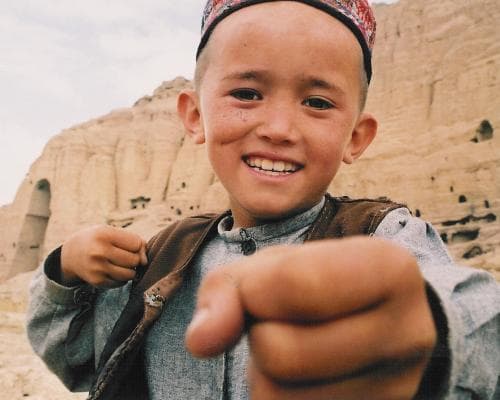
In 2002, eight-year-old Mir Hussein saw a camera for the first time. That moment, captured by documentary-makers Phil Grabsky and Shoaib Sharifi, became the seed of an extraordinary 25-year project—a single Afghan family's life, filmed through invasion, occupation, and withdrawal. Now, with the Taliban back in power, the updated version of *My Childhood, My Country* lands with a chilling urgency: it is not just a film, but a living archive of a nation's unraveling.
The original Bafta-winning cut, *20 Years in Afghanistan*, ended in 2021 as US troops left. This new version adds five more years of footage, showing what happened after the world's attention moved on. We see Mir Hussein, now a cameraman in Kabul, filming everyday moments—a football match, a family meal—against the backdrop of a regime that once banned cameras outright. The film's power lies in its patience: it refuses to sensationalize, instead letting the mundane become political. A child's wonder at a lens becomes a man's defiance.
Grabsky and Sharifi are not just documentarians; they are architects of a new narrative form. By handing the camera to their subject, they blur the line between observer and participant. This is no fly-on-the-wall journalism. It's a collaborative act of memory, where the subject's own gaze shapes the story. The result is a visceral counterpoint to the drone-strike abstractions of modern conflict—a reminder that geopolitics has a face, and that face is often a child who grows up too fast.
The technology here is deceptively simple: a camera, a microphone, and time. But its impact is profound. In an era of viral clips and 24-hour news cycles, the 25-year timeline is a radical act. It challenges the industry's addiction to instant gratification, proving that the deepest stories require the longest commitments. The film's updated format also reflects a shift in how archives are used—not as static relics, but as evolving documents that must be revisited as history unfolds.
For the elite capital and tech moguls who fund such projects, this is a lesson in patience. The returns are not financial but existential: a record that will outlive its creators. The film's distribution on ITV, a mainstream broadcaster, underscores the growing appetite for serious, long-form journalism. It's a bet on depth over speed, on empathy over spectacle—a bet that may define the future of documentary.
The broader signal is clear: in a world of deepfakes and algorithmic noise, authenticity is the new luxury. Mir Hussein's story—told by himself, with a camera he once feared—is a testament to the power of human agency. As the Taliban tightens its grip, the film becomes a time capsule of a freer moment, a reminder that tomorrow is never guaranteed. That is the true innovation: not a gadget, but a gaze that refuses to look away.
As the credits roll, we are left with a question: what will the next 25 years bring? The film offers no answers, only a mirror. For Mir Hussein, the camera is no longer a foreign object—it is his voice. For us, it is a window into a future we must not forget. In the end, *25 Years in Afghanistan* is not just a documentary. It is a promise, kept against all odds, that some stories are worth a lifetime of waiting.