The Bronx Otter Comeback Has a Dark Ledger: New York Still Pays in Fur for Recreation
River otters have returned to the Bronx River after a century, but New York state still sanctions the trapping and killing of roughly 900 otters annually for sport. For wealth builders and conservation-minded investors, this paradox highlights a failing market signal: recreation is pricing a recovering ecosystem's sentinel species back toward risk.
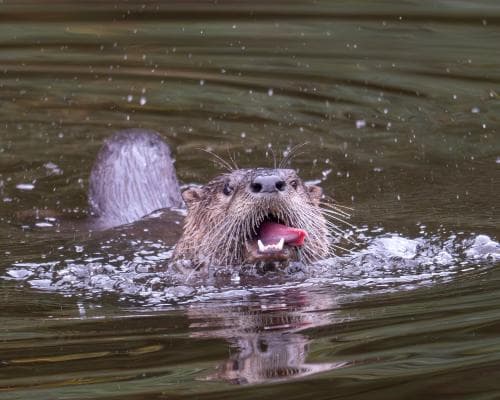
There is a particular thrill in watching a river otter slice through urban water—a sleek, wet comma of muscle and mischief that was supposed to be gone for good. The Guardian's report that otters have returned to the Bronx River after a century's absence is the kind of headline that makes even hardened finance types feel a pang of hope. But here's the uncomfortable footnote that belongs in every wealth portfolio review: New York state still legally allows hundreds of these same animals to be trapped and killed every year, not for food, not for fur's sake, but for the recreation of a small minority. That is not a wildlife footnote. That is a market inefficiency wearing a fur coat.
Let's put a number on it. According to state wildlife data, the average annual kill is around 900 otters, with some years topping 1,100. The tools of the trade are body-gripping traps and leg-hold traps—devices engineered to crush, hold, drown, or otherwise kill by force. This is not pest control. There is no overpopulation crisis in New York's waterways. In fact, the otter is an indicator species, meaning its presence signals a healthy aquatic ecosystem. When otters thrive, the water is clean enough to support a complex food web. When they vanish, it's a warning shot for every downstream asset, from waterfront real estate to fisheries to municipal water treatment costs.
Now consider the economics. The fur trade has been in serious decline for decades—global demand for wild otter pelts is a shadow of what it was in the 19th century, when unregulated trapping nearly wiped the species out of New York entirely. The average pelt might fetch a few hundred dollars, if it sells at all. But the cost to the state's ecosystem, and to the long-term value of its natural capital, is far higher. You don't need a PhD in environmental economics to see the mismatch: a renewable, high-value ecological asset is being liquidated at a discount for the entertainment of a few hundred licensed trappers. That is the kind of trade that would make any fund manager cringe.
For the wealthy and the wise, this is not a sentimental plea—it's a risk assessment. The return of otters to the Bronx River is a signal that decades of restoration investment are paying off. Clean water, restored wetlands, and thriving wildlife are not just nice-to-haves; they are appreciating assets. They underpin property values in adjacent neighborhoods, support tourism and recreation spending, and reduce the cost of water filtration—a service that New York City spends billions on annually. Every otter killed in a trap is a small but real erosion of that natural capital. And when a species that took a century to return is still being harvested at a rate that would make a commodities trader blush, the signal is clear: the market is failing to price in the full value of ecosystem recovery.
The comparison to capital markets is almost too easy. Think of an otter as a canary in the coal mine, but with better PR. Its presence says the system is healing. Its continued legal killing says the regulatory framework hasn't caught up with the science or the economics. In any other asset class, you'd call that a lagging indicator. In conservation, it's a policy lag that could undo decades of progress. The same unregulated trapping that nearly eliminated otters from New York in the first place is still on the books. The only thing that changed is the scale—and the public's awareness, which is now growing thanks to reports like this one.
So what does this mean for the forward-looking investor, the family office, the philanthropist with an eye on legacy? It means opportunity. There is a clear arbitrage between the current regulatory regime and the long-term value of a healthy ecosystem. States like Colorado and California have already moved to ban or severely restrict trapping of certain species, and the tourism and recreation dollars have followed. New York could be next—and when that happens, the value of every restored waterway, every otter sighting, will only rise. The smart money is already paying attention to biodiversity as an asset class. The question is whether New York's wildlife managers will see the ledger before the traps do.
We should celebrate the Bronx otter's return—it's a genuine victory for patience and investment. But celebration without accountability is just performance. The state's own data shows that hundreds of otters are still being killed each year, and the only rationale left is recreational. That is a luxury the ecosystem cannot afford, and a risk that wealth builders should not ignore. The next time you see a headline about a species recovery, ask what it costs to maintain that recovery. In New York, the answer is still measured in otter pelts. That is a price the market should not be willing to pay.