The Bookshop Survival Playbook: Why Independent Sellers Are the Next High-Street Tech
Independent booksellers, backed by authors like Philip Pullman and Maggie O'Farrell, are pushing for business rates relief, framing bookshops as community infrastructure. The campaign signals a shift in how we value retail spaces, with implications for urban planning and the future of high streets.
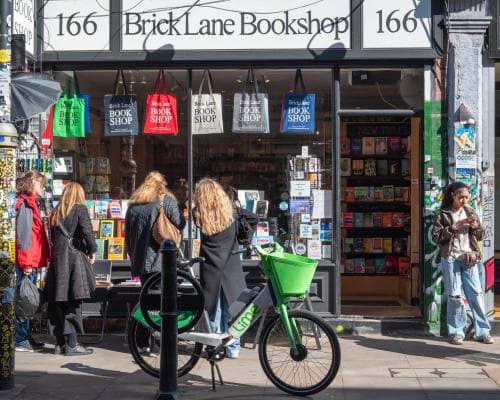
On a grey Tuesday morning in a Manchester suburb, a bookseller is doing the math. Rent, wages, and a business rates bill that just won't quit. The shop is thriving—book clubs, author events, a children's corner that's always full—but the numbers don't lie. This is the quiet crisis facing 234 independent bookshops across the UK, and now they've enlisted some of the country's most famous storytellers to write a new narrative.
Maggie O'Farrell, Philip Pullman, Katherine Rundell, and Elif Shafak have put their names to an open letter organized by the Booksellers Association, demanding that Andy Burnham and the government extend the same business rates relief given to pubs, clubs, and live music venues to bookshops. The ask is simple: treat bookshops as the community anchors they are, not as just another retail unit. The letter, sent on 13 August, is a masterclass in soft power—cultural heavyweights leveraging their reach to shift policy. But beneath the literary glamour lies a hard economic argument about the future of our cities.
The government's recent announcement of a 20% business rates cut for pubs, clubs, and live music venues from April 2027 was a watershed. It signaled a new principle: businesses that deliver measurable community benefit deserve targeted fiscal support. Bookshops, the letter argues, clearly meet that test. They are literacy hubs, safe spaces for teenagers, and de facto community centers in an era of shrinking public services. The campaign frames bookshops not as struggling retailers but as essential infrastructure—just as vital as a pub or a music venue, and arguably more so in a time of digital isolation.
This is where the innovation angle sharpens. The high street is being reimagined as a mixed-use ecosystem, and the question is which businesses get to survive the transition. Burnham's recent moves to curb vape shops and betting parlors, giving local authorities the power to reject new licenses, show a willingness to curate the urban environment. The logic is that certain businesses—those that extract value without adding social capital—are detrimental to the community. Bookshops, by contrast, are the ultimate positive externalities: they drive footfall, support local authors, and foster the kind of serendipitous discovery that algorithms can't replicate.
The market context is brutal. Independent bookshops have been squeezed by Amazon's dominance, the rise of e-books, and the pandemic's acceleration of online shopping. Yet, paradoxically, they've also seen a resurgence in recent years, with the Booksellers Association reporting a net increase in members. This is a story of resilience through community building. The campaign is a strategic move to formalize that resilience into policy, creating a durable advantage that goes beyond a single tax break.
What's at stake is the very texture of our towns. If bookshops close, we lose not just a retail category but a civic institution. The campaign's reference to the National Year of Reading is a canny reminder that the government's own cultural agenda depends on physical spaces where reading is celebrated. The letter's wording—"deeply disappointed"—is diplomatic, but the subtext is clear: you can't talk about the importance of literacy while letting the shops that sell books go under.
Looking forward, this campaign could be a template for other sectors. If bookshops win this relief, expect to see similar demands from independent toy stores, art supplies shops, and even repair cafes. The principle—community benefit as a tax-exempt category—could reshape how we think about retail subsidies. It's a small but significant step toward a post-growth economy where value is measured in social capital, not just transactions.
The authors' involvement adds a layer of narrative power. Pullman, O'Farrell, and Shafak are not just lending their names; they're staking their reputations on the idea that a bookshop is more than a place to buy things. It's a portal to other worlds, a refuge, a launchpad for the next generation of readers. And in a world of infinite digital distraction, that's a resource we can't afford to lose.
The clock is ticking. The government's relief for pubs doesn't kick in until 2027, and bookshops are asking to be included in that timeline. The campaign is a test of whether cultural value can be quantified in tax codes. If it succeeds, we'll see a new model for protecting the institutions that make our communities worth living in. If it fails, we'll have a clearer picture of what we're willing to lose. Either way, the conversation has started—and it's not going back on the shelf.