The Billionaire's Guide to Inner Wealth: Lessons from the Happiest Man Alive
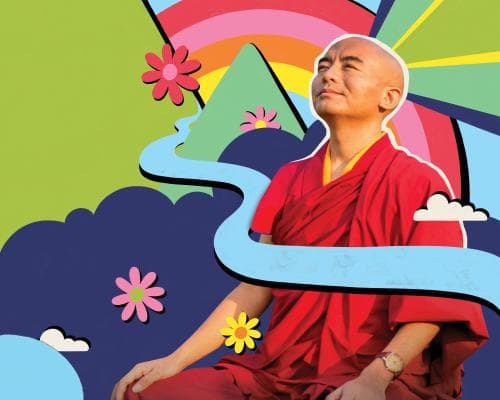
Forget the latest Bugatti or the private island with its own airstrip. The most coveted asset in today's rarefied circles isn't something you can dock, drive, or deposit. It's a quiet, unshakeable sense of contentment, and the man who has it in spades is a slight, laughing Buddhist monk named Yongey Mingyur Rinpoche. Brain scans of this Tibetan meditation master reveal neural activity off the charts in the left prefrontal cortex—the region associated with joy, enthusiasm, and happiness. At 41, his brain showed the wear-and-tear of a 33-year-old. He also laughs, constantly. That's not just wellness; that's the ultimate luxury: a mind that doesn't age, doesn't fray, and doesn't need to escape.
Mingyur's appeal to the ultra-wealthy is obvious. You've mastered the art of acquisition; he's mastered the art of being. And he insists it's a skill, not a genetic gift. In a world where you can summon a yacht, a chef, or a CEO with a tap on your phone, he points out the trap: we fill every uncomfortable pause with ice cream, a new app, or another deal. The Dalai Lama's observation, as Mingyur shares, is that we have everything at our fingertips, yet we're more restless than ever. The monk's prescription is radical: sit with the boredom. Feel the loneliness. Don't scroll away from it. Treat that discomfort not as a problem, but as a signal—a doorway to deeper self-awareness. For a person whose entire life is optimized for efficiency, learning to embrace a moment of emptiness is the ultimate edge.
His own story is a masterclass in embracing the terrifying. In 2011, Mingyur walked out of his monastery in the dead of night, with nothing but the robes on his back, to live as a wandering homeless yogi. Weeks later, he was struck down by severe food poisoning, paralyzed by pain and exhaustion. He describes that moment of utter helplessness as the beginning of real understanding—the relinquishing of control. He's not suggesting you need to risk dysentery to find peace. His point is more elegant: modern life is full of mini-adventures if you choose to see them. A new job, a new city, a new relationship—these are all opportunities to build your comfort with the unknown. And if you're not ready for that scale, he suggests a smaller, more accessible discipline: take a new route home, cook with an ingredient you've never used, keep a running list of things you want to try. When life feels stultifying, you've got a ready-made buffet of novelty. It's about training your nervous system to see change as a thrill, not a threat.
The craftsmanship here is internal. Mingyur's method is deceptively simple, but that's the point. He admits that his first meditation session was boring—just breathing, again and again. But he insists that meditation isn't about sitting in perfect silence. You can use anything as support: the noise of traffic, the chatter of your own mind, the feeling of your own breath. The goal is not to empty your head but to change your relationship with what's already there. For the person who has conquered every external challenge, this is the final frontier: the interior. It's the difference between owning a collection of rare watches and being able to truly enjoy the passing of a single hour without checking your phone. That's a skill money can't buy, and it's why Mingyur's wisdom is becoming the new currency in elite circles.
What does this signal about the future of luxury? It's a shift from the material to the experiential, from the accumulation of things to the cultivation of a rich inner life. The billionaires who are truly ahead of the curve aren't just buying wellness retreats; they're buying the tools to be content with what they already have. They're realizing that a private jet can take you anywhere, but it can't take you away from yourself. The next great status symbol isn't a thing at all—it's a calm, resilient, joyful mind. That's the rarest commodity of all, and Mingyur Rinpoche is its most eloquent salesman. His laughter is the sound of a man who has found the real treasure, and he's inviting you to join him.
The Experience
Seek out a private audience with Mingyur Rinpoche at one of his rare global teaching tours, or book a silent meditation retreat at a luxury wellness sanctuary like Aman or Como Shambhala to begin your own practice.