The BBC's Shrinking Future: Amol Rajan's YouTube Pivot Signals the End of Broadcast Primacy
Outgoing Today presenter Amol Rajan warns the BBC will shrink at an accelerating rate as audiences migrate to platforms like YouTube, where he is heading to launch a creator-economy venture. His move underscores a structural shift in media economics, where algorithmic distribution and direct audience relationships are eclipsing traditional broadcast reach.
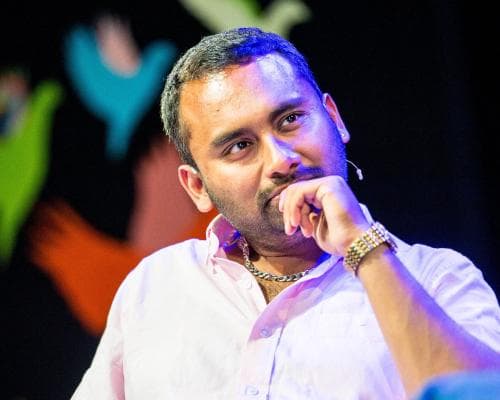
Amol Rajan is not leaving the BBC because he has lost faith in journalism. He is leaving because he has lost faith in the container. The outgoing Today programme presenter, who announced earlier this year that he would trade the microphone for a YouTube channel, has now delivered a blunt obituary for the institution he served for a decade: the BBC is destined to 'get smaller at an accelerating rate.' His words, spoken on the Political Currency podcast, are not the bitter farewell of a disgruntled employee. They are the cold calculus of a man who has watched the audience — and the advertising dollars — migrate to a different kind of public square.
Rajan's pivot is a personal bet, but it is also a diagnostic. He admitted on the podcast that he has spent twenty years 'a bit behind the curve,' working in newspapers and then in TV and radio, both sectors in 'rapid and accelerating decline.' The Today programme, he conceded, is 'the last big mass-market news programme' — a glorious exception in a world where the default is now a scroll, not a schedule. So he is going to where the action is: YouTube, the world's largest video platform, where the median viewer is under 35 and the algorithm is the new editor. His move is a signal to every legacy media executive: if you want to reach the future, you have to leave the building.
The BBC's own numbers tell the story. The corporation is facing £500 million in savings over the next two years, driven by a licence fee that is losing both purchasing power and legitimacy. More than a million households have stopped paying the fee in recent years, and the trend is accelerating among younger viewers who see the BBC as a subscription they never chose. The broadcaster has responded with a familiar mix of cost-cutting and digital expansion, including a new partnership to produce content dedicated to YouTube. But Rajan's critique cuts deeper: the BBC is not just losing money, it is losing relevance. The platform era rewards speed, personality, and data-driven iteration — none of which are natural strengths of a public institution built for consensus and schedule.
The shift is not just about the BBC. It is a global phenomenon. In the US, legacy broadcasters are bleeding viewers to Netflix and TikTok, while in the UK, commercial rivals like ITV are pivoting to streaming. But the BBC's unique funding model makes it especially vulnerable. It cannot chase scale through advertising alone, and its public service remit ties it to obligations that private platforms do not share. Rajan's departure is a rebuke to the idea that the BBC can simply 'do digital' by bolting on a YouTube channel. The creator economy is not a distribution channel; it is a culture. It rewards direct relationships, niche expertise, and the willingness to experiment — and it punishes institutional caution.
What Rajan is betting on is the rise of the individual as a media brand. He is not joining a network; he is becoming one. This is the same logic that has driven billionaires like Elon Musk to buy Twitter and turn it into X, or that has pushed Jack Dorsey to back a new Bitcoin-based social network. The media's center of gravity is shifting from institutions to individuals, from broadcast to conversation, from reach to relevance. Rajan's YouTube venture will likely be a mix of interviews, analysis, and personal storytelling — the kind of content that thrives on algorithmic recommendation and community engagement. He is betting that his credibility and curiosity will find a new audience, even as the BBC's reach contracts.
For the sector, this is a warning shot. The BBC's decline is not a management failure; it is a structural inevitability. As Rajan said, the pace of contraction will only accelerate. The question is not whether the BBC will shrink, but whether it can shrink intelligently — focusing on what it does best, like investigative journalism and global news, while ceding the ground of mass-market entertainment and commentary to the platforms. The corporation's demand for prominence in YouTube's and TikTok's algorithms is a desperate plea for a seat at a table it no longer controls. But the algorithm does not care about public service. It cares about engagement.
In the end, Rajan's departure is a lesson in timing. He is not fleeing a sinking ship; he is boarding a new one. The creator economy is still young, and the window for a credible journalist to build a direct audience is open. But it will not stay open forever. As the BBC shrinks, other legacy voices will face the same choice: adapt to the platform era or become artifacts of it. Rajan has chosen to be a pioneer, not a relic. The next decade will tell us whether his gamble pays off — but for the BBC, the direction is already clear. The future is not on the schedule. It is on the feed.