The Algorithm That Knows Your Price: Inside the Legal War Over Uber’s AI Pay Machine
Imagine a boss who never sleeps, never blinks, and knows your breaking point better than you do. A boss who watches every detour, every hesitation, every cheap fare you’ve ever accepted, and then—quietly, coldly—sets your next offer to the exact cent you’ll take. That’s not a dystopian screenplay. That’s the daily reality for hundreds of thousands of Uber drivers across Europe, and it has just exploded into a legal firestorm that could reshape the gig economy forever.
This week, a coalition of drivers from the UK, the Netherlands, and beyond filed a landmark class action at Amsterdam’s district court—Uber’s European headquarters—claiming that the company’s AI-powered pay-setting system is not just unfair, but unlawful. The case, backed by the European Trade Union Confederation, could run into billions of dollars and covers roughly 241,000 drivers. At the heart of it sits a “black box” algorithm that crunches personal data to assign a personalized rate for every single ride. The drivers say it’s a soulless, all-seeing synthetic manager that exploits their economic vulnerability. Uber, a $150 billion San Francisco giant, calls it just business.
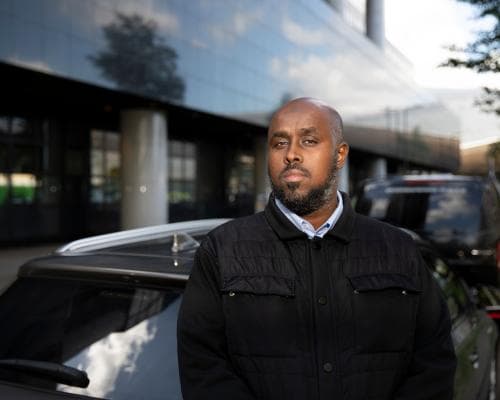
For the ultra-wealthy, this story is more than a labor dispute—it’s a window into the next frontier of power. Algorithms are no longer just recommending movies or optimizing supply chains. They are becoming invisible executives, making decisions that control income, schedules, and even family time. The drivers describe a system that learns your weaknesses. Mohammed Shirwa, a 41-year-old driver in Rotterdam, puts it starkly: “It is like someone watching you all the time and knowing about your weakness—the boss is the algorithm.” He says the AI studies what you’re willing to accept, then pushes fares lower because it knows you’re stuck. Kola Oba, a London driver, watched a colleague get offered £27 for the same job he was offered £23—simply because the algorithm had learned Oba had taken several cheap fares and assumed he’d accept less. “It’s scary,” he says. “They have all my information and they are using it against my own wellbeing.”
This isn’t just about ride-hailing. It’s a preview of how algorithmic management could infiltrate every sector—from finance to healthcare to luxury services. The craftsmanship angle here is not in a hand-stitched leather interior or a bespoke timepiece, but in the sheer sophistication of the code. Uber’s algorithm is a marvel of behavioral prediction, fed on millions of data points: your location, your history, your willingness to wait, your tolerance for lowball offers. It’s the ultimate luxury product—for the company. A personalized, predictive, profit-maximizing machine that operates with zero empathy. And that’s exactly why it’s so dangerous. The Dutch data protection authority already fined Uber €825 million last month for deactivating driver accounts through automated systems without proper notice. Uber says it will appeal.
For the world’s wealthiest, this legal battle signals a shift in the relationship between capital, labor, and artificial intelligence. The drivers aren’t just asking for more money—they’re demanding transparency. They want to know what data the algorithm holds, how it calculates their worth, and why a human can’t override it. The case is led by the Worker Info Exchange, founded by James Farrar, who previously secured a UK Supreme Court ruling that Uber drivers are entitled to worker rights. Now, he’s taking on the algorithm itself. If the drivers win, it could force every company using AI to manage human beings—from hedge funds to private aviation firms—to open their black boxes.
The ripple effects will be felt in boardrooms and private equity portfolios long before they hit the courts. This is about the ethics of automation, but also about the future of work itself. Uber is already planning to roll out driverless cars in European cities from London to Zagreb, initially with human supervision. If an algorithm can set pay for drivers, why not for pilots, surgeons, or even financial advisors? The ultra-wealthy have always prided themselves on hiring the best human talent. But as AI becomes the new middle manager, the question becomes: who watches the algorithm? And what happens when the algorithm learns to watch you?
For now, the drivers’ claim is a warning shot. It says that even the most powerful tech company can’t hide behind a line of code. It says that the human element—the ability to say no, to question, to demand a fair price—still matters. And for those who believe that true luxury lies in control, this is the ultimate wake-up call. The algorithm may know your price, but it doesn’t know your worth. That’s a lesson worth billions.
The Experience
For a firsthand look at how AI is reshaping the gig economy, consider a private briefing with labor-rights technologists or a visit to Amsterdam’s legal district, where the case unfolds. Alternatively, experience the human side of the algorithm by taking an Uber and asking your driver about their pay.