The 750 Million-Copy Empire: What Barbara Cartland's Romance Machine Teaches Us About Content at Scale
Barbara Cartland's astonishing output—723 novels, 750 million copies sold, 8,000 words a day—was a one-woman venture empire built on a repeatable, dictation-driven process. For today's wealth builders, her story is a masterclass in scalable content creation and the monetization of a distinctive brand.
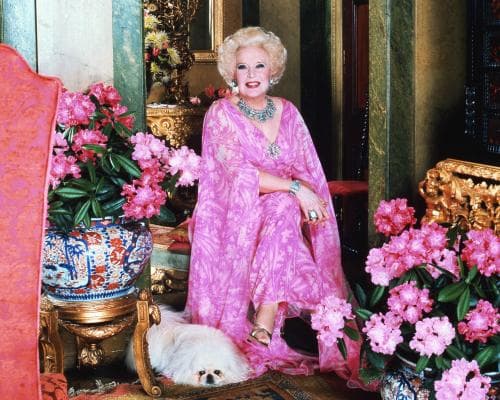
Before Substack, before AI writing tools, before the creator economy was even a phrase, there was Barbara Cartland—a woman who turned a Pekingese on her chest and a stenographer at her side into a global publishing machine. She didn't write her novels; she dictated them, reclining on a library couch, exhaling stories of virginal girls and wayward dukes at a pace that would make a modern ghostwriter blush. Eight thousand words a day. Twenty-three books a year. Seven hundred and twenty-three novels in total. And lifetime sales of 750 million copies—a figure that puts her in the rarefied company of Agatha Christie and William Shakespeare. For anyone who thinks scale is a modern digital invention, Cartland is the proof that the old economy could compound just as ferociously.
The financial mechanics of Cartland's operation are worth dissecting with the same rigor you'd apply to a late-stage startup's unit economics. Her key insight was that she wasn't in the business of writing books; she was in the business of manufacturing a repeatable emotional product. The formula was strict: a beautiful, innocent heroine, a brooding, damaged hero, and a courtship that ended in marriage—no sex, no swearing, just the promise of a happily-ever-after that her readers couldn't resist. That consistency wasn't a creative flaw; it was a brand promise. In an era before market segmentation, Cartland had found her niche and she exploited it with the precision of a hedge fund manager running a momentum strategy. Her output wasn't just high; it was industrialized. She dictated to a rotation of stenographers—Miss Savory, Mrs Smith, Mrs Morgan—chosen specifically for their ability to sit still and not sneeze. It was a human assembly line, and Cartland was the CEO, the creative director, and the sole bottleneck.
The economics of her scale are staggering. At her peak, she was producing more than a book every two weeks, and each one carried her name, her image, and her unmistakable aesthetic of pink chiffon and candyfloss hair. She understood that the brand was the asset. The books were the product, but the persona—the aristocratic, imperious, impossibly romantic figure—was the moat. That's a lesson that translates directly to today's markets, where a founder's personal brand can be worth more than the company's revenue. Cartland didn't just sell stories; she sold an aspirational lifestyle, and her readers bought it in the hundreds of millions. The man who printed her books, the managing director who suggested she read Nietzsche, was also madly in love with her—a testament to the cult-like loyalty she inspired, not just in readers but in the people who worked for her. That's the kind of magnetic pull that creates enduring enterprise value.
But there's a darker, more instructive angle to Cartland's story, one that Matthew Sweet's biography explores with unflinching seriousness. She was a dictator in every sense of the word. Husbands, dogs, houses, and local councils all bent to her will. Resistance was futile. That iron control extended to her business dealings: she didn't just write the books; she dictated the terms. In an industry where authors were often at the mercy of publishers, Cartland negotiated from a position of unassailable strength, leveraging her massive sales to secure advances and royalties that would make modern authors weep. Her net worth at the time of her death in 2000 was estimated at £60 million—a fortune built not on inheritance but on relentless, systematic production. For wealth builders, this is the ultimate lesson: true market power comes from owning the means of creation and the distribution channel, and Cartland owned both.
What does Cartland's story signal for today's markets? It's a reminder that the hunger for escapism is a recession-proof trade. In times of economic uncertainty, people don't stop buying books; they buy comfort. Cartland's novels were the original 'safe haven' asset—low volatility, predictable returns, and a loyal investor base that never panicked. Her success also foreshadows the rise of the content-as-a-service model, where creators build scalable empires on niche appeal. The difference is that Cartland did it without algorithms, without digital distribution, and without a single viral tweet. She was the original content machine, and her playbook—consistent output, a distinctive brand, and ironclad control over the product—is more relevant now than ever.
As the world of publishing (and investing) gets ever more crowded, Cartland's legacy offers a contrarian lesson: don't chase trends; double down on what you do better than anyone. She found her lane—romance, pure and simple—and she stayed in it for over seventy years. The result was not just literary success but a financial empire that outlasted her. For the modern wealth builder, the takeaway is clear: in a world of infinite content, the rarest commodity is consistency. Barbara Cartland wasn't a genius; she was a machine. And machines, as any investor will tell you, produce predictable, compounding returns.