The $4.8bn Fare Hike That Built a Tunnel: Inside Victoria's Secret Transport Levy
Victoria's Suburban Rail Loop is being funded by a hidden 1% annual fare surcharge that will run until 2062, raising $4.8bn. The revelation exposes a new model of infrastructure financing—one where future commuters, not just taxpayers, become the silent investors in mega-projects.
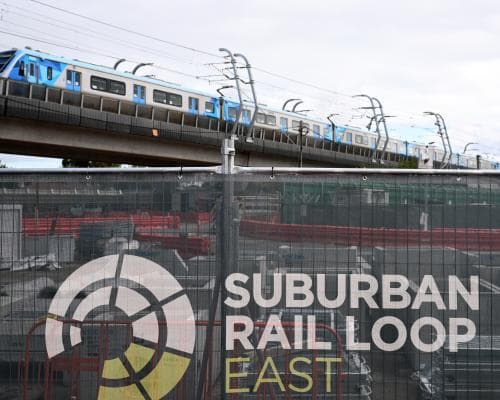
It was the kind of press conference that usually makes the evening news: a state government announcing $11.5bn in funding for a massive rail project, complete with talk of value capture, land taxes, and developer contributions. What they didn't mention—and what the auditor general revealed this week—is that a quiet, 1% annual surcharge on every train, tram, and bus fare in Victoria has been running since January 2025. By 2062, that 'levy' will have funneled $4.8bn into the Suburban Rail Loop (SRL) East, making it the project's single largest source of value capture revenue. But no one voted on it, and for nearly two years, no one was told.
The SRL East is a 26km twin-tunnel line connecting Cheltenham to Box Hill—a project that promises to reshape Melbourne's sprawling suburbs into a more connected, transit-oriented metropolis. But the financing strategy is a masterclass in political engineering. The government, led by Premier Ben Carroll, has repeatedly touted value capture as the key to funding infrastructure without burdening taxpayers. Yet the auditor general's report, tabled in parliament on Wednesday, reveals that the fare levy—which the government called a 'value capture tool'—was never disclosed in public communications about the 2025 and 2026 fare increases. Instead, the December 2025 press conference focused on five other measures: land tax, windfall gains tax, developer contributions, and two more revenue streams. The levy was kept out of the spotlight, buried in the fine print of a fare adjustment that was already pegged to inflation.
Why does this matter beyond the political spin? Because it signals a new, stealthier era of infrastructure finance. In the past, mega-projects were funded through general taxation, federal grants, or public-private partnerships. Now, governments are turning to 'value capture'—a concept that sounds like urban planning jargon but is essentially a claim on future increases in land and economic value that the project itself creates. The SRL levy is a particularly aggressive version: it doesn't tax landowners near the stations, but all public transport users across the state, including those who will never ride the SRL. It's a regressive tax, hitting low-income commuters hardest, and it's designed to run for 37 years—a timeframe that outlasts most political careers and even the project's own construction schedule.
The numbers are staggering. According to the Department of Treasury and Finance, by 2062 the daily full fare in zones 1 and 2 will rise to $39.20. That's not a typo. A single day of commuting in Melbourne could cost more than a movie ticket and a meal. The levy adds 1% on top of inflation-adjusted fare increases every year, compounding quietly. The auditor general notes that even as of June 2026, the government still hadn't announced the levy publicly. This is not just a transparency failure; it's a fundamental shift in how the state is asking citizens to invest in the future. You're not just paying for a ticket—you're paying for a bond that you'll never see mature.
What does this mean for the broader infrastructure landscape? Across the globe, from London's Crossrail to California's high-speed rail, governments are struggling to fund ambitious projects. Value capture is the new buzzword, but it's rarely implemented with such stealth. The SRL levy could become a template—or a cautionary tale. If Victoria's model succeeds, expect other states and nations to adopt similar 'levies' on transit fares, parking fees, or even ride-hailing trips to fund infrastructure. If it fails, it will be a case study in political backlash. The auditor general has already cast doubt on whether SRL East can be delivered on time or within budget, which means the levy might not even cover the cost overruns. That's the real risk: the public is being asked to pay a hidden tax for a project that may not deliver on its promises.
For the deep-tech and infrastructure crowd, the lesson is clear: the future of urban mobility isn't just about autonomous trains or digital signaling—it's about who pays for the tracks. The SRL levy is a sobering reminder that the most innovative part of a mega-project might not be the engineering, but the financial engineering. And if that innovation is kept secret, it's not innovation—it's a tax.
As Melbourne hurtles toward a more connected future, the question isn't just whether the tunnels will be built on time. It's whether the people who ride the trains will ever forgive the ones who built them. The levy ends in 2062, but the political consequences could last much longer. For now, the project's backers are betting that a 1% fee will go unnoticed. The auditor general just proved it won't.