The $31.30 Hour: How Australia Just Rewrote the Rules of the Gig Economy
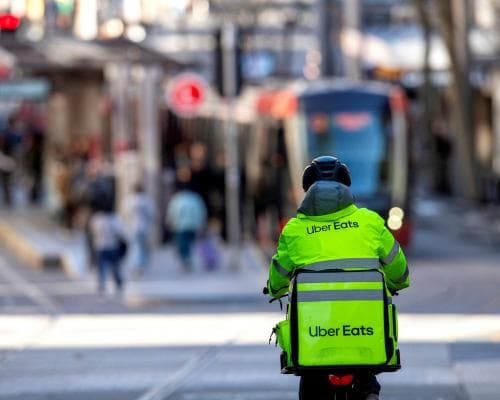
On a humid Melbourne evening, a bike courier weaves through traffic, a thermal bag strapped to their back. They’re not thinking about algorithms or shareholder value. They’re thinking about rent. For over a decade, that courier—and hundreds of thousands like them—have been the invisible engines of modern convenience, paid piecemeal, protected by nothing, and often earning less than the cost of the meal they’re delivering. But as of this week, Australia has done something unprecedented: it has told Silicon Valley that the gig economy is no longer a digital Wild West. It has set a floor. And the ripple effects will be felt from Sydney to San Francisco, from boardrooms to private dining rooms.
The headlines are stark: from Monday, any Uber Eats or DoorDash delivery driver in Australia will earn at least $31.30 an hour—$32 if they’re in a car. That’s the result of a landmark deal between the unions and the two platforms that control nearly all of Australia’s food delivery market, ratified by the country’s industrial umpire, the Fair Work Commission. It’s being called a “world first,” and for good reason. The gig economy has long been the last bastion of unprotected labor, a space where workers were told they were “independent contractors” but treated like employees—minus the benefits, the safety net, or the dignity. The new rules change that. They include dispute resolution processes, feedback mechanisms, representation rights, and personal injury insurance for couriers who have been injured on the job. But the real headline—the one that matters to anyone who’s ever tapped “order” on a phone—is the pay floor.
Here’s the nuance, and it’s worth understanding because it’s elegant in its design. This isn’t a traditional minimum wage. Uber Eats won’t suddenly start paying drivers an hourly rate. Instead, the platforms must ensure that over a 21-day period, a worker’s average earnings—calculated from the moment they accept a job to the moment they drop it off, including time waiting at the restaurant—don’t fall below that $31.30 or $32 floor. If they do, the platform tops up the difference. There’s no cap on earnings, so the ambitious courier can still hustle, but the vulnerable one is no longer left with $14 an hour, which the Transport Workers Union says has been the grim reality for some. For a nation that prides itself on a fair go, this is a correction long overdue.
But what does this mean for the consumer—particularly the kind of consumer who thinks nothing of spending $80 on a single meal delivery? The short answer: your takeaway might cost a little more. The longer answer is more interesting. This isn’t just about food. It’s about the entire architecture of on-demand luxury. When you order a $200 bottle of wine from a sommelier-curated app, or a bespoke bento box from a Michelin-starred kitchen, you’re not just paying for the product—you’re paying for the convenience, the speed, the frictionless experience. That experience has been subsidized by underpaid labor. Australia has just decided that the subsidy ends here. The price of convenience is going up, and for the ultra-wealthy, that’s not a bug—it’s a feature. Exclusivity has always had a cost, and now the cost is more honest.
For the workers themselves, the change is life-altering. Alexi Edwards, a longtime delivery rider who has worked for Uber Eats, DoorDash, and the now-defunct Menulog, says her pay will “definitely” go up. She’s been tracking her numbers since the $32-per-active-hour rate was first floated, and she expects to be $100 to $200 better off each week. That’s not pocket change—that’s the difference between surviving and living. Helen, a Melbourne driver who asked not to use her last name, is also optimistic. She’s been at this for four years, and her hourly rate has sometimes dipped below what she’d earn flipping burgers. Now, she says, there’s a baseline. There’s a floor. There’s a sense that the algorithm isn’t the only boss in town.
This is a moment of recalibration. It signals a shift in how we value labor in the digital age, and it’s a warning to every platform that thinks it can operate beyond the reach of national laws. Australia has effectively said: if you want to play in our market, you play by our rules. And for the luxury consumer, there’s a quiet satisfaction in knowing that the person who brings your dinner is no longer an afterthought—they’re a professional, protected, and paid accordingly. The future of on-demand isn’t about speed alone; it’s about sustainability. It’s about knowing that the meal you’re enjoying arrived at a fair price, for everyone involved. And that, perhaps, is the most exclusive luxury of all.
The Experience
To experience the new standard of on-demand luxury, consider booking a private chef through a platform that guarantees fair wages—or simply tip your delivery driver generously, knowing the cost now reflects their worth.