The $18 Billion Apology: What Meta’s US Settlement Really Buys—and What It Doesn’t
On a quiet street in Bahir Dar, Ethiopia, a professor of chemistry stepped outside his family home and was shot dead at close range. His son, Abrham Meareg, later discovered that for weeks, Facebook’s algorithm had been amplifying posts calling for his father’s murder—complete with photos and a home address. Meareg begged the company to remove them. Nothing happened. Nearly four years later, his case against Meta sits unheard in a Kenyan court. That’s the thing about power: it has a home address, and it doesn’t always answer the door.
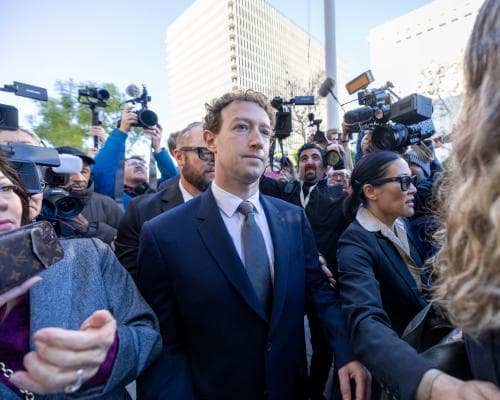
Now, Meta has agreed to pay $18 billion to settle a lawsuit brought by 29 US states, which argued that Facebook and Instagram were engineered to hook young users. The company will also impose default time limits—two hours a day for under-18s—and block nighttime access for minors. For American families, this feels like a victory. California’s attorney general called it “a world of difference.” And indeed, it is the first time a jury has done what Congress couldn’t: force a tech titan to bend. But here’s the uncomfortable truth for the rest of the planet: this settlement is a local fix for a global machine.
The numbers tell a story of their own. The states originally sought $200 billion; Meta’s own court filing suggested it might face up to $1.4 trillion in liability. Eighteen billion is pocket change for a company that generates more than $130 billion in annual revenue. Its share price actually rose after the announcement. Mark Zuckerberg didn’t have to testify. For Meta, this is a rounding error with a ribbon on it. For the rest of the world, it’s a reminder that justice is priced in jurisdictions—and the exchange rate is brutal.
Consider the concessions Meta has made. The two-hour default limit for teens, the nighttime block—these are not innovations. The UK and Australia already have similar regulations. What’s new is that Meta has now effectively admitted that its platforms are dangerous enough to require these guardrails, at least for American children. But what about the children in Nairobi, or Amsterdam, or Bahir Dar? The algorithm that promoted a professor’s murder is the same one that serves ads to a teenager in Ohio. The difference is that the Ohio teenager has a state attorney general on her side. The Ethiopian professor’s son has only a nonprofit and a lawsuit that keeps getting delayed.
This is the real lesson of the settlement: Meta’s power is not a product flaw—it’s a feature. The company owns a digital commons that shapes reality for billions of people, yet it is accountable to no one outside the US legal system. Courts in Kenya have tried to step in, but Meta has fought tooth and nail to avoid jurisdiction. The company argues that its terms of service waive liability—a legal fiction that only works when you have the resources to make it stick. For the ultra-wealthy, this is a cautionary tale about the limits of influence. You can buy a private island, but you cannot buy a different algorithm. You can hire the best lawyers, but you cannot make a foreign court hear your case. Power, it turns out, is not just about money—it’s about who gets to set the rules.
What happens next? The US settlement sets a precedent, but it’s a precedent for the US alone. Other governments are watching. The UK may now demand a two-hour default for under-18s. The EU could push for similar restrictions. But none of this addresses the deeper question: should a single company be allowed to shape political discourse, incite violence, and influence elections on a global scale, with no transparency and no accountability? The answer, for now, is yes—because no one has found a way to make it otherwise. For Meareg, the settlement changes nothing. His father is still dead. The posts are still up, somewhere in the archive. And the algorithm that killed him is still learning.
For those of us who watch from the top of the pyramid, the lesson is stark: wealth can buy many things, but it cannot buy immunity from the digital echo chamber. The same algorithms that shape our news feeds shape the world’s. And when the world burns, the smoke reaches even the highest towers. The $18 billion settlement is a start, but it’s a start in one country. The rest of the world is still waiting for its day in court.
The Experience
For a front-row seat to global power dynamics, consider a private briefing with a leading tech-policy strategist, or charter a jet to Nairobi to witness the next chapter of Meta’s legal battles firsthand.