The $1 Trillion Question: Natalie Harp's Clearance Fight Exposes the Real Price of Proximity to Power
The White House's struggle to get Trump's closest aide, Natalie Harp, to apply for a security clearance reveals a dangerous governance gap—one that wealth builders should read as a warning about information integrity and risk in the highest office. It's not a market story, but it's a capital story: when the person closest to the president can't be vetted, every policy signal becomes a potential minefield.
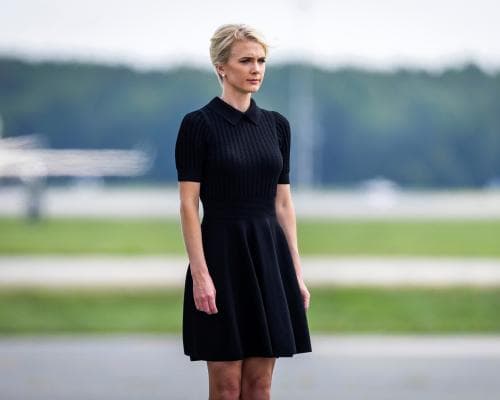
Imagine the most powerful person in the world, and the one person who sees his every thought, reads his every note, and whispers in his ear all day long—except she didn't have a security clearance. For over a year. That's not a plot from a political thriller. That's the real-life situation unfolding inside the Trump White House, and it's the kind of story that should make any serious investor stop and recalibrate how they read the news from Washington.
The report, from MS NOW and confirmed in part by outgoing press secretary Karoline Leavitt's non-denial, is that Natalie Harp—Trump's personal aide, the one who carries his phone, reads his feeds, and has been described as his 'walking tablet'—repeatedly refused to apply for the routine clearance that every West Wing staffer needs. She only caved after months of pressure from the White House counsel's office and security officials, and only after the president himself intervened. That's the kind of detail that doesn't stay in the political gossip column; it echoes straight into the trading floor.
Let's get the mechanics straight. A security clearance isn't a formality. It's a background investigation into your finances, your foreign contacts, your personal life, and your vulnerabilities. It's the system's way of ensuring that no one with access to classified information can be blackmailed, bribed, or coerced. When a top aide resists that process for months, the question isn't just 'What's she hiding?' It's 'What does this say about the integrity of the information flow around the president?' For markets, that's a systemic risk. Every tweet, every policy leak, every off-the-record briefing from the White House is a data point that moves capital. If the person closest to the source is unvetted, that data is contaminated.
And here's the wealth angle: the people who manage real money—the family offices, the sovereign funds, the billionaire principals—they don't just trade on headlines. They trade on the reliability of those headlines. They have teams of analysts who parse every word from the White House for signals on tariffs, taxes, regulation, and geopolitics. Now imagine a scenario where a key piece of that information flow comes from someone who hasn't been cleared, who might have motives or vulnerabilities no one has checked. That's not paranoia; that's a due diligence nightmare. It's like buying a bond without checking the issuer's balance sheet.
David Axelrod, the former Obama adviser, called it a 'deadly serious issue.' He's right, but not just for national security. It's a capital issue. The market's job is to price risk, and the risk here is that the president's decisions are being shaped by an unelected, unvetted, and potentially compromised source. That's not a partisan point; it's a structural one. The White House is the most important economic actor on the planet. Its information flows are the raw material of global markets. When those flows are compromised, every derivative, every currency trade, every emerging market bet gets a little bit more dangerous.
Now, look at the broader picture. This isn't just about Natalie Harp. It's about the erosion of institutional guardrails across the board. Security clearances are a guardrail. So are ethics reviews, financial disclosures, and conflicts-of-interest rules. When those guardrails are seen as optional, the market's trust in the system erodes. And trust is the ultimate reserve currency. You can see it in the VIX, in the gold price, in the flight to safe havens whenever Washington looks chaotic. This story is a microcosm of that chaos, and it's a reminder that the real cost of governance failures isn't just political—it's financial.
So what should a wealth builder do with this? First, don't dismiss it as inside baseball. Watch how the White House handles this from here. If Harp's clearance is fast-tracked without a real investigation, that's a red flag. If she's sidelined, that's a signal that the adults are still in the room. Second, diversify your information sources. Don't rely on a single news outlet or a single narrative. The market is going to react to this story in fits and starts, but the smart money is already asking: what else aren't we being told? The answer, as always, is that the most dangerous risks are the ones that haven't been cleared yet.