The $1 Billion Podcast War: Why Gary Lineker Wants Roy Keane — and Why Netflix Is Paying Up
Gary Lineker's The Rest Is Football is now a Netflix fixture, but the real money story is the escalating battle for podcast talent — with Roy Keane as the prize. As streaming giants throw billions at sports media, the value of a single combative personality has never been higher.
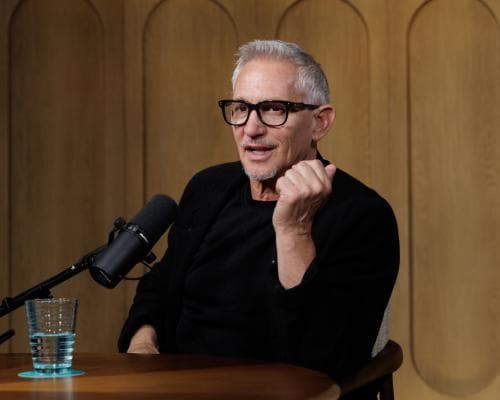
Gary Lineker has built a podcast empire that would make most media moguls blush. His The Rest Is Football show — already a chart-topper in the UK — just landed a Netflix deal that turns it into a regular fixture on the world's biggest streaming platform. But even at the top of his game, the former Match of the Day anchor admits there's one signing that would complete his roster: Roy Keane. "He's box office," Lineker said at the Edinburgh TV festival, with the kind of admiration usually reserved for a blue-chip stock. "He's bloody good at being Roy Keane."
This isn't just banter between former footballers. It's a window into a media gold rush that's reshaping how capital flows into sports content. The Rest Is Football's Netflix deal — reportedly worth tens of millions over multiple years — follows a pattern that's become standard in the creator economy: build a loyal audience, then let the deep-pocketed platforms fight over your distribution. And the numbers are staggering. The podcast industry is projected to hit $4 billion in ad revenue this year alone, with sports shows commanding premium CPMs because they attract exactly the demographic advertisers crave: affluent, engaged, and hard-to-reach men aged 25-54.
But the real prize isn't the ad revenue — it's the talent. Lineker's admission that he'd poach Keane is a masterclass in understanding what drives value in this market. Keane's brutal, no-nonsense delivery has made him a viral machine; his rants on Stick to Football — the rival show produced by Gary Neville's The Overlap — routinely rack up millions of views across social media. That's why Lineker's joke about Keane's analytical depth rings hollow: "He doesn't give you that much," Lineker quipped, before quickly adding, "I was kidding about the analytical thing." The truth is, Keane's value isn't in xG models or tactical breakdowns. It's in the raw, unfiltered emotion that turns a podcast clip into a cultural moment. And in the attention economy, that's worth more than any spreadsheet.
The rivalry between The Rest Is Football and Stick to Football is now a full-blown proxy war for the streaming giants. Netflix has backed Lineker, Shearer, and Richards; Disney has countered with Neville, Keane, and company. This is the same playbook we've seen in scripted content — throw money at proven talent and let them bring their audience with them. But the economics are tricky. Podcasts are cheap to produce compared to prestige TV, but the talent costs are soaring. Top-tier sports pundits can now command seven-figure annual salaries, and the real leverage lies in exclusivity. That's why Lineker's comments about Keane matter: they signal that the market for personality-driven sports content is still heating up.
For the wealthy, this is a signal about where entertainment capital is flowing. Sports media is no longer just about broadcast rights — it's about owning the voices that interpret the game. The rise of athlete and pundit-led podcasts has created a new asset class: the personal brand as a media property. And the platforms are willing to pay premium multiples for it. Netflix's move into live sports and sports-adjacent content is a direct challenge to traditional broadcasters, and podcasts are the low-risk entry point. The fact that Lineker can joke about his rivals "trailing in our wake" while simultaneously admitting he'd love to sign their star player shows how fluid this market really is.
So what's next? Expect more consolidation, more bidding wars, and more unlikely alliances. The podcast space is still fragmented, but the big players are circling. If Lineker gets his wish and Keane jumps ship — even as a guest — the deal would be a coup that would send shockwaves through the industry. And for investors, the lesson is clear: the next big media fortune won't be built on scripts or sets, but on the combustible chemistry of a few loud voices in a room. As Lineker put it, "There's room, particularly in football. There's a lot of competition." That's an understatement. The competition is just getting started.