Texas Turns on the AI Boom: A Political Reckoning for Datacenter Dollars
As public opposition to datacenters surges to 61%, Texas Attorney General Ken Paxton unveils a 'Texas first' plan to rein in the industry, signaling a major shift in the political winds that could reshape where the world's smartest capital builds its AI infrastructure.
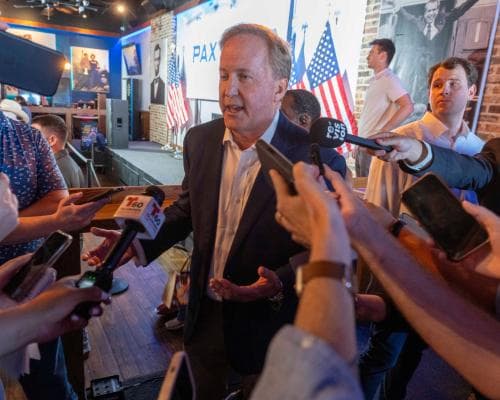
The same state that once begged tech giants to build with open arms is now drafting the restraining order. Texas Attorney General Ken Paxton, fresh off Donald Trump's endorsement and locked in a tight Senate race, has unveiled a 'Texas first' datacenter plan that reads less like an industry welcome mat and more like a regulatory warning shot. The target: the power-hungry, water-guzzling behemoths that have become the physical backbone of the AI gold rush. And the message is unmistakable — the era of unchecked datacenter expansion in the Lone Star State is over.
This is not a fringe populist tantrum. It's a political earthquake with a balance sheet attached. An Annenberg Public Policy Center survey released last month found that 61% of Americans now oppose building a new datacenter in their area — up from 49% in March. That's a 12-point swing in a matter of months, cutting across party lines: 69% of Democrats, 54% of Republicans, and 53% of independents are all saying 'not in my backyard.' For a wealth desk, that's not just a poll number; that's a repricing of risk for every megaproject from Texas to Virginia's 'Datacenter Alley.'
Paxton's four-point plan, posted on X with a graphic the platform flagged as 'Made with AI,' is a masterclass in political triangulation. He's calling for a ban on Chinese technology powering US datacenters, criminal liability for companies if AI chatbots harm children, and red-tape cuts to ensure datacenters don't spike Texans' electricity bills. He's also backing Governor Greg Abbott's state-level push to ban new datacenters from rural neighborhoods, repeal sales tax exemptions, and force these facilities to add to the grid rather than drain it. The subtext is pure capital markets: if you want to build the future, you need to pay for the present.
Governor Abbott's own rhetoric has gone from booster to bruiser. Last year he dubbed Texas the 'epicenter of AI development.' On Sunday, he told ABC's This Week that tech companies 'basically dug their own grave for the problem that's been caused for them and that's why they got the backlash they deserve.' That's not a guy angling for a ribbon-cutting ceremony; that's a politician reading the polls and pivoting hard. For investors, the signal is deafening: the political risk premium on datacenter assets just went vertical.
The scale of the money at stake is staggering. Datacenters are the new railroads — massive, capital-intensive, and essential to the economy's digital backbone. But unlike railroads, they don't create jobs in rural towns; they create heat, noise, and a voracious appetite for electricity and water. In Texas, where the grid has already buckled under winter storms, the idea of adding thousands of megawatts of new demand is a hard sell. Paxton's plan to hold companies criminally liable for AI chatbots' impact on kids is a novel twist, blending culture-war politics with infrastructure policy — a potent mix that could resonate with voters who feel left behind by the tech boom.
For the ultra-wealthy and institutional capital that have poured billions into AI infrastructure funds, this is a moment for careful recalibration. The returns on datacenter investments were already thinning as interest rates stayed higher for longer. Now add regulatory headwinds, community opposition, and the real possibility of tax breaks vanishing. The smart money isn't fleeing Texas — not yet — but it's certainly diversifying. States like Ohio, Indiana, and even Nevada are courting these projects with open arms, and they're watching Texas's political drama with a calculator in hand.
What happens next in Texas will set the template for the nation. If Paxton and Abbott succeed in imposing new costs on datacenters, other states will follow. If the industry fights back and wins, expect a decade of legal battles and lobbying wars. Either way, the days of silent approvals and sweetheart deals are over. The AI boom is about to learn a lesson every asset class eventually learns: when the public turns, the profits follow — right out the door.