Tax Star’s $1.75M Seed Bet on the UAE’s E-Invoicing Countdown
UAE taxtech Tax Star raises $1.75M seed to ride the e-invoicing mandate, with GCC expansion in sight.

For anyone tracking where Middle East money is moving, the most telling signal isn’t another luxury tower or sovereign fund stake — it’s the quiet scramble of startups positioning themselves around regulation. Tax Star, a UAE-based taxtech firm, just closed a $1.75 million seed round backed mostly by angel investors. That number may look modest against the region’s megadeals, but the timing is anything but. The company is a pre-approved Accredited Service Provider (ASP) for the UAE’s upcoming e-invoicing system, and that designation is suddenly one of the most valuable pieces of paper in the country’s business ecosystem.
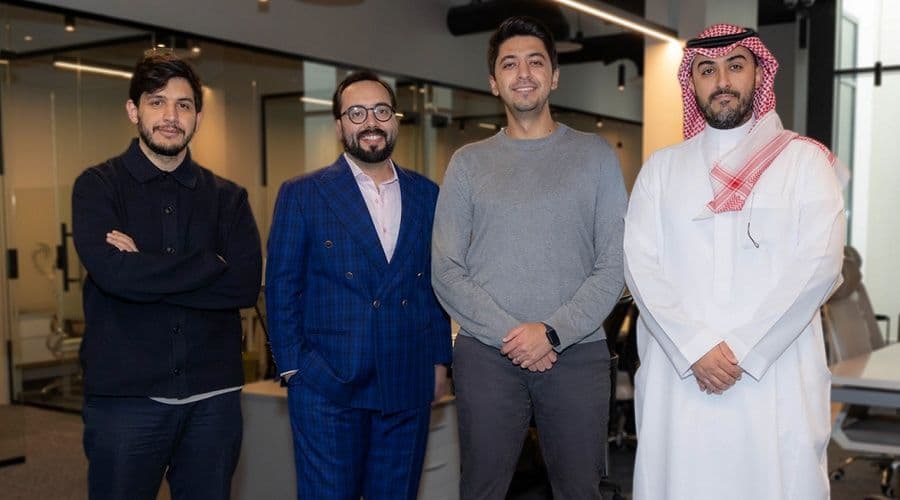
Founded in 2023 by Rayhan Aleem and Haris Tasawar, Tax Star built its name as the UAE’s first AI-powered corporate tax compliance platform. The founders are not flashy dynasty heirs; they are operators who spotted a gap in a market where tax is still a relatively new concept for many businesses. The UAE only introduced corporate tax in 2023, and now the government is pushing e-invoicing — a mandate that will force companies to digitize their invoicing and connect to a central system. The deadline clock is already ticking: businesses with annual revenue of AED 50 million or more must appoint an ASP by October 30, 2026, with the first mandatory implementation phase starting in January 2027. That gives Tax Star a narrow but real runway to convert regulatory anxiety into recurring revenue.
The seed round will go toward go-to-market expansion, product development, and simplifying compliance for businesses that are, frankly, not ready. Most UAE companies are used to a low-tax, low-paperwork environment. E-invoicing is a cultural as much as a technical shift. Tax Star’s pitch is that it can be the bridge — a pre-approved ASP that plugs into accounting tools like Xero, QuickBooks, Zoho, and Odoo, which most finance teams already use. Being the only ASP listed on the Xero and QuickBooks app stores with native integration is not a trivial detail; it means the company has done the hard work of embedding itself into the daily workflow of accountants rather than asking them to learn a new system.
What makes this raise more than a footnote is what it says about the direction of Middle East wealth. The region is moving from oil-driven accumulation to knowledge-economy infrastructure, and regulatory tech is a quiet but critical layer of that shift. Governments are digitizing everything from customs to VAT, and startups that can help businesses stay compliant are becoming essential service providers, not optional SaaS tools. Tax Star’s backers — mostly angels, not institutions — are betting that the UAE’s e-invoicing mandate will create a forced upgrade cycle for thousands of companies, and that the first-mover ASP with the cleanest integrations will capture outsized share.
The company also has its eyes beyond the Emirates. The stated plan is to expand across the GCC, using the UAE rollout as a proof case for other Gulf states that are watching and will likely follow with their own digital tax regimes. Being part of the Plug and Play and Dubai Founders HQ programs, plus Microsoft for Startups, gives the founders access to corporate networks that could accelerate that path. There is even talk of aspiring to Dubai’s D33 initiative, the emirate’s ambitious plan to double its economy by 2033 — a reminder that in this city, even a tax compliance startup is expected to think in terms of national transformation.
None of this is guaranteed. The e-invoicing deadline is still two years away, and delays or scope changes could soften the urgency. Competitors will emerge, and larger software firms could build their own ASP capabilities. But Tax Star’s raise is a bet on a simple, powerful idea: that the UAE’s future as a business hub depends on credible, transparent financial infrastructure, and that the companies helping build it will be rewarded. For investors who missed the early days of fintech in the Gulf, this is a chance to get in early on the next compliance wave. The money is small, but the stakes — for the company and for the region’s digital economy — are considerably larger.