Stokes Turns the Screw: The Economics of a One-Man Wrecking Ball
Ben Stokes' devastating spell for Durham against Derbyshire is a masterclass in high-stakes performance under pressure, showing how individual brilliance can single-handedly shift the fortunes of a team and the betting markets. For investors, it's a reminder that concentrated talent, while volatile, can deliver outsized returns when it matters most.
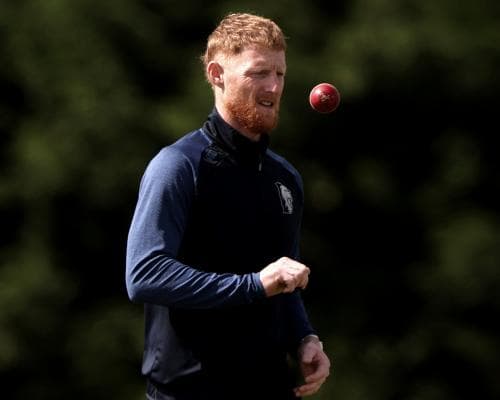
There is a moment in every high-stakes game when the script flips, and on this sun-drenched afternoon at Derby, Ben Stokes decided he was the author. The England captain, his ginger mane illuminated like a warning beacon, took three wickets in his first over, reducing Derbyshire to 44-7 and sending a shiver through the pavilion. This wasn't just cricket; it was a hostile takeover of a match that had been drifting toward a dull draw. For anyone who has ever watched a market-maker step in and reset the entire board, the sight was eerily familiar. Stokes doesn't just play the game; he reprices risk in real time, and the numbers on the scoreboard were his ticker tape.
The scale of the collapse was brutal. Derbyshire, chasing a target that was already looking steep, were 10 for 3 before most spectators had settled into their seats. Then Stokes, with the ball in his hand, delivered a spell that was less bowling and more asset stripping. First, Guest played a dreadful periscope shot and was caught near gully. Then Dal was lbw next ball, setting up a hat-trick. The crowd, a mix of local faithful and those who had come to see the great man, were on their feet. The third ball of the over was a brutish bouncer that felled Randell, a delivery so vicious it drew a concerned Stokes crouching over him, head in his hands. But the show went on. Aitchison had an ill-advised waft, backing away, and was caught. Three wickets in the over, four for Stokes in the innings, and Derbyshire were 44-7, a position from which no balance sheet could recover.
For the wealth builders watching, the mechanics of this collapse are a lesson in leverage. Stokes is the ultimate concentrated asset, a player whose presence alone alters the odds. Bookmakers had Derbyshire as slight favorites before the day's play, but after his first over, the live betting markets swung violently, with Durham's odds slashed to near-certainty. This is the same dynamic that drives momentum trading: one catalyst, a single piece of information or a single act of brilliance, can reprice an entire asset class. Stokes' spell was the equivalent of a surprise rate hike or a blockbuster earnings beat, and the market responded accordingly. The fielders were in every eyeline, the pressure suffocating, and the Derbyshire batsmen, like overleveraged traders, had no exit strategy.
The rarity of such a performance is what makes it precious. In an era of T20 slogging and data-driven strategies, Stokes is a throwback to the great all-rounders, a player who can win a match with bat, ball, or sheer force of will. His value to Durham, and to England, cannot be quantified in simple statistics. It is the kind of alpha that money cannot always buy, and it is why franchises in the IPL and other leagues will pay astronomical sums for his services. The heritage angle is also rich: Stokes is a modern-day Ian Botham, a player who thrives on chaos and delivers when the stakes are highest. For collectors and investors in sports memorabilia, a ball from this spell, signed and authenticated, would be a blue-chip asset, likely to appreciate as the legend grows.
What does this signal for markets? First, it is a reminder that individual talent remains a powerful driver of value, even in an age of systems and algorithms. In the world of venture capital, a single founder with a unique vision can outcompete a well-funded team. In sports, a single player can dominate a match and move the betting lines. Second, it highlights the fragility of momentum. Derbyshire were not a bad team, but they were psychologically broken by Stokes' intensity. In financial markets, this is how sell-offs happen: a trigger event, a loss of confidence, and a cascade of selling that no one can stop. The wealthy, who often pride themselves on rational analysis, would do well to remember that emotion and fear are the true drivers of volatility.
Looking forward, the question is not whether Stokes can do this again—he already has, twice in this match with first-ball wickets—but how long his body can sustain this level of intensity. At 33, he is managing a chronic knee injury, and every spell like this is a calculated risk. For investors, this is the classic dilemma of a high-beta asset: the potential for outsized returns is matched by the risk of a catastrophic drawdown. The smart play is to diversify, to hold a portfolio of such talents, but also to recognize that moments like this are why we watch, and why we invest. Stokes is not a stock; he is a force of nature, and on days like this, he is the only asset that matters.