Stellaria’s $6.8M seed round puts a UAE flag on the new space economy
UAE startup Stellaria raises $6.8M at $114.4M valuation to scale its AI geospatial platform, signaling Gulf capital's push into space-tech sovereignty.
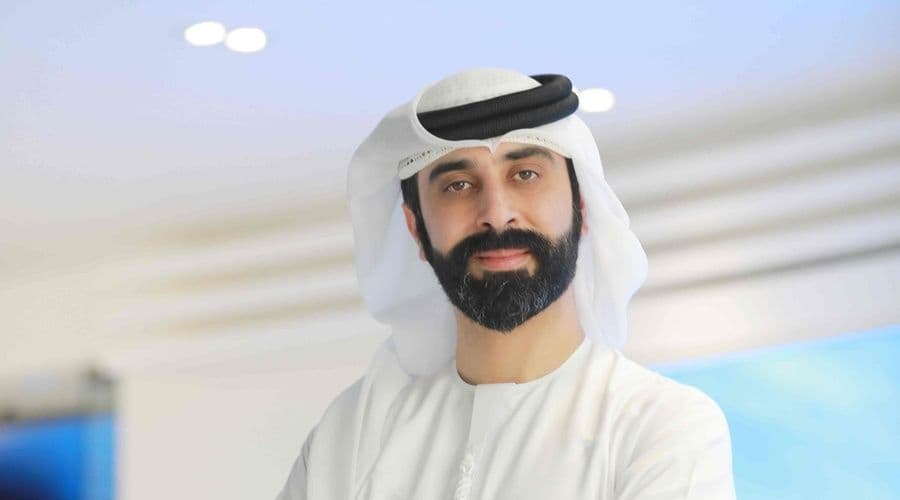
For anyone tracking where Gulf money is heading next, the answer just got clearer: up. A small Abu Dhabi-born company called Stellaria has quietly closed a $6.8 million (AED25 million) seed round, and the valuation attached to it — $114.4 million (AED420 million) — is the kind of number that makes global investors sit up and check their spreadsheets. This is not oil. This is not real estate. This is satellite imagery, artificial intelligence, and the quiet business of turning pixels into power.
Stellaria, which began life under the name Farmin, was founded by Dr. Ali AlHammadi, a UAE national with a doctorate and a clear ambition: build an AI operating system for geospatial intelligence. In plain terms, the company takes raw satellite data and makes it useful. Its Stella platform handles everything from automated target recognition and maritime port intelligence to super-resolution imaging and environmental monitoring. It can tell a government where a ship is loitering, or help a port operator see through cloud cover. The new funding, backed by a group of angel investors, will go toward expanding the technical team and scaling deployments both inside the UAE and abroad.
To understand why this matters, you have to understand how unusual it is. The geospatial AI sector is dominated by American and European players, with deep ties to defence and intelligence agencies. A startup from the Gulf breaking into that space — and doing so with a valuation that implies serious conviction from early backers — is not a small thing. The UAE has spent years positioning itself as a hub for advanced technology, from the Mohammed Bin Rashid Innovation Fund’s accelerator programme, which Stellaria graduated from, to the country’s broader space ambitions that put the Hope probe in Mars orbit. But a seed round like this suggests the ecosystem is maturing beyond flagship government projects into genuine private-sector innovation.
There is also a strategic layer that outsiders often miss. The Gulf states are acutely aware that data sovereignty and surveillance capabilities are forms of national power. Relying on foreign satellites and foreign algorithms for maritime security or infrastructure monitoring is a vulnerability. Stellaria’s technology, developed locally and owned locally, offers a path toward self-sufficiency in a domain that was previously outsourced. The fact that its applications span defence, ports, and environmental monitoring means it sits at the intersection of security and commerce — precisely where Gulf governments are willing to spend.
The valuation itself is a signal. A $114.4 million price tag on a seed-stage company in Abu Dhabi tells international investors that Middle Eastern angel networks are no longer playing it safe with retail or hospitality. They are writing cheques for deep-tech, for frontier science, for companies that could one day compete with the Maxars and Palantirs of the world. The $6.8 million raised is modest by global standards, but the multiple it implies — roughly 17 times the amount raised — suggests the founders gave away very little equity. That confidence, in turn, reflects a broader shift in how Gulf wealth views technology: not as a cost centre, but as an asset class.
Looking forward, the real test for Stellaria is whether it can move beyond government contracts and regional pilots. The UAE market is small; the world is not. AlHammadi has said the ambition is to build globally relevant space and AI technology from the UAE, and the funding is structured to support international expansion. If Stellaria can land a commercial client in Europe or Southeast Asia, it will prove that the Gulf can export intelligence products, not just import them. For now, the company remains a promising outlier. But in a region where capital moves fast and ambition moves faster, an outlier can become a template.
The wider lesson for wealth watchers is simple. The Middle East’s richest families and sovereign funds have spent the last decade diversifying into technology, but the next decade will be about owning the infrastructure of intelligence itself. Stellaria is a small piece of that puzzle — a seed-stage bet on a future where the Gulf does not just buy satellites, but reads them better than anyone else. That is a story worth following, and at $114.4 million, it is already priced like one.