St George's Araxá permit gamble puts Perth on the critical minerals map
St George Mining files key environmental permits for its giant Araxá rare earths project in Brazil, a bold step toward a mine by 2029.
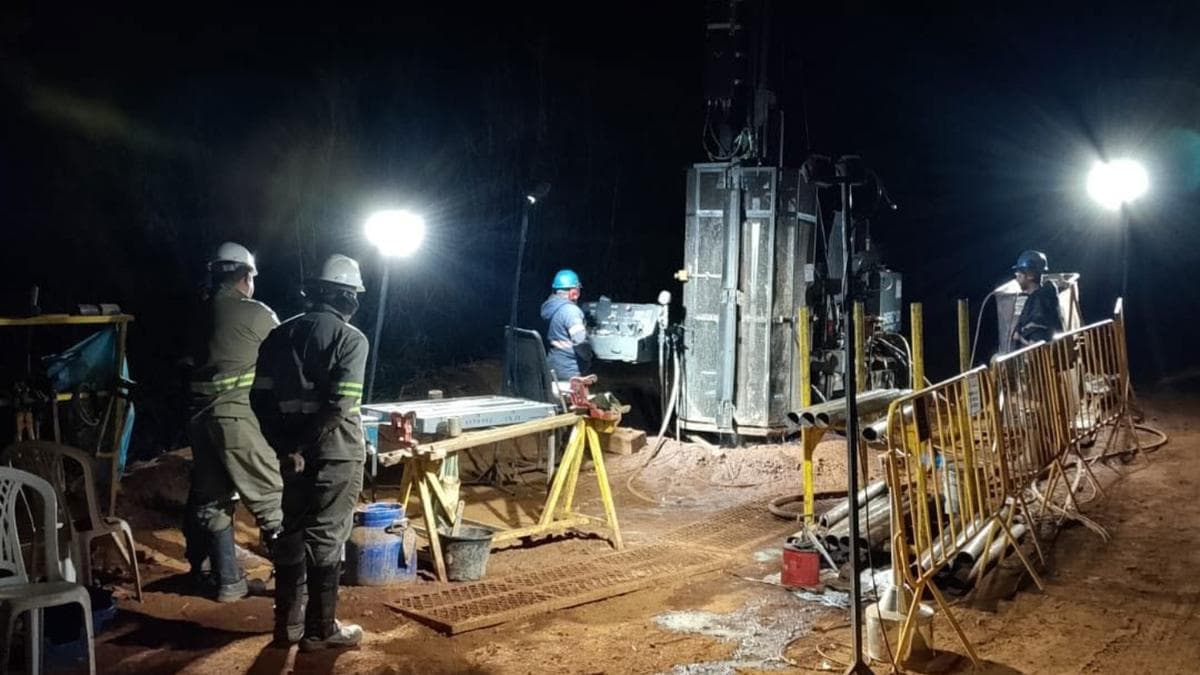
For a Perth-based explorer best known for chasing nickel in Western Australia's outback, the move into Brazil's Minas Gerais state once looked like a curiosity. Now St George Mining has lodged the formal environmental impact documents that could turn its Araxá deposit into one of the world's most significant rare earths and niobium mines outside China. The paperwork filed with the State Foundation for the Environment marks the end of discovery and the beginning of a long, expensive and politically delicate march toward production.
The company submitted its Environmental Impact Assessment and Environmental Impact Report to Minas Gerais authorities, capping 14 months of technical and environmental studies. These documents kick off a three-stage licensing process in Brazil's premier mining state, starting with a Preliminary Licence, then an Installation Licence, and finally an Operation Licence. St George expects the first two stages to wrap within 12 months, putting a potential construction start in the second half of 2029, assuming a final investment decision goes ahead. The proposal includes an open-pit mine, an industrial complex with processing and refining plants, and all the associated infrastructure — a serious industrial footprint, not a boutique operation.
Araxá sits on a JORC-compliant resource of 111.2 million tonnes grading 3.57 per cent total rare earth oxides and 0.57 per cent niobium pentoxide, which St George now calls the largest high-grade carbonatite-hosted rare earths resource in South America. Roughly 68 per cent of that — 75.2 million tonnes — falls in the high-confidence Measured and Indicated categories, giving global engineering firm Worley a solid base for the feasibility study running in parallel. The mineralisation is thick, starts at surface, and remains open in all directions, with a newly discovered high-grade zone growing one kilometre east of the main resource area. The shallow zones are also suited to free-dig mining, avoiding drill-and-blast costs that plague harder rock operations.
For international readers who track capital flows in Oceania, this is a telling moment. St George is a small-cap ASX-listed player, not a Rio Tinto or BHP. Yet it has pushed a Brazilian project into the formal approvals pathway while many Australian rare earths hopefuls still struggle with native title, environmental opposition and infrastructure gaps at home. The company's shift reflects a broader trend: Australian miners, blocked by domestic hurdles, are increasingly looking to Latin America, where governments are actively courting critical minerals investment. Minas Gerais offers established mining infrastructure, a skilled workforce and a supportive state government — a combination that Perth's boardrooms have begun to notice.
The timing is no accident. With the world scrambling to secure rare earths and niobium supplies outside China, Brazil has emerged as a key jurisdiction, and Araxá's grade and scale put it in the top tier globally. The permitting application also signals something deeper about Oceania's wealth engine: the region's mining know-how, honed over decades in the Pilbara and the Goldfields, is now an export in itself. St George is essentially packaging Australian technical expertise and ASX capital discipline into a Brazilian asset, and the market is watching closely. The project's upside remains untested at depth, and the licensing process could still throw up surprises, but the company is steadily ticking regulatory boxes.
What happens next will depend on how smoothly the licensing stages move and whether the feasibility study confirms the economics. If Araxá reaches production, it would not just transform St George — it would validate a new template for Australian miners seeking growth offshore. For a market desperate for new sources of critical minerals, this is a classic case of the right project, in the right place, at the right time. The paperwork is filed, the clock is ticking, and Perth's junior mining sector has a new frontier to watch.