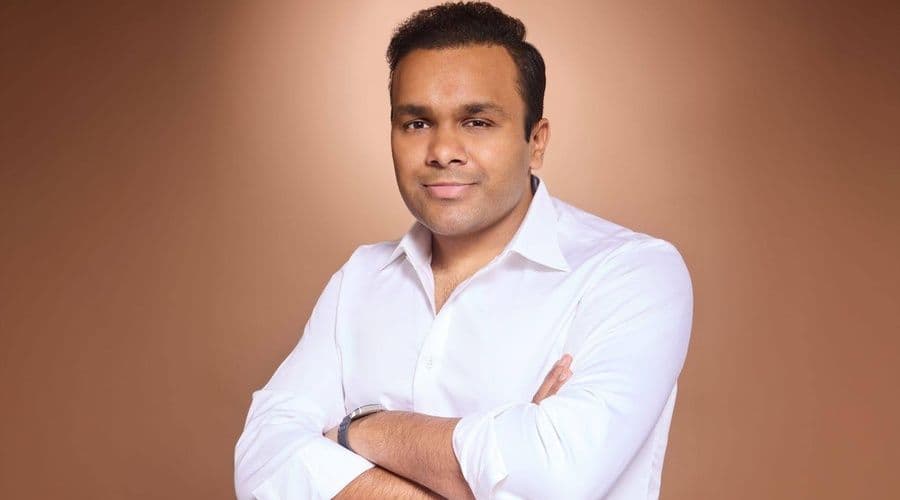
Source Meridian taps Wharton-trained operator to scale AI in Latin America's healthtech waters
Source Meridian hires Bob Reisenweber as Director of Operations to scale AI healthcare solutions across the US, Colombia, and Ecuador.

In the high-stakes world of regulated healthcare data, operational missteps are not merely costly—they can be catastrophic. That is why the announcement that Source Meridian, a boutique AI firm with deep roots in Latin America, has brought in Bob Reisenweber as its new Director of Operations deserves more than a passing glance from anyone tracking capital flows in the region. Reisenweber, a Wharton School of Business alum, is not a typical corporate hire. His mandate is to fine-tune the machinery behind Source Meridian's generative AI and automation offerings, ensuring the company can scale without tripping over its own complexity.
Source Meridian, founded in 2016 by Mike Hoey, has carved out a niche that most tech companies avoid: solving problems in highly regulated industries. Instead of chasing generic software opportunities, the firm builds machine learning architectures and custom analytics systems for clients who must navigate strict data privacy standards like HIPAA and make sense of complex, often messy, datasets. In this world, precision is non-negotiable, and the cost of error is measured in compliance violations and lost trust. Reisenweber's arrival signals that the company is betting on operational excellence as the next frontier for growth.
For an international reader, the significance here lies in the geography. Source Meridian operates across the United States, Colombia, and Ecuador, a footprint that reflects a growing trend among tech firms: leveraging Latin American talent to solve global problems. Colombia, in particular, has become a hotspot for software development and AI engineering, with a deep pool of skilled professionals who offer cost advantages without sacrificing quality. By anchoring operations in these markets, Source Meridian is tapping into a workforce that is increasingly central to the region's economic ambitions. This is not just about outsourcing—it is about building cross-border teams that can compete on the world stage.
Reisenweber's background adds another layer of intrigue. Before joining Source Meridian, he spent time in the startup ecosystem and in financial services, working on mergers and acquisitions at UBS. That experience gives him a sharp eye for structural efficiency, a skill that is rare in the tech world, where founders often prioritize innovation over process. He then moved into venture capital, founding and leading startups focused on emerging markets. This hybrid profile—part operator, part investor, part entrepreneur—suggests that Source Meridian is preparing not just for incremental growth, but for a significant expansion that will require disciplined execution.
In his own words, Reisenweber expressed enthusiasm about working with the team to scale operations and support the next phase of growth. While such statements are common in press releases, his specific focus on operational scaling is telling. For a company that thrives on technical rigor, the challenge is to grow without diluting the quality that has earned it a reputation as a leader in its niche. The appointment appears to be a deliberate move to institutionalize processes, reduce bottlenecks, and ensure that the firm can handle larger, more complex projects without breaking a sweat.
For South America's wealth watchers, this hire is a quiet but meaningful signal. It underscores the region's growing role as a hub for high-value tech services, not just low-cost labor. It also highlights the increasing sophistication of companies that operate across the Americas, where talent flows in both directions and success depends on seamless integration. As the global market for AI in healthcare and life sciences is projected to reach $188 billion by 2030, players like Source Meridian are positioning themselves to capture a slice of that pie—and they are doing it from Bogotá and Quito as much as from Silicon Valley.
Looking ahead, Reisenweber's success will be measured not in press releases but in the firm's ability to deliver on its promises. If he can translate his operational acumen into tangible efficiencies, Source Meridian could become a model for other tech companies looking to scale in Latin America. For now, the appointment is a bet on the future—one that carries implications for the region's tech ecosystem and its place in the global AI landscape.