Settler Violence Surges in Palestinian Heartland: The West Bank's New Frontier for Capital and Conflict
Israeli settler attacks in Areas A and B of the West Bank have nearly doubled since 2025, marking a strategic shift into territory designated for Palestinian statehood. This escalation signals rising geopolitical risk that wealth builders must factor into regional investments and security assessments.
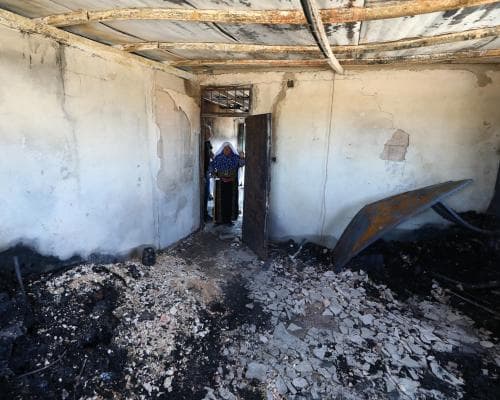
The map of the West Bank is being redrawn not by diplomats, but by violence. A new report from the Israeli human rights group Yesh Din reveals that settler attacks in Areas A and B—the very zones meant to form the backbone of a future Palestinian state—have nearly doubled since 2025. This is not a border skirmish; it's a systematic push into the heart of the Oslo Accords' vision, and it carries profound implications for anyone with capital in the region or a stake in global stability.
The numbers are stark. Almost two-thirds of settler violence incidents in 2026 have occurred in Areas A and B, up from roughly a third in 2025. Yesh Din's report, 'The Next Frontier,' describes a 'rapid shift' in violence and pressure from Area C—where Israeli settlements are concentrated—into Areas B and even A. This isn't random chaos; it's a coordinated campaign, what settlers themselves call a 'great settlement revolution.' For investors, this is a red flag: when the rules of a decades-old framework are being violently rewritten, the risk premium on regional assets—from real estate to infrastructure—just went up.
Let's get the mechanics straight. The Oslo Accords carved the West Bank into three zones: Area C (60%), under full Israeli control, where all government-approved settlements sit; Area A (18%), with Palestinian civil and security control, home to major cities like Ramallah and Nablus; and Area B (22%), with Palestinian civil control but Israeli security oversight. The intent was for these areas to collectively form a Palestinian state. Instead, successive Israeli governments have exploited Area C for settlement expansion, and now the pressure is bleeding into Areas A and B. The report notes that settlers are not just targeting isolated farms; they're attacking Palestinian communities, often with military support, and the frequency is accelerating.
The scale of the economic disruption is hard to overstate. These attacks aren't just physical—they're aimed at livelihoods. Olive groves are torched, grazing land is seized, and families are forced to abandon homes and businesses. A 2024 UN report estimated that settler violence has displaced thousands of Palestinians, with a direct hit on agricultural output that feeds local markets and export chains. For the wealthy, this is a reminder that geopolitical risk isn't abstract; it's a tangible drag on productivity, supply chains, and property values. The West Bank's GDP growth has already lagged, and this escalation will only deepen the divide.
What's new here is the audacity. In the past, settler violence was mostly confined to Area C, where the Israeli military had a heavy presence. Now, it's moving into the urban and peri-urban zones that were supposed to be the Palestinian Authority's stronghold. Yesh Din's data shows that 2026 is on track to be the worst year on record for settler attacks in Areas A and B, with a near-doubling of incidents. This isn't a fringe movement; it's state-backed, with government ministers openly supporting settlement expansion and military units often standing by during attacks. For global investors, this signals a breakdown in the rule of law—a critical factor in any market assessment.
For wealth builders, the message is clear: the West Bank is becoming a higher-risk zone, and that has ripple effects beyond its borders. Regional stability is a key input into oil prices, defense spending, and tech supply chains in Israel and neighboring states. The escalation could also trigger international sanctions or divestment campaigns, hitting companies with exposure to settlements. Already, several European pension funds have pulled out of firms operating in the West Bank, and the trend is likely to accelerate as violence spikes.
Looking ahead, the question is whether this 'great settlement revolution' will succeed in its aim of making a two-state solution physically impossible. The data suggests it's working. Areas A and B are the last bastions of Palestinian governance, and if they fall, the entire Oslo framework collapses. For investors, that means a long-term structural shift in the region's risk profile. The savvy move is to watch how this plays out—not just for humanitarian reasons, but because capital flows follow security. When violence becomes the norm, capital leaves. And that's a lesson that transcends borders.