Qatar's Aligator raises $1.2m seed to automate PR with AI agents
Qatar's Aligator raises $1.2m seed led by QDB and Next Ventures to scale agentic AI for PR across the GCC and MENA.
In Doha, a startup barely a year old is betting that the most relationship-driven corner of the communications business — public relations — can be handed to autonomous software agents. The wager has just drawn fresh capital from two of Qatar's most strategically placed backers.
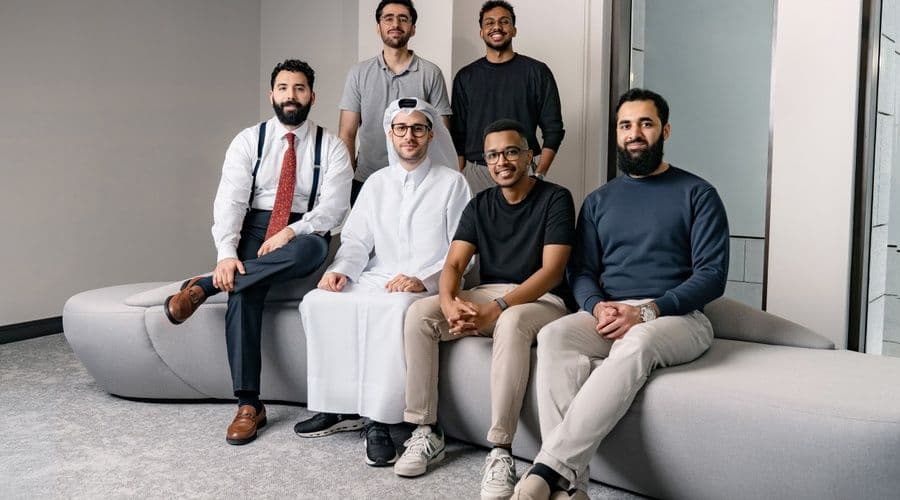
Aligator, a Qatar-based developer of agentic AI for the PR industry, has closed a $1.2 million seed round, equivalent to QAR4.3 million. The round was led by Qatar Development Bank (QDB) and Next Ventures, the fund established by Media City Qatar, with additional participation from a group of private investors. Founded in 2025 by Ali Abbas, the company builds AI agents that draft and distribute press materials, monitor media coverage, match journalists and outlets to pitches, and manage outreach workflows from start to finish. The new money is earmarked for product development, hiring across engineering, AI research and go-to-market teams, and regional expansion into the GCC and the wider MENA region.
For readers outside the Gulf, the names behind the cheque matter as much as the amount. QDB is the state's development bank, the institution that has spent years trying to convert Qatar's hydrocarbon wealth into a private sector that can stand on its own. Next Ventures is the venture arm of Media City Qatar, the free-zone hub that hosts media and technology companies and is building a cluster around them. When both the state's startup financier and its media-zone fund lead the same early round, it is less a purely commercial signal than a policy one: this is the kind of company Qatar wants to exist.
The founders' pedigree reinforces that reading. Aligator was built by Qatar Foundation alumni — graduates of Carnegie Mellon University in Qatar and Texas A&M University at Qatar, both based in Education City, the sprawling campus cluster Doha has funded for decades to import world-class universities. The company is incorporated in Media City Qatar and licensed by the Qatar Financial Centre, giving it a foot in both the free-zone and onshore financial regimes. In practice, that means a startup born from state-funded education, housed in a state-backed media zone, and financed by a state development bank — a full loop of Qatar's innovation apparatus. That is a detail an outsider might miss: in the Gulf, the distance between public institutions and private ambition is often deliberately short.
The pitch itself is straightforward. PR teams, the company argues, spend most of their hours on repetitive work — tracking coverage, building media lists, drafting routine releases, chasing follow-ups — leaving little time for strategy and relationships. Aligator's agents are designed to absorb that operational load, learning a client's voice and media landscape. It is a crowded global field; agentic AI is the phrase of the moment from Silicon Valley to Singapore. What Aligator is selling is not the underlying technology but domain specificity: agents tuned for communications, sold into agencies, corporates and government communications offices across the region.
Seen from the wider Middle East, the deal fits a pattern that has accelerated over the past two years. Gulf sovereign and quasi-sovereign investors, once content to write cheques into American and Chinese venture funds, are increasingly funding homegrown software. Qatar's National Vision 2030, the country's long-range diversification blueprint, is cited explicitly by Next Ventures' Khalid Mubarak Al-Naimi as the frame for the investment. The sums remain modest by global standards — a $1.2 million seed is a rounding error in the Gulf's sovereign wealth universe — but the direction is what matters. Capital is being pointed at applied AI built locally, by locally educated talent, for regional customers.
The test now is execution. Aligator must prove that PR agencies and government communications teams will trust autonomous agents with their most sensitive relationships, and that a Doha-built product can win business in Riyadh, Dubai and beyond. If it can, the company becomes a template for the next wave of Qatari founders — and a validation of the education-to-enterprise pipeline Doha has spent a generation constructing.