Saudi private markets platform OORI wins CMA licence, opening doors for retail-qualified investors
Saudi platform OORI secures CMA licence to arrange and advise on Shariah-compliant private market deals, targeting tech startups for qualified investors.
For years, the most interesting money in the Gulf has sat behind a velvet rope: private market deals in venture capital, growth equity and pre-IPO tech were reserved for a tight circle of institutions and billionaires who could write cheques most people only see in movies. That rope is now being loosened in Saudi Arabia, one platform at a time. The latest tug comes from OORI, a Riyadh-born investment platform that just secured a licence from the Kingdom's Capital Market Authority to arrange and advise on private market investments — a quiet but significant step in a country that is trying to turn its oil wealth into a durable, diversified financial engine.
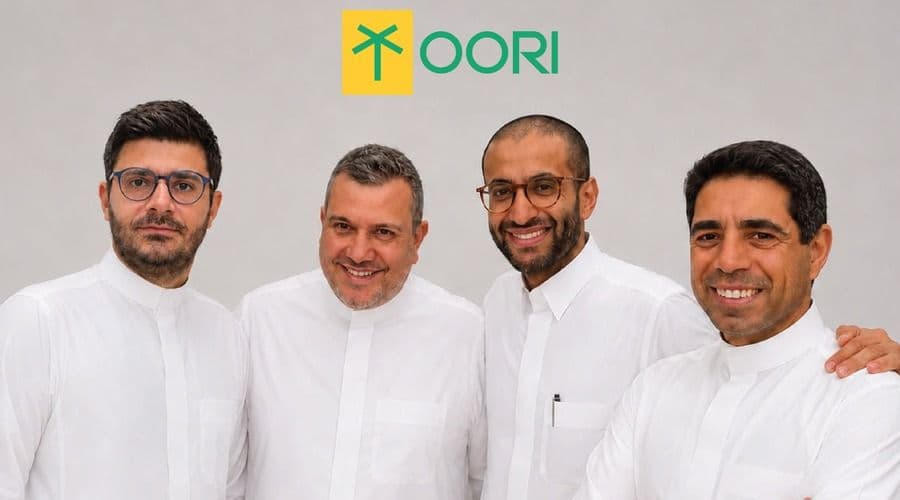
OORI, founded in 2023 by Elie Nasr and Naif Al Ajmi, will use the CMA licence to give qualified investors in Saudi Arabia regulated access to Shariah-compliant private market opportunities, starting with technology companies from the pre-seed stage all the way to pre-IPO. The company raised a seven-figure US dollar pre-seed round in 2024, backed by strategic investors, family offices and angels from Saudi Arabia, the GCC and Europe, including Bunat Ventures and RZM Investments. That capital went into building the platform's technology, completing the licensing process and preparing for launch. The founders' pitch is simple: private markets have historically been closed to all but a sliver of high-net-worth individuals, not because demand was missing, but because the structures were costly, opaque and illiquid.
To understand why this matters, you have to look at who is behind it and where it sits in the broader Saudi story. Nasr and Al Ajmi are not outsiders dipping into the Kingdom for a quick fintech play; they are building from within, with an eye on the country's Vision 2030 push to create a capital market that can rival Dubai, Abu Dhabi and even Singapore. Saudi Arabia's Capital Market Authority has been quietly modernising its rulebook, and the fact that OORI pursued a full CMA licence from day one — rather than operating in a grey zone or waiting for a more permissive jurisdiction — signals a deliberate bet on the Kingdom's regulatory trajectory. The platform's initial focus on Shariah-compliant structures is also no accident: a large share of Saudi investors, including family offices that control some of the region's oldest fortunes, want exposure to high-growth tech without compromising on religious principles.
The timing is telling. Saudi Arabia is in the middle of an unprecedented wealth redistribution, with sovereign funds, public pension money and private capital all being pushed toward non-oil sectors. But the retail and qualified investor class has often been left out of the most exciting deals — the ones that happen in boardrooms and private equity calls before a company ever hits an exchange. OORI's model aims to change that by aggregating curated opportunities, lowering minimums through technology, and providing a layer of transparency that the private markets have long resisted. The company says it has already built partnerships with investment banks, venture capital firms, private equity funds and wealth managers to source and vet deals, which suggests it is not trying to reinvent the wheel but rather to widen the road.
What does this signal for the wider Middle East economy? First, that the region's wealth is no longer content to sit in real estate and public equities. There is a growing appetite for venture and growth-stage exposure, and platforms like OORI are the connective tissue between that appetite and the startup ecosystem. Second, it shows that Saudi Arabia is serious about becoming a financial hub in its own right, not just a source of capital for London or New York. The CMA's willingness to licence a young platform focused on private markets is a quiet endorsement of the idea that regulation can be an enabler, not just a gatekeeper. And third, it reflects a broader generational shift: the heirs of Gulf fortunes, many of whom are now in their thirties and forties, want to back founders, not just buy buildings.
Looking ahead, OORI's roadmap extends beyond tech. The company plans to expand into other alternative asset classes, and its longer-term vision includes tokenisation, smart contracts and digital investment infrastructure — the kind of buzzwords that usually make seasoned investors roll their eyes, but which in this context carry real weight. If Saudi Arabia is going to build a private markets ecosystem that can channel its wealth into innovation, it will need more than a few licensed platforms; it will need the infrastructure to make those markets liquid, transparent and accessible. OORI is early, but it is positioned exactly where the Kingdom's capital wants to flow. The velvet rope is still there, but for a growing number of qualified investors, it is starting to look more like a welcome mat.