Rubio's 'Brute Force' Diplomacy: A High-Stakes Bet That Could Redefine American Power
Marco Rubio's rejection of traditional peace processes in favor of coercive statecraft marks a radical shift in US foreign policy, with profound implications for global stability and the 2028 Republican primaries. This editorial analyzes the strategy, its risks, and what it signals for the future of diplomacy.
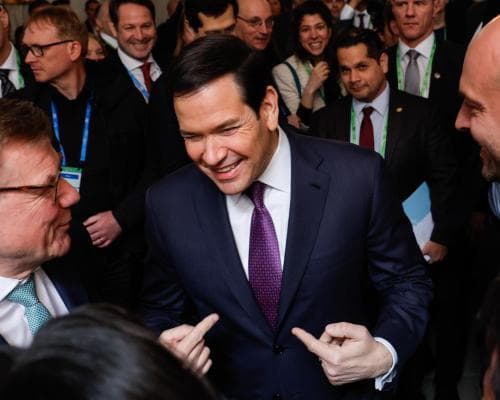
The world is on fire, but the smoke isn't from record heatwaves. It's from the smoldering remains of failed peace accords, brazen cross-border attacks, and a superpower that seems to have traded its diplomatic toolkit for a sledgehammer. As Iran simmers, Israel flatly rejects Washington's latest Gaza proposals, and Russia tests NATO's patience with escalating provocations, the need for a deft, professional hand at the helm of US foreign policy has never been more acute. Enter Marco Rubio, the secretary of state who appears determined to prove that the loudest voice in the room is the only one that matters.
Rubio is not your typical secretary of state. Unlike the shuttle-diplomacy energy of a John Kerry or the meticulous alliance-building of an Antony Blinken, Rubio projects a raw, unvarnished assertion of American power. He has little time for what he dismisses as "peace processes," preferring instead to present take-it-or-leave-it "solutions" that advance US interests through sheer force of will. This is a bet that the world's respect is less valuable than its fear, and that a strongman's resolve can outlast the messy, patient work of negotiation. It's a strategy that echoes the instincts of his boss, Donald Trump, but with a sharper, more ideologically consistent edge.
The stakes could not be higher. With the Ukraine war grinding into its fifth year and energy prices still volatile, Rubio's approach is being tested in real time. His willingness to sideline traditional diplomacy in favor of coercive ultimatums has already produced a glaring rebuke from Israel, a key ally, which flatly rejected his latest peace plan within days of Trump's self-congratulatory "historic breakthrough." This isn't just a policy disagreement; it's a signal that even close partners are unwilling to be strong-armed into agreements that don't account for their own security calculus. The question is whether Rubio's hardline posture is a calculated strategy to reset the global order, or a dangerous gamble that isolates America at the exact moment it needs allies most.
Behind the scenes, a different kind of war is being waged—one of capital and technology. While Rubio projects strength abroad, the real levers of power are increasingly held by a new class of global elites: billionaires who fund AI-driven defense startups, sovereign wealth funds that bankroll satellite constellations, and tech moguls who see geopolitics as another market to disrupt. These players are not waiting for the State Department to catch up. They are building their own diplomatic channels, their own intelligence networks, and their own peace-brokering platforms, often with more speed and agility than any government bureaucracy. Rubio's brute-force approach may appeal to a domestic audience tired of endless wars, but it risks ignoring this new reality: that in the 21st century, power is no longer solely measured by the size of your carrier fleet, but by the sophistication of your algorithms and the reach of your capital.
For Rubio, this is a personal crucible as much as a national one. The 55-year-old son of Cuban immigrants, once mocked by Trump as "little Marco" and a "loser," now has a platform to redefine himself. A successful handling of these crises could propel him to the front of the 2028 Republican primary race, transforming him from a loyalist into a statesman. But the path is fraught. Every failed ultimatum, every dismissed peace plan, and every escalation in Europe or the Middle East is a data point against his thesis. The world is watching to see if he can pivot from being a purveyor of threats to a builder of outcomes—or if his legacy will be that of a man who wielded power without wisdom.
What does this signal for the sector of international relations? A clear trend toward transactional, leverage-based diplomacy that treats alliances as negotiable contracts rather than enduring bonds. This is a world where trust is a commodity, and where the ability to project force—whether military, economic, or cyber—is the ultimate currency. For the deep-tech and elite capital crowd, this is both a warning and an opportunity. The vacuum left by traditional diplomacy is being filled by private actors who can move faster, but also with less accountability. Rubio's approach, if it fails, could accelerate this fragmentation, creating a multipolar chaos where every nation and every billionaire is out for themselves.
The next few years will be a stress test for Rubio's doctrine. Will he double down on coercion, or will the realities of a burning world force him to rediscover the art of compromise? The answer will not only shape the 2028 race but also define whether America remains the indispensable nation—or just another player throwing its weight around. As the fires rage, one thing is certain: the old rules of diplomacy are dead, and Rubio is writing the new ones with a blunt instrument. The question is whether he's building a fortress or a tomb.