Elon Musk’s Kardashev Mantra: The Billionaire Escape Hatch From Climate Reality
Tech titans, led by Elon Musk, are increasingly invoking the Kardashev scale—a measure of civilization’s energy use—as a futuristic rationale to sidestep today’s climate fixes. This editorial unpacks why that mindset is a dangerous distraction, and what it signals for the clean-energy transition.
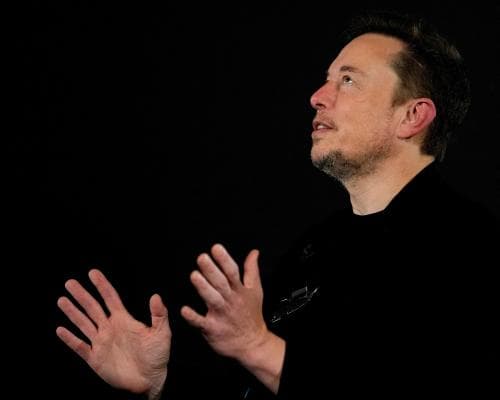
Next time the UK endures 61 rainless days and you catch yourself wondering if this is the beginning of the end, there’s a phrase you can murmur like a rosary: the Kardashev scale. It’s a concept ripped from 1960s Soviet astrophysics, dusted off by tech’s elite, and now championed by Elon Musk as the ultimate get-out-of-jail card. The logic is seductive in its simplicity: if humanity is destined to become a Type I civilization, harvesting every joule of solar energy that hits Earth, then today’s emissions are just a phase. Why sweat the carbon budget when we’re on the cusp of becoming a star-faring species? It’s the kind of thinking that lets a billionaire sleep at night while the tap runs dry.
The Kardashev scale, named after Soviet astronomer Nikolai Kardashev, ranks civilizations by their energy consumption. Type I uses all planetary energy; Type II harnesses a star; Type III commands a galaxy. For Musk, who has made a career of turning sci-fi into startups, it’s a perfect narrative: climate change isn’t a crisis to solve with boring policy—it’s a puzzle to outgrow. His Tesla and SpaceX ventures are framed as stepping stones to this grand destiny. But here’s the rub: the scale is a measure, not a plan. It tells you how far we’ve come, not how to get there. And when billionaires adopt it as a mantra, they’re not engineering a solution—they’re engineering an excuse.
This isn’t just Musk’s quirk. It’s a pattern among the ultra-wealthy, who see intractable problems and decide the missing ingredient is their own brilliance. Jeff Bezos, instead of paying taxes like a regular citizen, reinvented preschools. Mark Zuckerberg and Priscilla Chan launched schools with no expertise, just ambition. Steve Jobs, when diagnosed with pancreatic cancer, delayed surgery for holistic remedies—with fatal results. The Kardashev scale is the same impulse, writ cosmic: a belief that intelligence can leapfrog limitations, that innovation is a skeleton key for all human knowledge. It’s a comforting story, but the evidence is thin. None of these ventures have worked. And while Musk’s solar and battery ventures are real, they’re not enough to justify ignoring the 1.5°C target.
The capital behind this mindset is staggering. Musk’s net worth, SpaceX’s valuation, and Tesla’s market cap give him a megaphone that drowns out climate scientists. He’s not just selling electric cars; he’s selling a vision of human destiny that makes today’s sacrifices seem trivial. The Kardashev scale becomes a rhetorical shield against carbon taxes, grid upgrades, and international agreements. It’s a form of techno-optimism that feels bold but is actually conservative—it preserves the status quo by promising a future that may never arrive. Meanwhile, the market is responding. Clean energy stocks fluctuate, but the real action is in speculative ventures: fusion startups, space-based solar, and carbon-sucking machines. These are all Kardashev-adjacent bets, and they’re sucking up billions that could be spent on proven solutions like wind, solar, and grid storage.
This matters because the climate crisis is not a physics problem—it’s a governance problem. The Kardashev scale assumes we can engineer our way out, but every year of delay costs us. The UK’s drought, California’s wildfires, Pakistan’s floods—these are not abstractions. They are the results of a civilization that has chosen to believe in a future that hasn’t arrived. The tech billionaires’ mantra is a luxury good, available only to those who can afford to ignore the present. For the rest of us, the tap is already dry.
So what’s the forward path? It’s not to abandon ambition. SpaceX’s achievements are real, and Tesla’s role in electrifying transport is vital. But the Kardashev scale should be a reminder of how far we have to go, not a sedative. The next time Musk tweets about Type I civilization, ask him what he’s doing about the grid. The next time a billionaire invokes the future, ask them to fund today’s infrastructure. The future is built with boring things: transmission lines, heat pumps, and carbon pricing. The Kardashev scale is a beautiful dream, but dreams don’t stop droughts. They just make them easier to ignore—until they’re impossible to ignore. And by then, no mantra will save us.