Nvidia's Korea courtship: What a $2.3bn chip startup says about AI's next power play
Nvidia eyes South Korean AI chip startup Rebellions for partnership or acquisition, signaling a shift from training to inference compute.
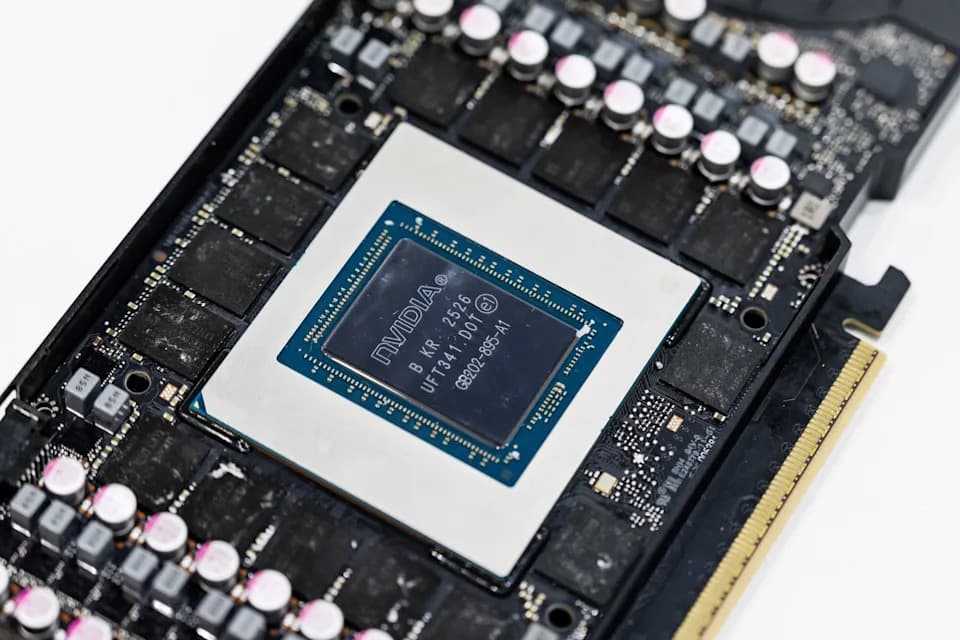
The most interesting meeting in artificial intelligence this month did not happen in Silicon Valley's usual glass towers, nor did it involve a product launch. It took place in Santa Clara, where Jensen Huang sat down with Sunghyun Park, the co-founder and CEO of Rebellions, a South Korean chip designer that has quietly raised roughly $850 million since its 2020 founding during the pandemic. The conversation, according to sources familiar with the matter, covered everything from a technical partnership and investment to a full acquisition. For anyone tracking capital flows in the global AI race, this is not a footnote — it is a signal flare.
Rebellions, headquartered in Bundang just south of Seoul, designs neural processing units tailored for data center inference. That distinction matters more than most outsiders realize. Training an AI model is like building a library — it requires massive, concentrated compute power once. Inference, by contrast, is what happens every time a user asks ChatGPT a question or a bank flags a fraudulent transaction. It is the constant, high-volume workload that runs the world's AI services, and it is where the money will be made as these tools scale. Rebellions has focused on that less glamorous but far more commercially vital layer, and it has attracted heavyweight backers including SK Hynix, Samsung Ventures, and Arm Holdings, plus direct support from the South Korean government. Its valuation now sits around $2.3 billion.
For African readers who track global wealth, the story is less about one startup and more about how strategic assets are being consolidated at the top. Nvidia already dominates the training segment with its GPUs, and Huang has made no secret of his appetite for aggressive investments and talent grabs to lock in that supremacy. Buying or partnering with Rebellions would give Nvidia a foothold in inference silicon — a market that is expected to dwarf training in volume, even if it is less spectacular per unit. The meeting was not a courtesy call; it was reconnaissance for a war over the next decade of compute architecture. South Korea, for its part, treats advanced semiconductors as critical national infrastructure, so any deal would face scrutiny from local regulators who are unlikely to wave through a foreign takeover of a domestic champion without conditions.
What does this have to do with Africa? More than one might think. The continent is largely absent from chip design and fabrication, but it is not absent from the AI economy — it is a consumer, a data producer, and increasingly a testing ground for inference-heavy applications like mobile money fraud detection, agricultural advisory services, and health diagnostics. When Nvidia consolidates control over the chips that run those workloads, it shapes the cost and accessibility of AI for everyone downstream, including African startups and governments. A deal that strengthens Nvidia's grip on inference hardware could mean cheaper, faster AI services globally — or it could mean tighter vendor lock-in and higher licensing fees for emerging markets that have little negotiating power. The outcome matters in Lagos and Nairobi just as much as in Seoul and Santa Clara.
The broader signal for capital watchers is that AI's center of gravity is shifting from pure research to deployment economics. Investors who poured billions into training models are now realizing that the real bottleneck — and the real prize — is the infrastructure that keeps those models running at scale. Rebellions' rise from a pandemic-era startup to a $2.3 billion company with government backing shows how quickly strategic value can accrue in this space, and how national governments are willing to play banker and protector for their champions. South Korea is not alone; the European Union, Japan, and even Gulf states are all shoring up domestic chip ambitions. Africa, by contrast, has no equivalent play, and that absence is becoming a strategic vulnerability as AI becomes a utility rather than a novelty.
No deal is done. The discussions are preliminary, and antitrust regulators in the United States are already circling Nvidia's market share with unusual interest. A failed negotiation would hardly be a shock. But the fact that Huang chose to meet Park at all, at this moment, tells you where the industry's future lies. For those of us who watch wealth and power move across continents, the takeaway is simple: the next phase of the AI boom will not be won in the lab but in the supply chain, and the companies — and countries — that control the chips that run the world's intelligence will set the terms for everyone else. Africa should be watching closely, because it will feel the consequences long before it has a seat at the table.