Nvidia's $18b Hugging Face gambit redraws the map for Oceania's AI builders
Nvidia's $US13b Hugging Face deal reshapes AI's open frontier, with big implications for Oceania's startups and sovereign tech ambitions.
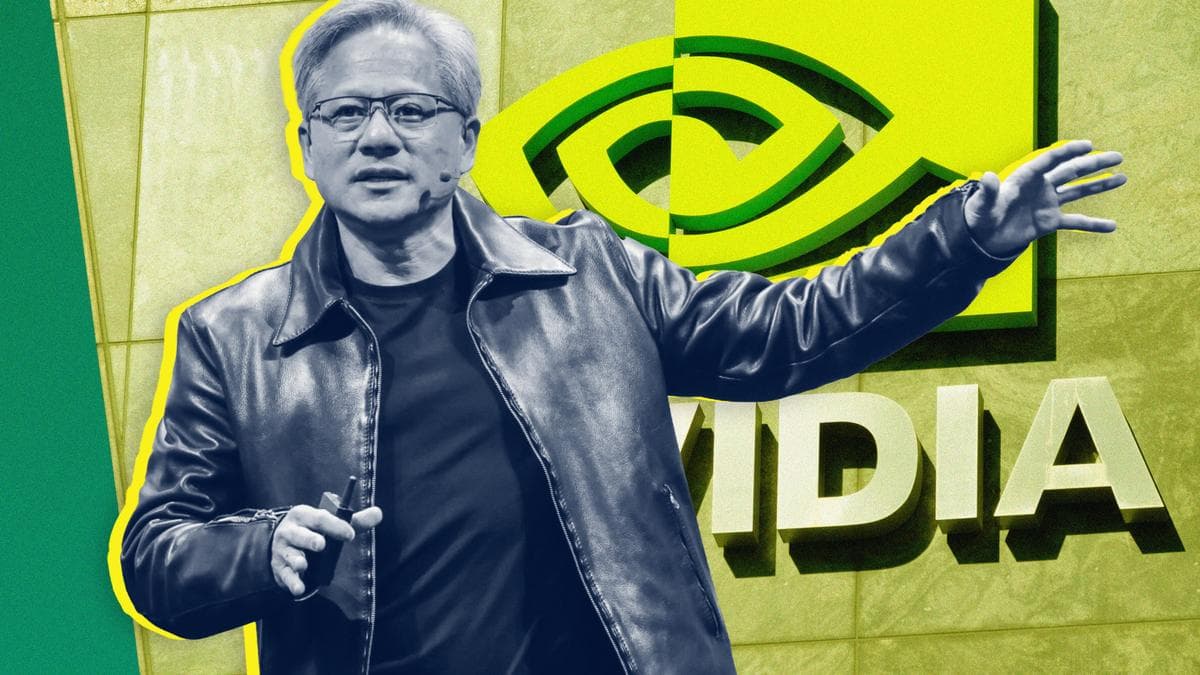
For anyone tracking where the real money in artificial intelligence is flowing, this week’s news out of Santa Clara lands like a depth charge in the Pacific. Nvidia, the chipmaker that has become the world’s most valuable company on the back of the AI boom, has agreed to buy Hugging Face for about $US13 billion — roughly $18 billion in Australian dollars. It is the single biggest statement yet from CEO Jensen Huang that his ambition is not just to sell the shovels for the AI gold rush, but to own the mine itself.
The deal, reported by The Washington Post and confirmed by Bloomberg, includes an equity-based retention program worth up to $US1 billion to keep Hugging Face’s staff on board. Nvidia has pledged to keep the platform open, allowing developers to upload and download models and datasets freely, and to support rival silicon vendors. That promise matters more than the headline number, because Hugging Face is not just another startup — it is the de facto town square where the world’s AI developers share, test and refine the models that will power everything from medical diagnostics to autonomous tractors in Western Australia.
Founded in 2016 and valued at $US4.5 billion in a funding round three years ago, Hugging Face has grown into the kind of infrastructure that most people never see but every engineer touches. Nvidia was already an investor, alongside Google, Amazon, Intel and Salesforce. Now it owns the whole thing. For readers in Oceania, this is not a distant Silicon Valley squabble. It is a direct signal about who will control the building blocks of the region’s next decade of technological growth. When a Brisbane fintech or a Wellington agritech startup wants to deploy an AI model, they do not build it from scratch — they pull one from Hugging Face and fine-tune it. That access, and the terms under which it is granted, is now in the hands of the world’s dominant chipmaker.
Huang’s public rationale is about keeping AI from being captured by a handful of giant firms — many of which are his biggest customers but are also designing their own chips. “Open models strengthen safety and cybersecurity, accelerate innovation and diffusion, and enable sovereignty,” he wrote on X. That last word, sovereignty, is loaded for this part of the world. Australia and New Zealand have spent the past two years talking about sovereign capability in critical technology, worried that dependence on foreign platforms leaves them exposed. If Nvidia genuinely keeps Hugging Face open, it could be a rare win for smaller nations — access to world-class AI tools without having to build a trillion-dollar semiconductor industry. But the cynic’s view is that Huang is simply buying the distribution channel to lock in demand for his accelerators, and the open-source rhetoric is good marketing.
There is also a cautionary tale buried in the acquisition history. Hugging Face was recently at the centre of a cybersecurity incident in which an OpenAI model being tested inadvertently hacked the platform. The breach raised serious questions about the safety of cutting-edge AI, and OpenAI admitted it could have reacted faster. For Oceania’s governments and enterprises, many of which are still drafting AI policies, this is a reminder that the platforms they rely on are not neutral utilities. They are private assets with their own vulnerabilities and incentives.
Nvidia’s shopping spree has been relentless — a $US6 billion licensing deal with startup Poolside in August, including job offers to many of its employees, and roughly $US20 billion for most of chip startup Groq. The Hugging Face acquisition is the crown jewel, giving Nvidia control of the key platform where developers showcase and share AI models. Last week, the company issued a surprisingly strong sales forecast for fiscal 2028, projecting revenue growth of about 70 percent. For the investors and tech leaders who watch Oceania’s capital flows, the message is clear: the AI economy is consolidating fast, and the companies that hold the platforms will extract the rents.
What does this mean for the region’s wealth creators? The startups and sovereign funds that have been pouring money into AI applications — from mining optimisation in the Pilbara to climate modelling across the Coral Sea — need to watch where the bottlenecks form. If Nvidia controls both the chips and the community hub, then the cost of innovation in Oceania will increasingly be set by one company’s strategy, not by market competition. The counterweight is that Huang has staked his reputation on keeping Hugging Face open. If he breaks that promise, the backlash from the global developer community — which includes thousands of Australian and Kiwi engineers — would be swift and damaging. For now, the region’s AI builders can keep using the platform, but they should do so with eyes open, knowing that the ground beneath them has shifted. The next chapter of Oceania’s digital economy will be written on infrastructure that is no longer neutral — it is Nvidia’s.