Hitachi Energy's Schierenbeck Bets on India as the Keystone of a De-Risked Global Supply Chain
Hitachi Energy CEO Andreas Schierenbeck says India is a keystone of its plan to de-risk global supply chains, with a ₹2,000 crore transformer plant in Gujarat.
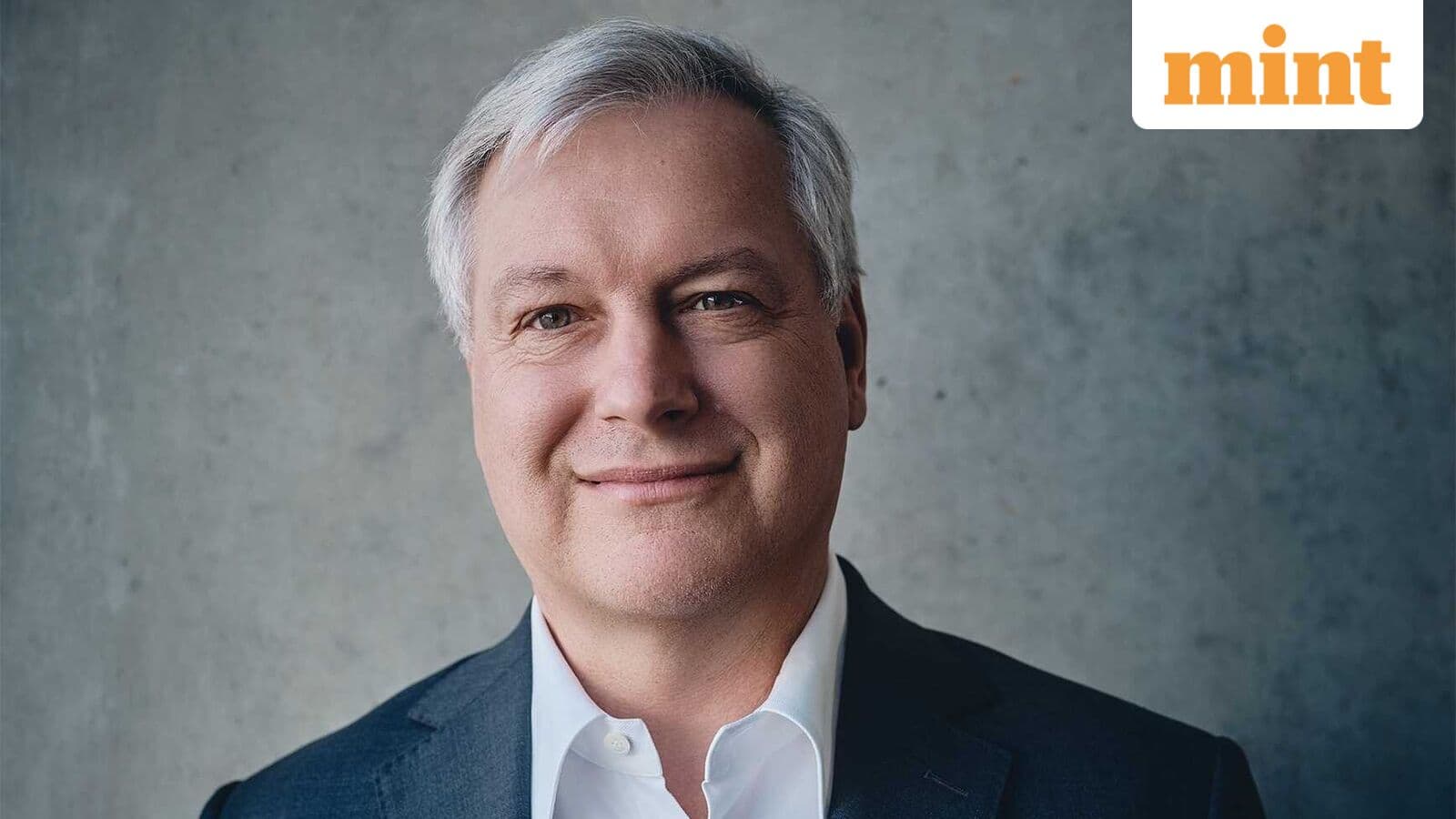
The bottleneck in the global AI boom is not chips. It is the humble transformer — and the man who makes them is increasingly building them in India. Andreas Schierenbeck, chief executive of Hitachi Energy, the Zurich-based power equipment maker, says India has become a cornerstone of the company's effort to spread its manufacturing footprint as geopolitical conflict and trade tensions make single-region sourcing a liability.
For anyone tracking Asian capital, the signal is straightforward. Hitachi Energy is not a startup chasing subsidies; it is a century-deep industrial supplier whose transformers, high-voltage direct current transmission gear, energy storage and power semiconductors sit inside the grid buildout that data centres, renewables and electrified industry all depend on. In July the company began construction of a large power transformer factory at Karjan, near Vadodara in Gujarat, an investment of about ₹2,000 crore. That plant will sit alongside existing Gujarat facilities making power, dry-type distribution and traction transformers, plus insulation and component plants in Mysore and Halol. In all, Hitachi Energy runs 19 manufacturing units across eight Indian locations, and its Chennai engineering centre has just added 2,000 people.
Schierenbeck's framing is blunt: 'India for India and India for the world.' The phrase matters because it describes a shift in how multinationals treat Indian capacity — not as a low-cost back office or a domestic-only bet, but as an export base. Hitachi Energy India already supplies transformers for railway locomotives and automation for transmission and renewable projects, and the CEO says output from Indian plants is aimed at both local demand and overseas buyers. For a country that has spent years trying to move up the manufacturing value chain, a European industrial heavyweight exporting grid equipment from Gujarat is a more meaningful endorsement than another assembly line.
The context is a power equipment market that has swung violently. Schierenbeck notes that demand in the US and Europe was flat for roughly 15 years, which left the industry and its shareholders cautious about adding capacity. The energy transition, electrification of industry and the data-centre buildout have since reversed that, producing a seller's market where supply and demand are badly out of balance. The timelines explain why. A data centre can go up in one to three years; new generation and transmission capacity can take a decade or more to plan and build, and a greenfield factory three to four years. That mismatch cannot be closed by wishful thinking, only by long-term framework agreements, demand visibility and reserved capacity — the kind of bankable contracts that justify pouring concrete.
That is where India's role becomes strategic rather than merely commercial. Diversifying production across geographies is how Hitachi Energy hedges against the trade ruptures and regional conflicts that have made concentrated supply chains risky. India offers scale, an engineering talent pool and a government keen on grid and manufacturing investment. The ₹2,000 crore Vadodara plant is a bet that those advantages will hold for the decade it takes for global power supply to catch up with demand.
Watch the framework agreements, not the ribbon-cuttings. If Hitachi Energy and its peers begin locking customers into multi-year capacity reservations, Indian factories will move from being a hedge to being a load-bearing wall of the global grid supply chain. Schierenbeck's wager is that the world's insatiable appetite for electricity will make that happen — and that Gujarat will be one of the places where the answer is built.
More in MONEY


