Musk Ties SpaceX Equity to American Birthright, With Oceania Capital Watching
Elon Musk says he will give a SpaceX share to every US child, a pledge that reframes how the world's richest founder treats equity and citizenship.
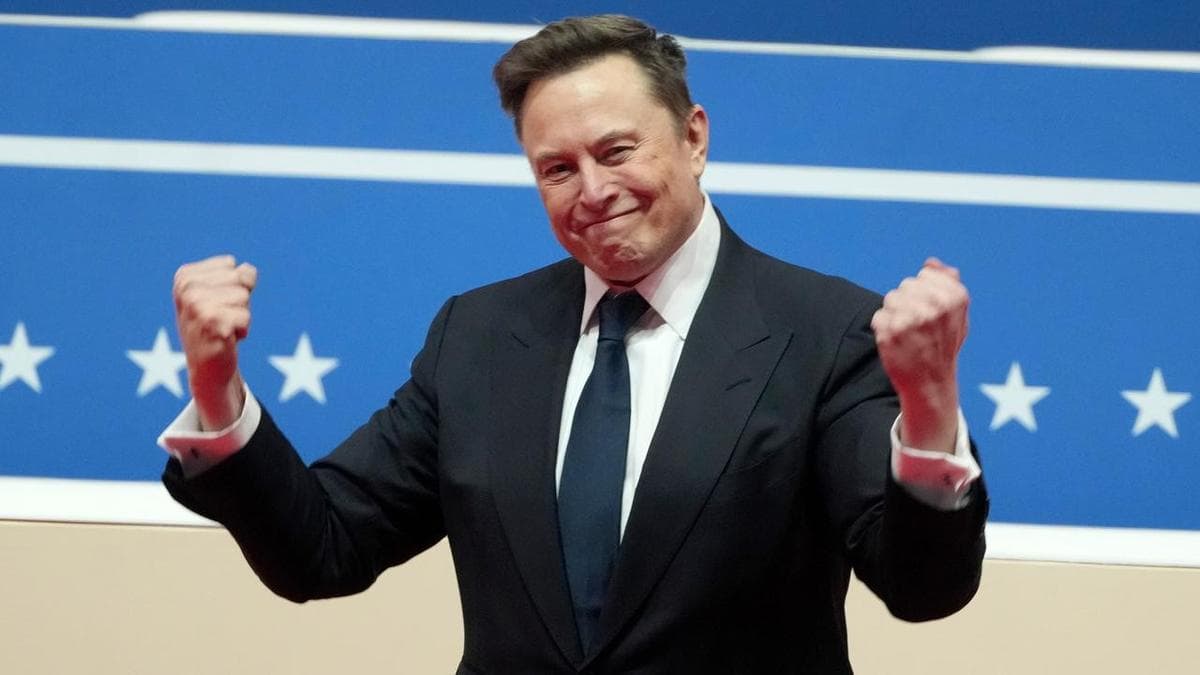
Elon Musk has built his fortune on rockets, satellites and electric cars, and now he is attaching a slice of that fortune to something stranger: the birth certificate of every American child. The pledge, reported by Deutsche Presse-Agentur and carried by The West Australian, is that Musk will give a SpaceX share for every child born in the United States. The mechanics, the timing and the tax treatment are not spelled out in the report. What is clear is the gesture itself, and for anyone tracking capital in Oceania it lands with unusual force.
The facts as published are narrow. Musk, the founder of SpaceX and the world's most closely watched billionaire, has committed to allocating a single SpaceX share per US child. No value is attached to the pledge in the source, no trust structure is described, and no date for distribution is given. That absence matters. SpaceX is a private company whose valuation has become a fixture of global wealth coverage, and any promise to hand out equity in it raises immediate questions about dilution, custody and whether the shares would sit with children, parents or the state. The report offers none of those answers.
To understand why this resonates in Oceania, you have to understand what SpaceX has become in the region. The company's Starlink constellation is no longer a curiosity for remote broadband; it is infrastructure. In Australia it connects stations and households beyond the fibre footprint. In New Zealand it serves communities the incumbent networks never reached. Across Pacific island states it has become a diplomatic and security question as much as a commercial one, because satellite capacity is now part of how governments talk to their own outer islands. A founder who treats equity as a civic instrument is therefore not a distant American story here. He is a counterparty.
The comparison that will occupy Oceania's family offices is not with philanthropy but with sovereign wealth. Australia's Future Fund, New Zealand's Superannuation Fund and the region's growing pool of private capital all wrestle with the same question Musk is answering in his own way: who should hold the upside of strategic assets, and on what basis? Musk's answer is citizenship, delivered through a private company rather than a state fund. That is a genuinely novel framing, and it is why the pledge travels further than a typical billionaire giveaway. It suggests that equity in critical infrastructure can be distributed as a birthright rather than earned as an investment.
For Oceania's wealthy, the practical read is more cautious. A single share in a private company is a promise whose value depends entirely on liquidity events that have not happened. SpaceX remains unlisted, and the source gives no indication of how or when a child could realise anything. Families who hold concentrated positions in private firms will recognise the structure: a headline number today, a governance question tomorrow. The pledge also invites an obvious regional question. If American children receive a stake, what does that imply for the customers in Australia, New Zealand and the Pacific whose subscriptions underwrite the constellation? The report does not address it, and Musk has not said.
What to watch is whether the pledge acquires machinery. A trust, a custodian, a vesting schedule, a disclosure to regulators: any of these would turn a statement into a structure, and structures are what Oceania's investors actually price. Until then, the story is a signal about how the region's most important private contractor thinks about legitimacy. Musk has spent two decades persuading governments to buy his rockets and his bandwidth. Offering equity to citizens is a different kind of sale, and the buyers are not governments at all. For a region that depends on his satellites and competes for his capital, that is worth following closely.