Landau and Segura Head to Buenos Aires to Advance the Andes-Atlantic Corridor
US officials Christopher Landau and Juan Pablo Segura tour Paraguay and Argentina to push the Andes-Atlantic Corridor, investment and security ties.
Christopher Landau, the US Deputy Secretary of State for Western Hemisphere Affairs, lands in South America this week carrying an agenda that matters to anyone tracking where capital and political favour are converging in the region. His tour, running from October 19 to 26, takes in Paraguay and Argentina — two of Washington's most reliable partners in the Southern Cone — and it is built around the twin pillars of business and security that define Donald Trump's hemispheric doctrine.
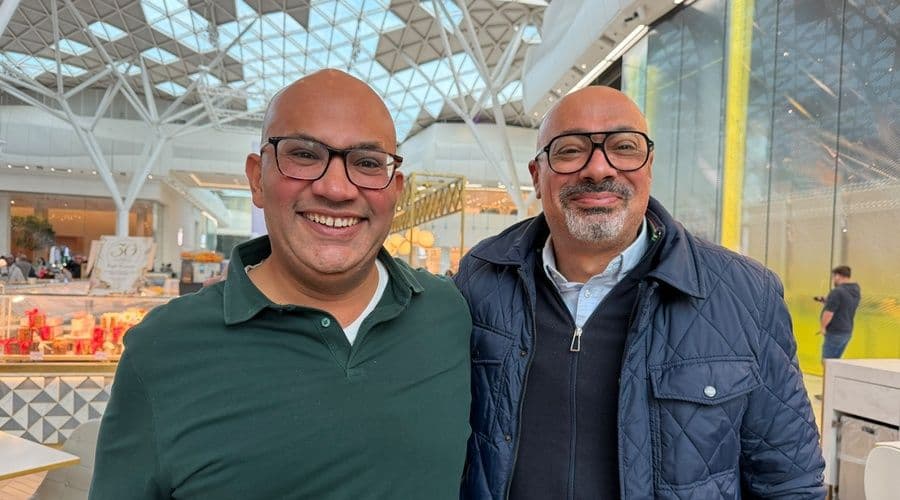
Landau, one of the senior US diplomats responsible for promoting American interests across Latin America, the Caribbean and Canada, will be accompanied by Juan Pablo Segura, an Argentine-born businessman appointed Principal Deputy Assistant Secretary for the region in August. The pair arrive in Buenos Aires on Thursday for a 2pm meeting with Foreign Minister Pablo Quirno at the San Martín Palace, following a stop in Asunción, where President Santiago Peña has become a leading voice in the push to contain Chinese influence. A State Department statement says Landau will meet senior Argentine officials and private-sector leaders. President Javier Milei is not expected to attend; he is due in Spain on October 21.
The centrepiece is the Andes-Atlantic Corridor, an initiative announced on September 23 during the UN General Assembly and framed squarely within Washington's strategic competition with Beijing. It envisages US investment in railways, waterways, ports, oil pipelines and energy infrastructure, with the Vaca Muerta shale formation and Argentina's mining sector at its core. Landau and Quirno appeared together in New York to sign the agreement, and the officials now intend to build on that momentum, seeking ways to drive growth, raise US investment and deepen security cooperation, with a particular focus on what Segura calls "narcoterrorism" as a threat to sovereignty.
For outsiders, the context matters. Vaca Muerta, in Neuquén province, is one of the world's largest shale plays and the engine of Argentina's energy ambitions; the mining sector, meanwhile, is central to the lithium and copper supply chains that both Washington and Beijing covet. The corridor is less a single project than a framework for channelling American capital into the infrastructure that would move those resources to market. Segura, the son of Argentine immigrants, has been blunt about the leverage involved: "One of the strongest tools the United States has is economic power," he told El Observador. "We are seeing that in Argentina."
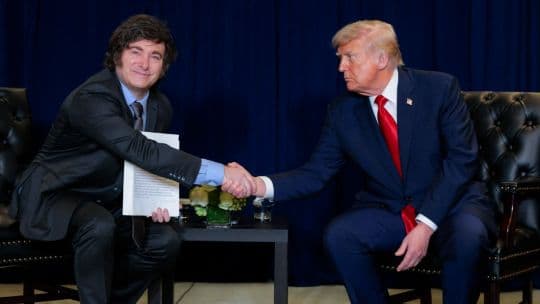
The visit lands at a moment of exceptional warmth between Washington and the Casa Rosada. Milei has just returned from his second US trip in a month, a 36-hour stay in which he collected the US Chamber of Commerce's "World Champion of Free Enterprise" award and attended a gala organised by La Derecha Diario and the Heritage Foundation. He did not get his photograph with Trump, but he emphasised a telephone conversation with Secretary of State Marco Rubio. The security file is moving too: on October 5 the National Security Ministry announced that Washington had approved US$13.35 million in funding, with US$7.5 million for projects in Argentina and the rest for regional initiatives, and that a regional unit of the State Department's anti-narcotics office would be established in the country — a tenfold increase in current cooperation.
What does it signal? That American money and attention are being deployed as instruments of alignment, and that Buenos Aires is willing to be the showcase. The itinerary also points to what comes next: Vice-President JD Vance is expected in Argentina after the November 5 US midterms, in what would be the first visit by a US vice-president since Mike Pence in April 2017. The Casa Rosada has described it as a regional visit, possibly in the third week of November, though the White House has not confirmed it. For investors watching South America, the message from this week is that the corridor is no longer a communiqué — it is a pipeline, and Washington is sending its people to fill it.