Milei's central bank about-face: from 'worst garbage' to fortress of fiscal discipline
Argentina's Milei now seeks to bar the central bank from financing government spending, a striking reversal of his 2023 pledge to abolish it.
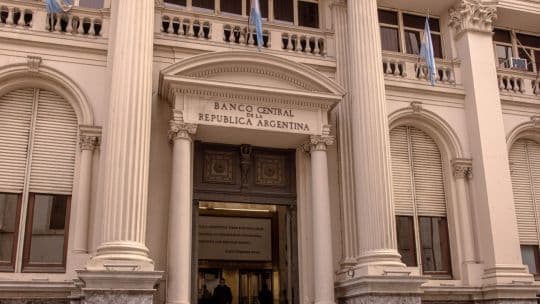
For anyone tracking the strange afterlife of Argentina's peso, the spectacle of Javier Milei — the man who once called the central bank "the worst garbage that exists on this Earth" — now laboring to fortify that very institution is the kind of twist that makes South America's wealth circuit feel like a telenovela written by an economist. The libertarian president who swept into office promising to dollarise the economy and nail the coffin shut on the monetary authority is now pushing a reform that would enshrine the central bank's independence by banning it from financing state spending. It is not the abolition he promised; it is something arguably more pragmatic, and for the region's capital watchers, far more telling.
The core of the proposal is simple on paper: strip the central bank of its ability to print money to cover government deficits, a practice that has fueled Argentina's chronic inflation for decades. Milei's administration is effectively trying to write into law a firewall between the treasury and the monetary base, a move that would force future governments to live within their fiscal means or borrow from markets at punishing rates. The reported details are sparse, but the direction is unmistakable. This is not the dramatic dollarisation of the campaign trail, nor the immediate shuttering of the institution he vilified. Instead, it is a bid to make the bank's independence a permanent feature of Argentina's institutional landscape, rather than a policy preference that can be reversed with a change of government.
To understand why this matters beyond Buenos Aires, you have to appreciate the peculiar role the central bank has played in Argentina's modern economic drama. For much of the past two decades, it has been less a monetary guardian than a cash register for successive administrations, financing deficits through the printing press and exporting inflation to a population already hardened to price shocks. The Peronist governments that preceded Milei treated the bank as a political tool, and its credibility collapsed accordingly. Milei, a self-described anarcho-capitalist who built his political brand on chainsaw-wielding rhetoric against the state, now finds himself in the unglamorous position of institutional builder. The irony is thick enough to cut with a peso note.
For the international reader who follows capital flows in South America, this pivot signals something deeper than a change of heart. It reflects a broader regional reckoning with the limits of monetary populism. Across the continent, from Brazil to Chile, central banks have spent the post-pandemic years clawing back credibility after a wave of fiscal expansion. Argentina, however, has been the outlier — the country where inflation became a way of life and where the central bank's balance sheet was treated as an extension of the political budget. Milei's reform, if it passes, would mark a structural break: it would make it harder for any future government, including his own, to resort to the inflationary tax that has quietly eroded Argentine savings for generations.
The timing is also telling. Milei came to power on a wave of frustration with the peso, promising to abandon it entirely. Yet the reality of dollarisation — the loss of monetary sovereignty, the need for vast dollar reserves the country does not have — has forced a recalibration. The reform he now champions is a second-best solution, but it may be the most consequential one available. It acknowledges that the central bank cannot be destroyed, so it must be tamed. For wealth holders in the region, this is a signal that Argentina is trying to rejoin the club of countries where monetary policy is boring — and boring, in this context, is a compliment.
What comes next will depend on the political arithmetic in Congress, where Milei's coalition remains a minority and the Peronist opposition still holds sway over the provinces. But even the attempt marks a shift in the Overton window of Argentine economics. The debate is no longer whether the central bank should exist, but what rules should bind it. For those who have watched Argentina lurch from crisis to crisis, that is progress of a sort. The man who wanted to throw the institution into the trash has instead decided to build it a fortress. In South America's most volatile economy, that may be the most radical thing he has done yet.