Maritana's 148% reserve jump reshapes the Goldfields' next production play
Maritana Minerals lifts WA gold reserves 148% to 204,000oz, feeding its Black Swan hub as the Goldfields heat up.
For anyone tracking capital flows in Oceania's mining heartland, the number that matters this week isn't the gold price – though at above A$6,300 an ounce it's certainly doing its part. It's the 148 per cent leap in Maritana Minerals' combined ore reserves to 204,000 ounces, a jump that turns a Perth-based explorer into something far more interesting: a credible feed source for a long-life processing hub in Western Australia's legendary Goldfields.
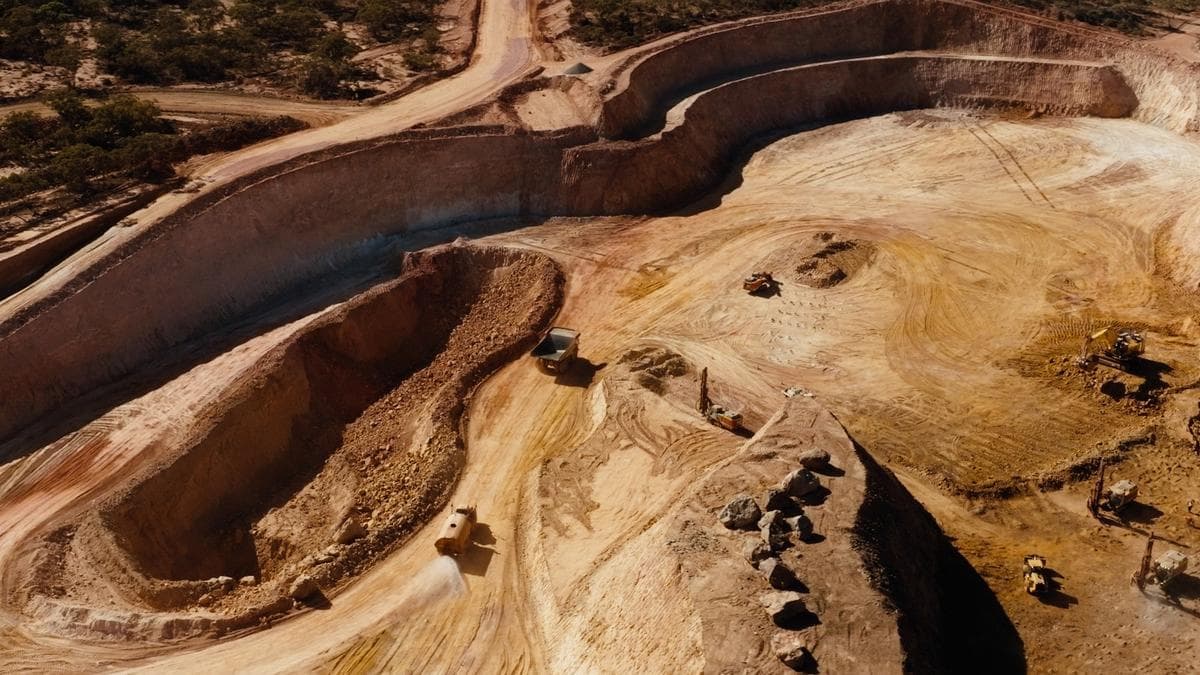
The headline figure comes from Maritana's annual resource update for the year ended 30 June 2026. Total combined gold mineral resources rose 6.3 per cent to 1.86 million ounces – and that's after subtracting the 53,000 ounces depleted by mining at its cornerstone Boorara open pit. The reserve growth was driven by maiden open-pit ore reserves at the Crake and Kalpini projects, plus an updated reserve at Boorara itself. All sit within 50 kilometres of the company's 100 per cent owned Black Swan processing hub, 40 kilometres northeast of Kalgoorlie. That proximity is the quiet strategic point: in a region where haulage costs and processing access can make or break a project, Maritana is assembling ounces around infrastructure it already controls.
For outsiders, the context matters. Kalgoorlie is not just a town; it's the spiritual and logistical centre of Australian gold mining, a place where the earth has been turned over for more than a century and where the current merger and acquisition frenzy is putting a premium on any ground with proven ounces and working mills. Maritana's Boorara and Burbanks projects remain the foundation of its resource base, with Boorara's in-situ resource now at 9.28 million tonnes grading 1.26 grams per tonne for 375,000 ounces. The company also re-reported several resources at a lower cut-off grade of 0.5 g/t gold – a savvy geological interpretation that saw the Coote project's tonnage swell five-fold and its contained ounces triple, while Golden Ridge North and Gordons Dam each lifted their gold endowment by roughly 40 per cent. That's not just number-juggling; it reflects a more confident understanding of the orebody and what can be economically extracted at today's prices.
This is happening against a backdrop that any Oceania wealth-watcher recognises: the Goldfields are consolidating fast, with major corporate deals underscoring the value of local ounces and established infrastructure. Maritana's reserve growth is a smaller but telling signal that the mid-tier is also positioning itself. The company holds a diverse portfolio beyond gold – 20.2 million ounces of silver and 104,000 tonnes of zinc at Nimbus, plus 293,100 tonnes of nickel and 5,800 tonnes of cobalt after divesting its Lake Johnston assets. That diversification is a hedge, but gold is clearly the engine room.
The bigger story is what this means for the region's capital dynamics. A 148 per cent reserve increase in a single year, driven by drilling and reinterpretation rather than acquisition, shows there's still life in the old ground – and that the ASX juniors are willing to spend on exploration when the price signals are right. Maritana currently has drill bits spinning on a 60,000-metre program across Burbanks, Coote, Crake and Gordon's Dam, with management promising updates on the high-grade Burbanks project and a reserve update for Rose Hill in the near term. That pipeline of news flow is exactly what the market wants to see in a hot gold environment.
For international investors, the takeaway is straightforward: the Goldfields are not just a relic of the nineteenth century, but a live laboratory for how smaller players can build critical mass. Maritana is assembling the ounces needed to feed a long-life production hub, and with resources knocking on two million ounces, it's approaching the threshold where it becomes either a serious producer or a prime takeover target. As the drill results roll in, Perth's explorer class will be watching closely – and so should anyone with capital deployed in Oceania's most storied commodity.