London’s Ulez just proved clean air pays — why is capital still so slow to cash in?
New research shows London’s ultra-low emission zone has measurably improved children’s lung health, a rare quantified return on a public investment. For wealthy investors and city leaders, the lesson is that environmental regulation can be an asset class, not just a cost.
Ten years ago, Alastair Harper sat in a stuffy meeting room in London, planning a campaign for young people’s health, when his phone buzzed. His own child was in an ambulance, struggling to breathe the city’s toxic air. That moment — the blue lights, the hospital dash, the helplessness — is seared into him. But this week, a study from Queen Mary University London delivered something close to vindication: children’s lungs have grown bigger and stronger since the capital restricted its most polluting vehicles. The ultra-low emission zone, or Ulez, isn’t just a policy. It’s a measurable return on a decade of political courage — and a signal for anyone who thinks environmental rules are pure drag on growth.
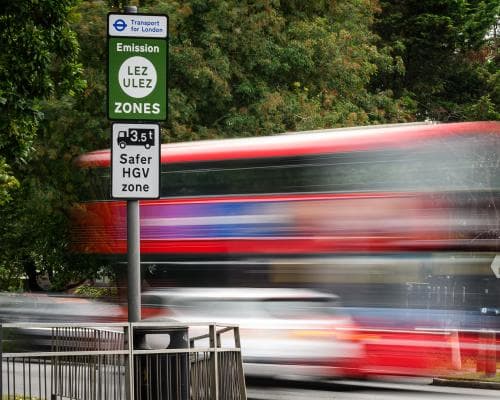
The Ulez, introduced by Mayor Sadiq Khan in 2019 and expanded in 2021 and 2023, charges £12.50 a day for older, dirtier cars that don’t meet strict emissions standards. It’s a simple mechanism: pay up or switch to a cleaner vehicle. And the numbers are striking. Nitrogen dioxide — the pollutant most linked to asthma and stunted lung growth — has plummeted. The QMUL study found children’s lung capacity has improved significantly since the scheme began. That’s not a poll or a sentiment index. It’s a biological, quantifiable outcome, the kind of hard data that money managers love — except this one is measured in forced expiratory volume, not basis points.
Let’s put the scale in context. In the late 2010s, between 6,000 and 8,000 Londoners were dying prematurely each year from air pollution. In 2020, a coroner ruled that the death of nine-year-old Ella Adoo-Kissi-Debrah in 2013 was directly caused by air pollution — the first such ruling in UK history. That’s the human cost. The financial cost is harder to calculate, but think about it: hospital admissions, lost productivity, lower cognitive performance in children, and reduced property values near polluted roads. The Ulez is a £12.50 toll, but it’s also a hedge against a healthcare bill that would otherwise run into the billions. For the wealthy, this is the kind of infrastructure play that private equity loves — except here, the dividend is paid in healthier lungs and longer lives.
Critics called the Ulez a war on motorists, a tax on the poor, a bureaucratic overreach. The expansion in 2023 was met with protests, and some suburban councils fought it. But the data is now hard to ignore. Professor Nick Hopkinson of Imperial College London, a respiratory medicine specialist, has long argued that clean air zones are one of the most cost-effective public health interventions available. The QMUL study backs him up: the improvement in children’s lung function is not marginal. It’s the kind of shift that epidemiologists usually only see after major public health campaigns, like smoking bans or seatbelt laws. And it happened in just a few years.
For the world’s wealthiest cities, the lesson is uncomfortable but clear: London took the risk, and it’s paying off. Yet cities from Paris to Delhi to Los Angeles remain cautious, afraid of the political backlash. That caution has a price. Every year of delay means another cohort of children breathing air that stunts their development. For investors, this is a reminder that regulatory risk cuts both ways. A city that drags its feet on clean air is not just harming public health — it’s undermining its own long-term productivity and attractiveness to talent. Clean air is now a competitive advantage, and London is quietly building a moat.
Harper, who later worked as Khan’s environmental adviser, now works independently. He says the relief at his own child’s recovery is mixed with pride that fewer parents will face that blue-lit ambulance. “To know now that same air is so much safer for the kids that breathe it because of the political choice of one man makes me feel proud of this city,” he told the Guardian. That pride is warranted — but it’s also a warning. The Ulez was a political bet that required conviction and a willingness to absorb short-term anger for long-term gain. In a world where most capital is deployed on a quarterly cycle, that kind of patience is rare. But the returns, as London is now proving, can be extraordinary — and they’re measured in the most valuable currency of all: human potential.