Lincoln City's £10m Bet: How a 65-Year Wait Became a Blueprint for Football's New Money Play
Lincoln City's return to the Championship after 65 years, backed by a £10m stadium upgrade and modern fan experience investments, signals a broader trend of smaller clubs leveraging infrastructure and community capital to compete with financial heavyweights. For investors, it's a case study in patience, place-based value, and the rising cost of footballing relevance.
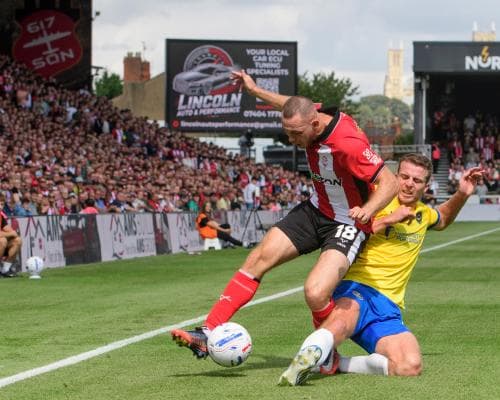
In the shadow of Lincoln Cathedral, where history is measured in centuries, a different kind of wealth is being built — one that took 65 years to mature. On a sun-drenched Saturday, Sincil Bank held more than 10,000 souls who came to witness something their grandparents never imagined: second-tier football in a city better known for its medieval architecture than its midfielders. The 2-0 defeat to Portsmouth was a sobering opener, but the mood was anything but. This is not a club counting losses; it's a club counting the cost of a dream, and it's a figure worth examining for anyone who thinks football is just a game.
The financial story here is not about transfer fees or television windfalls. It's about a deliberate, £10m summer capital expenditure programme — a new fan village, a big screen, upgraded stands that were nearly sold out — designed to make Sincil Bank not just a stadium, but a destination. For a club that spent decades in the footballing wilderness, this is a signal to the market: Lincoln City is no longer a charity case; it's a growth asset. The investment is a bet on the idea that infrastructure and experience drive recurring revenue, not just matchday spikes. And it's working — the ground was all-but full, a testament to the pent-up demand that had been suppressed for two generations.
The numbers behind this revival are modest by Premier League standards, but they're profound in the context of the English Football League. Lincoln won League One last season with over 100 points — a statistical outlier that suggests operational excellence, not luck. That success has translated into a fanbase willing to pay for upgrades, and a club willing to reinvest every pound into its own future. The new co-managers, Chris Cohen and Tom Shaw, inherited a squad and a stadium that are both being rebuilt simultaneously. That's a rare alignment in football, where owners often flip assets before the foundations are set. Here, the patience is part of the strategy.
The heritage angle is what makes this story resonate beyond the terraces. Lincoln's last second-tier match was in 1961, the same year Yuri Gagarin orbited the Earth. For 65 years, the club was a sleeping giant — or more accurately, a forgotten one. Now, the air raid siren still sounds at every corner, a nod to the city's military history, but it's also a metaphor for the club's own resurgence: a warning shot to the established order that a new player is in the game. For wealth builders, this is a lesson in the value of scarcity and narrative. Lincoln is not just another club; it's a story that sells tickets, merchandise, and increasingly, corporate partnerships.
What does this signal for the broader market? It's a microcosm of the 'small club, big ambition' playbook that private equity and high-net-worth investors have been eyeing across Europe. The cost of entry to the Championship is rising, but so is the potential yield. Lincoln's £10m spend is a fraction of what a single Premier League player costs, yet it's creating an asset that could be worth multiples of that in a decade — if the club can hold its own in the second tier. The risk is real: two consecutive defeats to start the season show how unforgiving this level is. But the infrastructure is now in place to ride out bad runs, which is more than many clubs can say.
Looking forward, the question is whether Lincoln can convert this momentum into sustainable financial growth. The club's leadership is clearly thinking beyond survival. The fan village isn't just a place to drink; it's a revenue stream that operates on non-matchdays. The big screen isn't just for replays; it's for advertising. These are the moves of a club that understands modern football economics: you don't just sell tickets, you sell an ecosystem. For investors watching from the sidelines, Lincoln is a case study in how to build value from the ground up — literally. The cathedral on the hill may still dominate the skyline, but on the pitch below, a different kind of monument is being erected: a financially resilient, community-anchored football club that just might be a model for the next decade of the beautiful game.