LEAP 2026: The Real Test Is What Gets Built, Not What Gets Announced
At LEAP 2026, the real test isn't billion-dollar announcements but whether the Gulf turns capital into deployed tech, agents, and Arabic-first products.
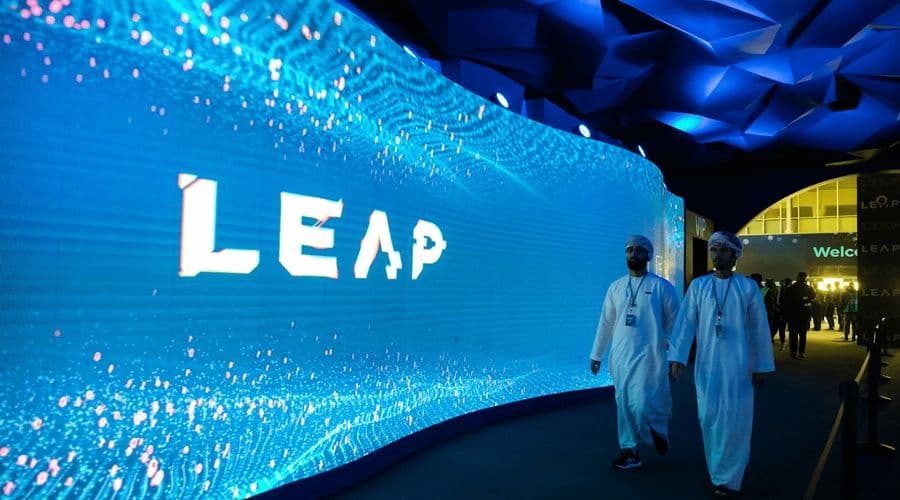
For anyone who tracks Gulf capital, LEAP has become the annual barometer of ambition. Five years ago, the idea that a tech conference in Riyadh could draw over 100,000 people from 80 countries felt like a fever dream. Last year, attendance doubled, and the opening day alone carried $14.9 billion in AI investment pledges. Since its debut, the event has helped push announced technology infrastructure investment in Saudi Arabia past $42.4 billion. But as the fifth edition opens this month, the numbers are no longer the story. The story is whether any of that money actually turns into working technology, real products, and local talent.
Abdullah Al Jaafari, CEO of Resquad AI, frames this shift sharply. The Gulf, he notes, has already proven it can buy compute and build data centres. That was the easy part. The harder question is what happens after the power switches on. Who is building applications on all that cloud capacity? Who is deploying them inside government agencies and private firms? Who sticks around to fix the unglamorous integration problems that never make it into a press release? Gigawatts are an input, not an outcome. This year's LEAP, he argues, should be judged by outputs — the messy, unglamorous work of making AI actually function in an organisation.
One area where that test will play out is agentic AI. At previous events, agents were mostly keynote theatre. Now, the conversations have shifted to integration schedules, costs, and ownership. The UAE has moved furthest, with its National Artificial Intelligence System sitting inside the Cabinet and, since June, a new AI and Data Authority pushing agentic systems into federal services. At DeepFest, the AI track running alongside LEAP, the signal to watch is not another demo but a deployment. Where are agents already running in production? What do they cost? Do they actually work? Demos are seductive; deployments are evidence.
The third lens is Arabic-first technology. For too long, Arabic support was an afterthought — a localisation task bolted onto an English product. That approach is becoming indefensible. The models have improved, governments are demanding locally designed solutions, and a language spoken by over 400 million people is not a niche. If this year's main stage features products designed in Arabic, for Arabic-speaking users, it will signal something larger than better translation. It will mean the region is starting to produce its own technology rather than merely procure it. That shift also changes who gets to build here, opening the door to a broader generation of founders and engineers.
Finally, there is talent. Every infrastructure dollar and every agent deployment ultimately depends on people who can build, run, and sustain these systems. The Gulf has attracted global tech giants and their engineers, but the long-term question is whether it can cultivate its own. LEAP has settled one argument: Saudi Arabia, and the wider region, can pull in capital and attention at an enormous scale. The next argument is whether it can convert that attention into a durable tech ecosystem. That will not be settled by a single announcement. It will be measured in the years after the conference ends, in the products that survive, the companies that scale, and the engineers who stay.
So I will be watching LEAP 2026 with a different filter. Not the billion-dollar headlines, but the quieter signals: a working agent inside a government service, an Arabic-first product on the main stage, a founder who can explain their deployment costs without flinching. The Gulf has already won the argument about attracting capital. The harder prize — building something that outlasts the conference — is still up for grabs. That is the real test, and it starts in Riyadh this month.