Kavak's $300M lifeline: Andreessen Horowitz bets big on Latin America's used-car king
Kavak closes $300M Series F led by Andreessen Horowitz, its largest LatAm investment, as the Mexican unicorn rebounds toward profitability.
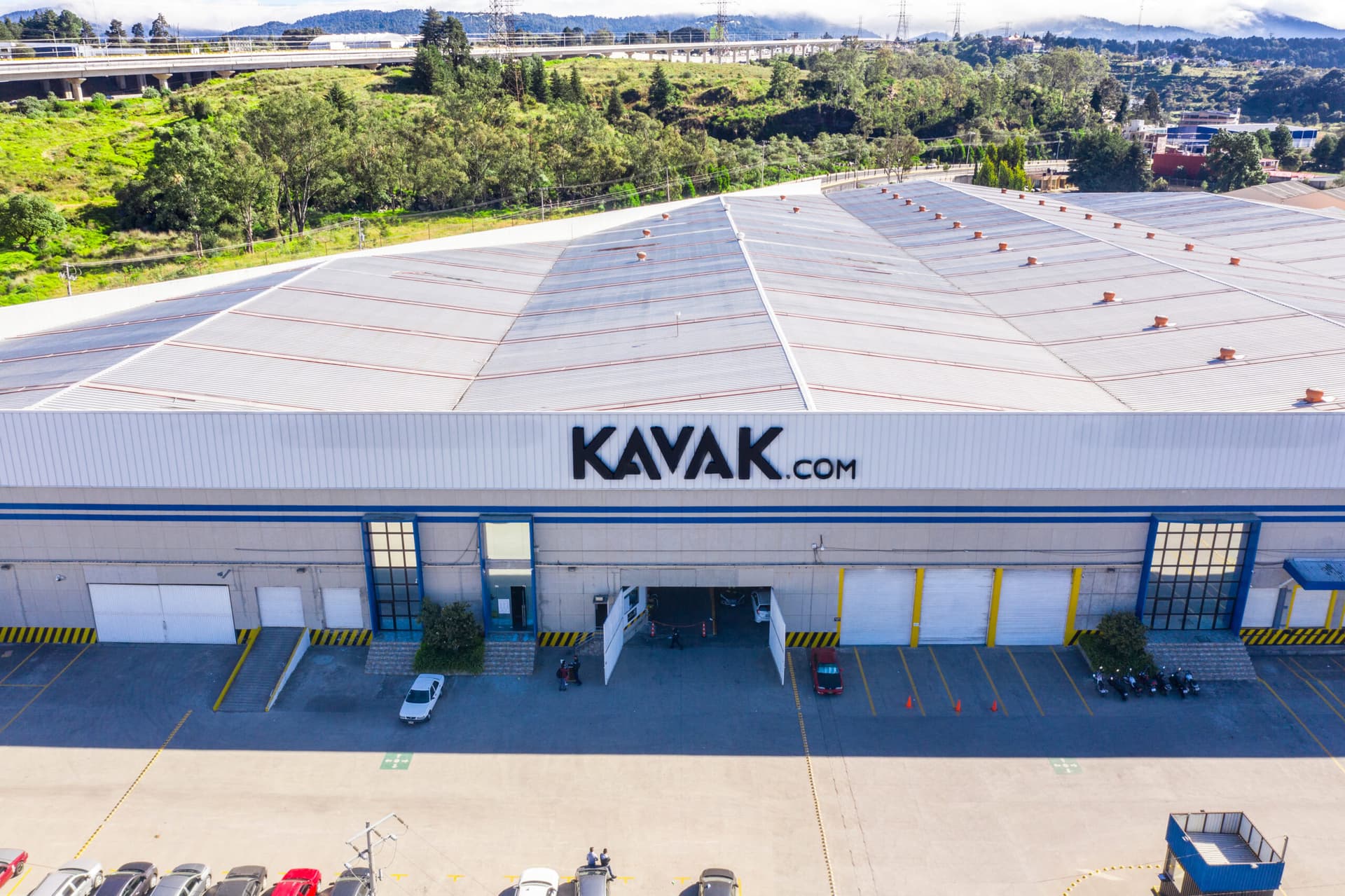
For years, the story of Latin American tech was written in rounds of venture capital that kept growing until they didn't. Kavak, the Mexican used-car platform that once wore the crown as the region's most valuable startup, knows that arc better than anyone. Now, with a fresh $300 million injection led by Andreessen Horowitz — the largest check the legendary Silicon Valley firm has ever written in Latin America — Kavak is signaling that the correction phase is over, and the consolidation phase has begun.
The deal, a Series F round announced this week, sees a16z's Growth fund contribute $200 million of the total, with additional participation from WCM Investment Management, Lingotto Innovation, Foxhaven, Galdana Ventures, Stelac, and Allen & Company. For context, this is not just another funding round. Andreessen Horowitz has been cautious in the region, and this marks its first investment from the Growth fund in Latin America. David George, the fund's leader, framed it as a bet on a "category-defining platform" in a massive market — and the numbers back him up. Kavak closed 2025 with nearly 120,000 transactions, roughly 40% growth year-over-year, and posted its first full month of consolidated global profitability in December, driven by Mexico and strong milestones in Chile and the Middle East.
To understand why this matters, you have to remember where Kavak has been. Founded in 2016, the company rode the venture boom to a peak valuation of $8.7 billion, surpassing Rappi as Latin America's most valuable startup. Then came the reckoning. In March 2025, a down round slashed that valuation by 75%, a brutal reset that echoed across the region's startup ecosystem. Kavak has raised $2.9 billion since inception, according to Crunchbase, but the new capital is not about glory — it's about balance sheet strength and survival at scale. The company has been transparent that the funds will go toward expanding its fintech arm, which has already provided over $1 billion in customer financing, and toward automating operations with AI agents to rebuild trust in a sector notorious for opaque pricing and shady sellers.
The used-car market in Latin America is a beast of informality. Millions of transactions happen off the books, with no warranties, no financing, and no recourse for buyers. Kavak's bet has always been that formalizing this chaos — offering inspection, financing, and buy-back guarantees — could create a marketplace giant. The fintech angle is particularly sharp: during Q4 2025, Kavak reached an annual average of $600 million in loans granted, and it enters 2026 with nearly 100% growth in that vertical. That is the real story here. The company is no longer just a car dealer; it is becoming a lender, using its platform data to underwrite first-time buyers who have been locked out of traditional banking. For a region where credit penetration remains low, that is a powerful position.
What does this signal for South American wealth more broadly? First, that patient capital still exists for companies that can show a path to profitability, even after a brutal correction. Kavak's December profitability milestone — achieved while still scaling — is precisely what a16z wants to see before writing its largest regional check. Second, it confirms that the future of Latin American tech is not in copycat consumer apps but in infrastructure that formalizes fragmented markets. And third, it shows that Mexico, not Brazil or Argentina, remains the gravitational center for venture capital in the region, with its proximity to the U.S. and a deep, under-served consumer market.
There are still risks. Kavak has faced years of customer service complaints, and the used-car business is capital-intensive with thin margins. But the company's pivot toward AI-driven automation and its disciplined focus on operational excellence suggest a maturity that was missing in its hyper-growth years. The Middle East expansion, entered in 2022, is also bearing fruit, giving Kavak a hedge against any single market downturn. As 2026 unfolds, the watchword is execution. Kavak has the capital, the scale, and now the backing of one of the most influential investors in the world. If it can maintain profitability while growing, it won't just be a comeback story — it will be the blueprint for how Latin American unicorns survive their own hype and emerge as durable institutions. For anyone tracking capital flows south of the border, this is the deal to watch.