Jelou's $10M bet: turning WhatsApp chat into Latin America's new bank counter
Ecuadorian fintech Jelou raises $10M Series A led by Wellington Access Ventures to scale AI payment agents on WhatsApp across LatAm.
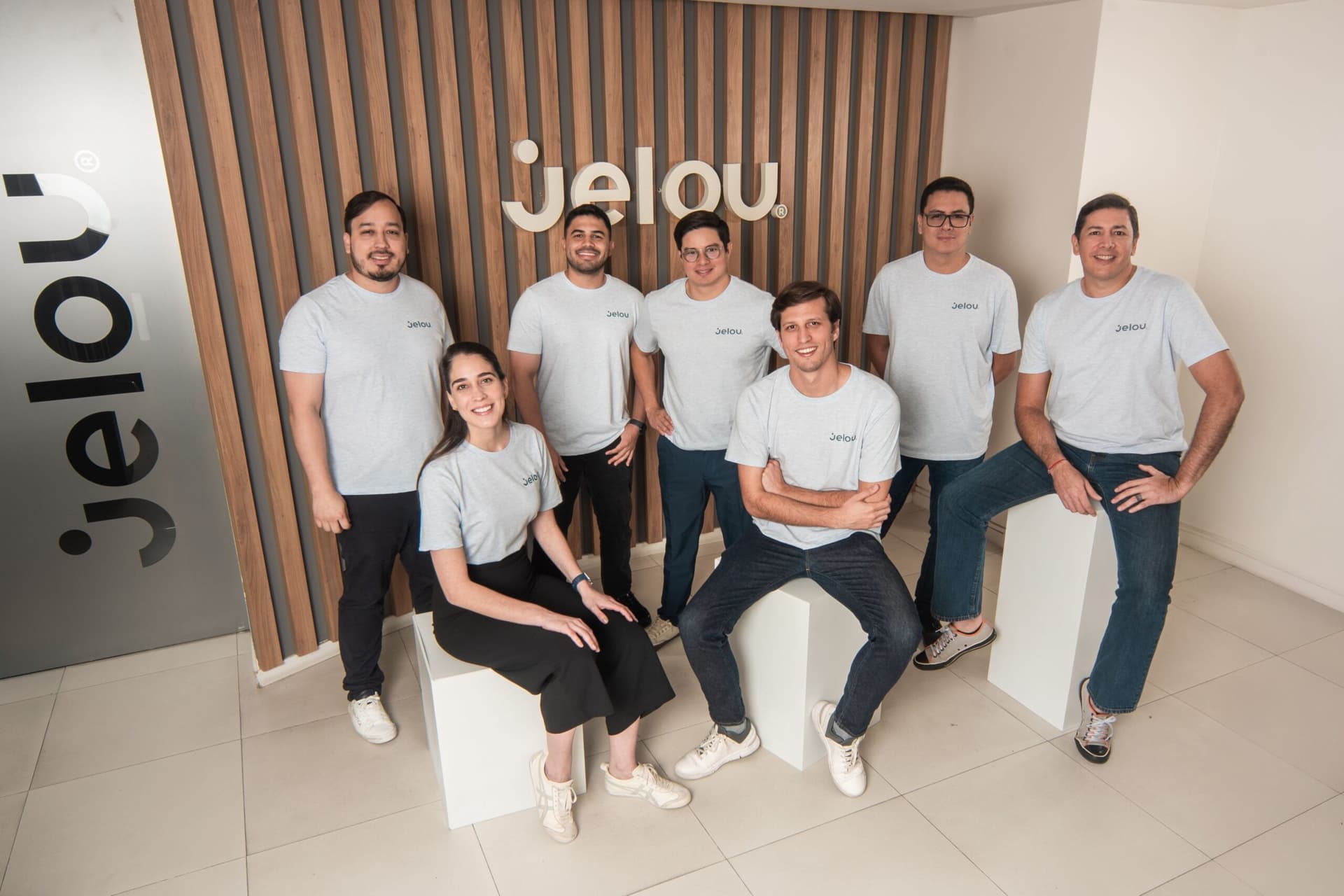
Forget the marble lobbies and the numbered queues. The most interesting banking counter in Latin America right now lives inside a green chat bubble on your phone. That is the bet Jelou, an Ecuadorian fintech founded in 2017, just convinced investors to double down on with a $10 million Series A round led by Wellington Access Ventures, alongside Krealo and Collide Capital. The money is earmarked for Brain OS, the company's platform that lets businesses build AI agents inside WhatsApp capable of verifying identities, executing secure transactions, and activating payments without ever forcing a user to leave the conversation.
Jelou's pitch is disarmingly simple, and the numbers back up the audacity. The company says it has already processed $100 million in financial transactions directly within messaging channels. In 2025, new customers grew 265.6%, and interactions with AI agents exploded by 1,775%. That is not incremental growth; that is a hockey stick drawn in a language investors understand. Around 500 clients now use Jelou's tools, and the team has grown to roughly 170 people spread across eight countries, with a heavy tilt toward engineering, product, and regulatory compliance.
The founding story matters here because it explains why this is happening in Ecuador and not in São Paulo or Mexico City. Luis Loaiza and Alberto Vera built Jelou on a blunt observation: messaging had become the default way Latin Americans talk to businesses, but the financial stuff—payments, credit, signatures, identity checks—still happened in fragmented, clunky, often insecure side channels. They started by helping financial institutions deploy digital banking through Facebook Messenger and WhatsApp, then kept pushing until chat itself became the transaction layer. That is a distinctly Latin American problem, born from a region where smartphones are ubiquitous but traditional banking infrastructure remains patchy and trust is scarce.
This round is not just a win for one startup; it is a signal about where capital in South America is flowing. More than 70% of digital purchases in the region now happen on smartphones, per industry reports, yet most of those transactions still route through clunky apps or shared links that feel one phishing attempt away from disaster. Jelou's approach—making the chat interface itself the secure rails for commerce—speaks directly to that friction. The involvement of Krealo, the corporate venture arm of Credicorp, is particularly telling: a heavyweight Peruvian financial group betting that conversational AI will define the next wave of banking inclusion. That is mainstream capital validating a niche that once seemed like a gimmick.
What comes next is expansion, and it is aggressive. Jelou has announced offices in Mexico and Colombia, deeper investment in Peru, and initial forays into Brazil and the United States. Partnerships with Google and Huawei are already in place to sharpen its go-to-market muscle. The five-year ambition is to process more than $1 billion in financial transactions through its platform and to emerge as one of the defining technology companies to come out of Latin America. That is a tall order, but the trajectory suggests the founders are not daydreaming.
For anyone tracking wealth and capital in South America, Jelou is a reminder that the region's tech story is no longer just about copycat e-commerce or ride-hailing. It is about building infrastructure for a population that lives on WhatsApp and expects its money to move as easily as its messages. The green bubble is becoming a bank branch, and Ecuador—not usually the first name in fintech—is quietly helping to build it. The next few years will show whether that bubble can hold billions.