Japan's Defence Chief Heads to Canberra: Melon-Gate Fades as Frigate Talks Take Center Stage
Shinjiro Koizumi's visit to Australia signals a shift from diplomatic awkwardness to strategic substance, with Tokyo and Canberra closing in on a landmark deal for Japan's Mogami-class frigates. The meeting underscores a deepening security partnership that could reshape the Indo-Pacific naval balance.
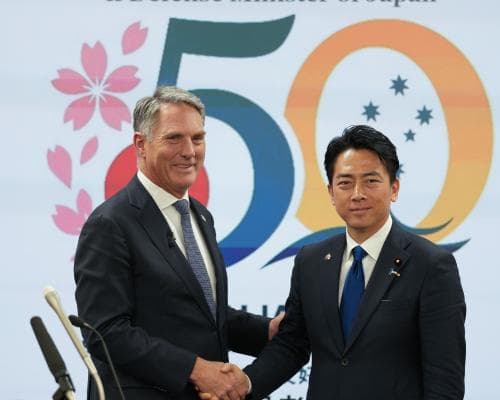
The melons are gone, but the memory lingers. When Japan's defence minister, Shinjiro Koizumi, touches down in Canberra this week, he steps into a diplomatic minefield that has nothing to do with warships or regional security. It has everything to do with two pieces of fruit, a podcast, and a prime ministerial hand gesture that sparked a firestorm of speculation. But beneath the tabloid chatter lies a serious strategic agenda: Australia's planned acquisition of Japan's Mogami-class frigates, a deal that could redefine naval cooperation in the Indo-Pacific.
Koizumi, a political scion with a famous father, is not just another minister on a routine visit. He is widely tipped as a future prime minister of Japan, and his presence in Canberra signals Tokyo's intent to move past the so-called 'melon-gate' controversy. The visit comes after Australian Prime Minister Anthony Albanese found himself defending comments made on the Bush Deep podcast, where he described a gift of melons from Japan's Prime Minister Sanae Takaichi with a gesture that critics interpreted as crude. Albanese insists it was innocent, but the opposition pounced, warning that such remarks could jeopardize a vital partnership. Japan's ambassador, Kazuhiro Suzuki, has since issued a statement that carefully avoids escalating the issue, suggesting Takaichi's government is eager to keep the focus on strategy, not scandal.
The real meat of Koizumi's agenda is the Mogami-class frigate. These are not your grandfather's warships. Built by Mitsubishi Heavy Industries, the Mogami-class is a stealthy, compact vessel packed with advanced sensors and unmanned systems, designed for the kind of littoral operations that dominate modern maritime security. Australia is looking to replace its aging Anzac-class frigates, and Japan's offering has emerged as a frontrunner, partly due to its cutting-edge technology and partly because it aligns with a broader shift toward interoperability among allies. The deal, if finalized, would mark Japan's first major export of complete warships since its post-war pacifist constitution was reinterpreted to allow such sales. That is a big deal, and it signals a Japan that is increasingly willing to flex its military-industrial muscle.
But this is not just about hardware. It is about the architecture of deterrence in a region where China's naval expansion is a constant shadow. Australia and Japan, along with the United States and India, are deepening their ties through mechanisms like the Quad, and a frigate deal would be a tangible expression of that alignment. It would also give Japan a foothold in Australia's defence supply chain, creating a two-way street of technology transfer and joint maintenance that could last decades. The strategic logic is clear: shared threats, shared technology, shared security. Yet, the political economy is delicate. Australia has its own shipbuilding industry, and any foreign deal will face scrutiny from local unions and politicians who want jobs at home. The Albanese government has been careful to frame the Mogami-class as a complement to, not a replacement for, domestic capabilities, but the details are still being negotiated.
For the broader defence sector, this visit is a signal of momentum. The market for frigates is crowded, with competitors from Europe and South Korea, but Japan's entry into the fray is a game-changer. It brings not just a product but a partnership model that could set a precedent for future arms deals in the region. If Australia chooses Japan, it could open the door for other Indo-Pacific nations to follow suit, creating a new export market for Japan's defence industry and a new axis of security cooperation. That is a narrative that investors and strategists will be watching closely.
Koizumi's visit, then, is a pivot point. It turns a week of embarrassing headlines into an opportunity to reset the agenda. The melons may have been a diplomatic faux pas, but the frigate deal is a strategic imperative. As Koizumi and Marles sit down to talk, the stakes are higher than ever. The Pacific is no longer just a geographic term; it is a geopolitical chessboard, and this meeting is a move that could shape the next decade of security in the region. The question is not whether the deal will happen, but how quickly, and what it will mean for the balance of power. The answer may come sooner than we think, and it will be written not in fruit, but in steel and silicon.