Informa's £2.2bn Clarion Bet: A Live Events Giant Doubles Down as France's Debt Woes Sink the Euro
Informa is buying Clarion Events for £2.2bn and spinning off Taylor & Francis to become a pure-play live events powerhouse, funded by a £940m share placing. Meanwhile, France's central bank chief warns of strangulation by interest rates, sending the euro lower and underscoring the stark divide between corporate boldness and sovereign fragility.
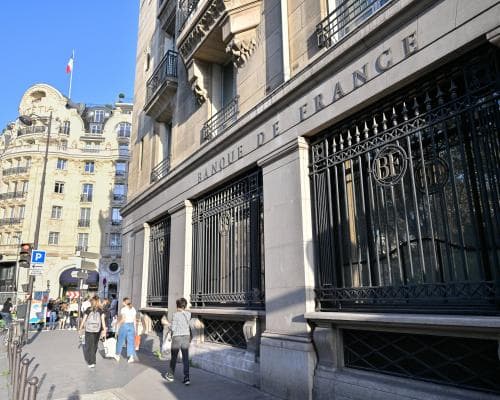
France's central bank governor just used a word you rarely hear from a central banker: strangulation. The euro dipped further as he warned that the country risks being choked by rising interest rates. It's a stark image—and a timely one. Because while sovereign Europe struggles under the weight of its own debt, a quieter, sharper story is unfolding in London's boardrooms. Informa, the FTSE 100 events juggernaut, is making a £2.2bn bet that the future of face-to-face business is worth every penny.
The deal: Informa is acquiring Clarion Events from private equity giant Blackstone for £2.2bn. That's not pocket change. It adds more than 100 events to Informa's portfolio—from DSEI, the defence and security exhibition at London's ExCeL, to AwesomeCon, the comic book and pop culture convention in Washington. To fund it, Informa will raise £940m through a share placing, including a £250m offer for retail investors via the broker RetailBook. And in a move that signals real strategic clarity, the company also plans to spin off its academic publishing arm, Taylor & Francis. The message is simple: Informa wants to be a pure-play live events business.
Why does this matter? Because Informa's shares have slipped 1% this year. The company has been forced to reschedule key Middle East events due to regional conflict. CEO Stephen Carter—who last year moved his residency from the UK to the UAE—knows where the growth is. Informa makes more than a third of its revenue in India, the Middle East, and Asia. Its Saudi joint venture, Tahaluf, generates over $250m in annual revenue. This isn't a company retreating; it's a company repositioning. The Clarion deal is a statement of intent: we are doubling down on the live experience economy, even as geopolitical tremors rattle the ground beneath.
Contrast that with the macro picture. In Germany, manufacturing orders slumped 10.6% in August, a sharp drop led by a 61.5% plunge in orders for aircraft, ships, trains, and military vehicles—after more than doubling in July. The three-month trend is barely positive, up just 1.3%. France's central bank chief is warning of strangulation. The euro is weakening. And yet, here is Informa, raising nearly a billion pounds to buy convention centres and trade shows. It's a fascinating divergence: sovereign balance sheets are creaking, but corporate balance sheets—at least for the right assets—are still willing to move.
What does this signal for markets and the wealthy? First, the live events business is not dead. It's consolidating. Private equity owned Clarion. Now a strategic buyer is taking it out. That's a classic late-cycle move: financial sponsors exit, strategics with synergies step in. Second, the spin-off of Taylor & Francis tells you where the smart money sees margin. Academic publishing is a stable, high-margin business, but it's not where the growth is. Live events—particularly in defence, security, and pop culture—are where the pricing power lives. Third, the £250m retail offer via RetailBook is a nod to the democratisation of deal access. Armchair investors can now get a piece of the action, not just institutions.
For wealth builders, the lesson is clear: follow the capital that is moving, not the capital that is stuck. France is stuck. Germany is stuck. But Informa is moving—literally and figuratively. Carter's relocation to the UAE is a tell. The company's revenue mix is a tell. The Clarion acquisition is a tell. The world's smartest capital is not waiting for Europe to sort itself out. It is deploying into the Middle East, Asia, and the live experience economy. The euro may be strangled by interest rates. But Informa just bought itself a bigger stage. And that, in a world of sovereign fragility and corporate agility, is the trade to watch.