Hong Kong closes in on New York, London as Asia’s financial gravity pulls
Hong Kong is poised to overtake New York and London as the top global finance hub, says GFCI creator, as Asia’s weight in finance grows.

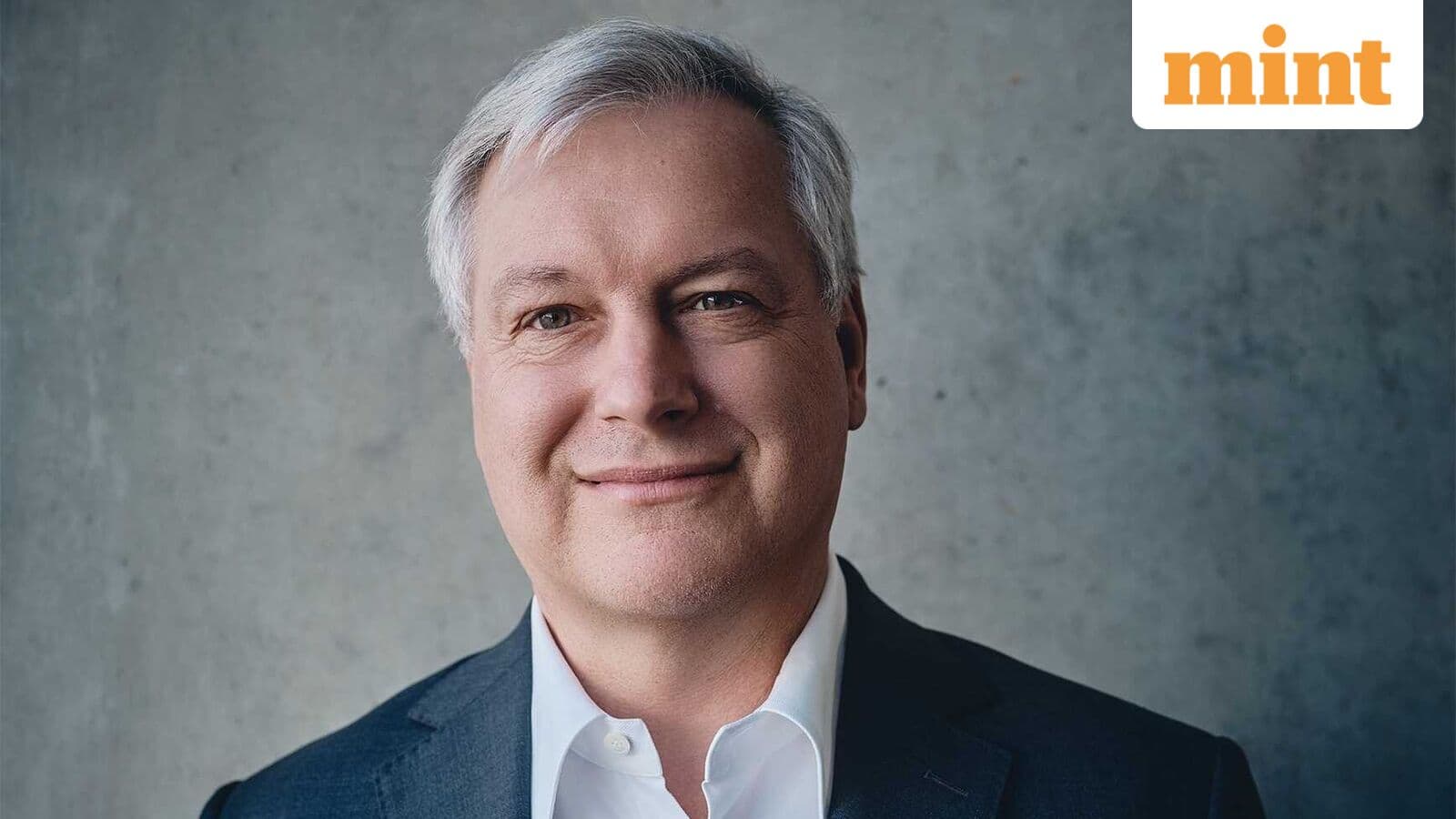
For anyone who has watched the world’s money maps redraw over the past decade, the news out of Hong Kong this week lands less like a forecast and more like the inevitable end of a slow-burning shift. Michael Mainelli, the man behind the Global Financial Centres Index, put it bluntly: an Asian city will eventually take the crown from New York and London, and Hong Kong is best placed to do it. “It’s going to happen,” he said, pointing to a race so tight that a single point now separates the city from the top of the table.
The numbers tell the story of a narrowing gap that has become almost unbearable to watch. In the March edition of the GFCI, compiled twice a year by London’s Z/Yen Group and Shenzhen’s China Development Institute, Hong Kong ranked third, trailing London by one point and New York by two. The next edition lands later this month, and the anticipation is palpable. Mainelli’s reasoning is simple: the gap is so slim that any event — a policy stumble, a market shock, a geopolitical tremor — could tip the order. He even said it outright: “At some point, there will be an event.”
For outsiders, it is easy to miss why this matters so deeply. Hong Kong is not just another financial district; it is the bridge between China’s capital and the world’s markets, a role it has played for decades with a particular legal DNA — English common law, predictable courts, and a tax regime that has long attracted global wealth. Mainelli highlighted these very traits: legal predictability and a low tax burden make the city unusually resilient, even as macroeconomic volatility, including tensions in the Middle East, has weighed on other hubs. This is the quiet advantage that often gets lost in headlines about protests or policy shifts: the underlying framework has held, and that matters more than any single quarter’s trading volume.
What makes this moment significant is not just Hong Kong’s rise, but what it represents for Asia’s broader financial gravity. Mainelli noted that Asia now accounts for roughly 40 per cent of global finance — a figure that would have seemed unthinkable two decades ago. The shift is structural, not cyclical. As wealth accumulates in Shanghai, Singapore, and Shenzhen, the infrastructure that moves that money — the banks, the legal firms, the asset managers — is consolidating around a few key nodes. Hong Kong’s advantage is that it combines the openness of an international hub with the depth of China’s economy, a pairing that neither Tokyo nor Singapore can fully replicate.
For the international reader who follows capital flows, this is the story to watch. If Hong Kong does overtake New York and London, it will not be a symbolic victory alone; it will signal a reordering of where decisions get made, where contracts get signed, and where the world’s richest families choose to park their fortunes. The city’s resilience through recent volatility — both financial and political — suggests that its status is not a relic of colonial-era luck but a deliberately maintained architecture of rules and incentives.
Looking ahead, the question is not whether Hong Kong will top the next GFCI edition, but what happens when it does. Mainelli’s own words carry a hint of inevitability, yet he is careful to condition it on the city maintaining its openness and predictability. That is the real test. In a region where capital moves fast and loyalties faster, Hong Kong’s edge will depend on whether it can keep its legal system stable and its doors wide open. If it does, the crown will come — and the world’s financial order will have a new centre of gravity, one that faces east.